Menu
Store
Blog
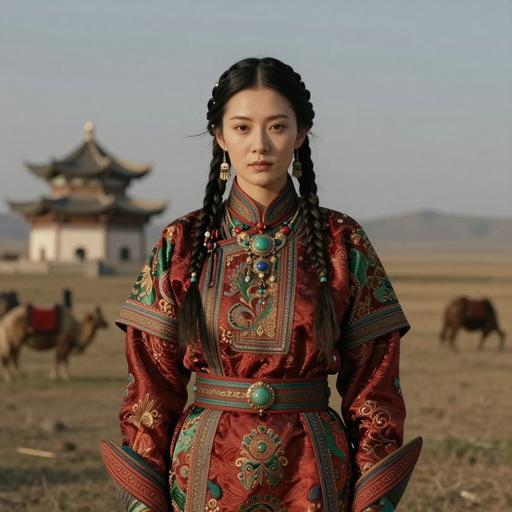
Portrait reconstruction of TK5-8
Ancient Individual

A woman buried in Mongolia in the Imperial era

TK5-8
1299 CE - 1409 CE
Female
Mongol Empire
Mongolia
Scroll to begin
Chapter I

Identity

The biological and cultural markers that define this ancient individual

Sample ID

TK5-8

Date Range

1299 CE - 1409 CE

Biological Sex

Female

mtDNA Haplogroup

Y1a1

Cultural Period

Mongol Empire

Chapter II

Place

Where this individual was discovered

Country Mongolia
Locality Tavan Khailaast
Chapter III

Time

When this individual lived in the broader context of human history

TK5-8 1299 CE - 1409 CE
Chapter IV

Story

The narrative of this ancient life

The Mongol Empire, which existed during the 13th and 14th centuries, was the largest contiguous land empire in history, stretching from Eastern Europe across Asia to the Sea of Japan and into the Indian subcontinent, the Middle East, and the edges of Eastern Europe. The empire emerged from the unification of nomadic Mongol and Turkic tribes under the leadership of Genghis Khan, who was proclaimed ruler of all Mongols in 1206.

Cultural Overview:

Nomadic Heritage: The Mongol Empire's culture was deeply rooted in its nomadic heritage. The Mongols were originally pastoral nomads, relying on the extensive steppe lands of Central Asia for grazing their herds. This lifestyle fostered immense skills in horseback riding and archery, which were pivotal in their military success.

Political Structure: The governance of the Mongol Empire was notably sophisticated despite their nomadic origins. It was divided into various khanates, each ruled by a member of the Mongol aristocracy. The political system was characterized by a meritocratic and somewhat decentralized structure but retained a common allegiance to the Great Khan, who was the supreme ruler.

Military Innovations: The Mongol military was one of the most disciplined and effective fighting forces of the time. What set them apart was not just their use of cavalry and archery, but also their innovative military tactics and intelligence networks. The Mongols utilized psychological warfare, rapid mobility, and surprise to defeat more established armies.

Religious Tolerance: The Mongols practiced a policy of religious tolerance unmatched by other empires of the time. Though they themselves were primarily shamanists, they accepted and promoted a degree of religious freedom, allowing a multitude of religions, including Buddhism, Islam, Christianity, and Taoism, to co-exist and even thrive within their territories.

Cultural Exchange and Trade: The vast Mongol Empire facilitated extensive cultural exchange and trade across the Eurasian continent. The Mongols revitalized the Silk Road, making it safer for merchants and travelers, which led to a vibrant exchange of goods, ideas, and technology. This period saw the movement of technologies like papermaking and gunpowder from East to West and the dissemination of crops and spices in return.

Social Structure:

Clan and Tribal Organization: Mongol society was organized along clan and tribal lines. Loyalties were first to family, then the tribe, with the Mongol Khan as the overarching leader. Social ranking within Mongol society was fluid, with merit often allowing for upward mobility, a system Genghis Khan in particular encouraged.

Roles and Rights of Women: Women in the Mongol Empire had relatively more rights and responsibilities compared to other contemporary cultures. They were involved in managing herds, engaging in trade, and at times even participating in military campaigns. The female members of Genghis Khan's family, in particular, were known to have wielded significant power and influence.

Law and Order: The Yassa, a code of law purportedly enacted by Genghis Khan, was designed to maintain order and unity within the empire. The laws codified a range of subjects from military discipline to social conduct, helping to maintain the stability and cohesiveness of the vast territories.

Economy and Innovation:

Pastoral Economy: The Mongol Empire's economy remained largely based on its pastoralist roots, with a strong emphasis on animal husbandry. However, they also encouraged agricultural development in more sedentary regions to support grain production and farming activities.

Prominent Trade Networks: By controlling the Silk Road, the Mongol Empire opened new channels for international trade. Their empire functioned as a vast free-trade zone, where goods and cultures flowed freely. They introduced and supported a credit system and established trade practices that were essential for the growth of commerce.

Technological Advances: Under Mongol rule, technological knowledge and inventions were widely shared and disseminated. They were instrumental in the transfer of advanced engineering techniques, medical knowledge, and other technological innovations across regions, thus sparking periods of cultural renaissance, especially in China and Persia.

Decline and Legacy:

By the late 14th century, internal strife, overexpansion, and the inability to maintain such a vast territory led to the fragmentation of the Mongol Empire into smaller, rival khanates. Despite this decline, the legacy of the Mongol Empire persisted through its enduring cultural and trade connections. The empire's impact on communication, trade, and cultural exchange had lasting effects on the course of history, indeed changing the cultures of Europe, Asia, and the Middle East forever. The Mongol period is seen as a time of unification of the Eurasian landmass under a single political entity, which played a critical role in shaping the modern world.

Chapter V

Context

Other ancient individuals connected to this sample

Use code for 40% off Expires Feb 26