Menu
Store
Blog
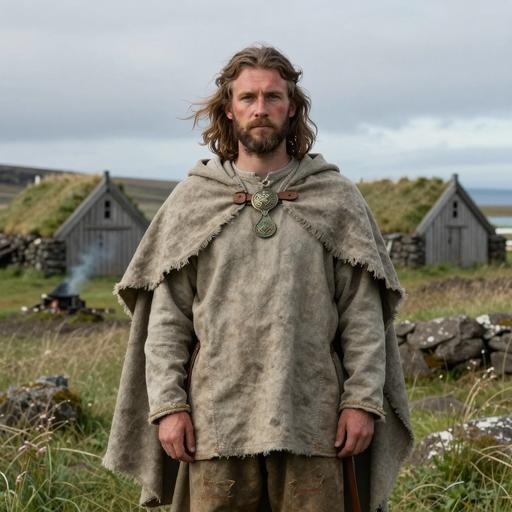
Portrait reconstruction of TSK-A26
Ancient Individual

A man buried in Iceland in the Middle Ages era

TSK-A26
1050 CE - 1200 CE
Male
Early Christian Period Iceland
Iceland
Scroll to begin
Chapter I

Identity

The biological and cultural markers that define this ancient individual

Sample ID

TSK-A26

Date Range

1050 CE - 1200 CE

Biological Sex

Male

mtDNA Haplogroup

J1b1a1a*

Y-DNA Haplogroup

R-Y77406

Cultural Period

Early Christian Period Iceland

Chapter II

Place

Where this individual was discovered

Country Iceland
Locality Skeljastadir
Chapter III

Time

When this individual lived in the broader context of human history

TSK-A26 1050 CE - 1200 CE
Chapter IV

Story

The narrative of this ancient life

The Early Christian Period in Iceland, typically dated from the late 10th through the 12th centuries, marked a pivotal transformation in the island's cultural, religious, and social landscape. This era is intricately entwined with the voluntary adoption of Christianity by the Icelandic Althing in the year 1000 AD—a decision that transitioned Iceland from its pagan Norse roots to a Christian society.

Historical Context

Iceland was primarily settled by Norse seafarers and their Celtic thralls during the late 9th and early 10th centuries. The settlers brought with them the Old Norse religion, which was polytheistic and centered around gods like Odin, Thor, and Freyja, as well as a rich oral tradition of sagas and eddas. However, the Christianization of Scandinavia, which gained momentum in the mainland throughout the 10th century, heavily influenced Iceland due to close trade and familial ties.

The Conversion

The conversion to Christianity is perhaps the most defining event of this era. Historical accounts, notably the \Íslendingabók" (Book of the Icelanders) by Ari Thorgilsson, describe how pressures from Norwegian and Icelandic chieftains, as well as a growing number of Christian settlers, led to a significant religious debate at the Alþing, Iceland’s national assembly, in 1000 AD. Lawspeaker Þorgeir Ljósvetningagoði, although a pagan, decided that the entire nation should adopt Christianity to maintain peace and unity. It's said he laid under his cloak for a day, contemplating the decision, and when he stood, he declared Icelanders would be Christian, but with allowances for private pagan worship, the continued consumption of horseflesh, and exposure of unwanted infants (practices which were later phased out).

Cultural and Social Implications

The acceptance of Christianity had profound impacts on Icelandic society:

  1. Religious Practices: Traditional pagan rituals were replaced or adapted into Christian rites. Churches began to be built, and Iceland became part of the ecclesiastical province of Nidaros (Trondheim). Missionaries played a significant role in transforming religious practice with the introduction of monastic communities and ecclesiastical schools.

  2. Art and Literature: The transition spurred a synthesis of Norse and Christian elements, seen vividly in Icelandic art, stone carvings, and manuscript illumination. Importantly, the Christian conversion was a catalyst for the written tradition in Iceland. Latin script replaced runes for recording texts, paving the way for the rich literary heritage of Iceland, including sagas, laws, and genealogies.

  3. Legal and Political Changes: The Church gradually attained considerable influence in legal matters, embedding canon law within the Icelandic legal framework. While initially, there was a separation of church and secular governance, over time, church officials gained substantial power.

  4. Economic and Social Transformation: Tithing was introduced, which reshaped economic structures. Land and resources began to be apportioned to the Church, leading to the establishment of ecclesiastical estates. This reinforced the power dynamic between secular chieftains and clerical authorities.

  5. Cultural Exchange: The link with the broader Christian world opened new channels of interaction. Icelandic clerics traveled abroad for education, bringing back influences that enriched domestic intellectual life. This period also witnessed pilgrimages, most notably to Rome.

Challenges and Conflicts

While the initial conversion was peaceful, tensions occasionally flared between pagan holdouts and Christians, often reflecting broader power struggles. The establishment and endowment of churches created new hierarchies, leading to conflicts, particularly concerning tithes and ecclesiastical jurisdictions.

Long-term Influence

By the end of the 12th century, Iceland was thoroughly integrated into Christendom. The legacy of this era is evident in Iceland’s historical identity, manifested through its unique preservation of medieval literature and a rich tapestry of cultural memories that continue to inform and inspire modern Icelandic society.

In summary, the Early Christian Period in Iceland was a transformative epoch characterized by religious conversion, cultural synthesis, and significant social restructurings, setting the stage for the island's future development."

Chapter V

Genetics

The genetic ancestry of this ancient individual

Ancient Genetic Admixture

This analysis compares the DNA profile of TSK-A26 with ancient reference populations, showing the genetic composition in terms of prehistoric ancestral groups.

Western Steppe Pastoralists 44.6%
European Hunter-Gatherers 40.8%
Neolithic Farmers 14.6%

Modern Genetic Admixture

This analysis compares the DNA profile with present-day reference populations, showing what percentage of genetic makeup resembles modern populations from different regions.

Europe 95.4%
Northwestern European 75.2%
English 35.5%
Scandinavian 18.4%
Northwestern European 16.5%
Finnish 4.8%
Southern European 13.6%
Italian 6.7%
Iberian 4.8%
Sardinian 1.9%
Eastern European 6.5%
Asia 4.5%
Central Asian, Northern Indian & Pakistani 4.2%
Indian 4.2%

Closest Modern Populations

These are the modern populations showing the closest statistical alignment to A man buried in Iceland in the Middle Ages era, ranked by genetic distance. Lower distance values indicate closer statistical similarity.

1
Orcadian
1.7073
2
Scottish
1.9482
3
Dutch
2.1297
4
English
2.1515
5
Norwegian
2.1516
6
Danish
2.2046
7
English Cornwall
2.2220
8
Welsh
2.2415
9
Icelandic
2.3115
10
Irish
2.3442
Chapter VI

Context

Other ancient individuals connected to this sample

Sources

References

Scientific publications and genetic data

Scientific Publication

Ancient genomes from Iceland reveal the making of a human population

Authors Ebenesersdóttir SS, Sandoval-Velasco M, Gunnarsdóttir ED
Abstract

Opportunities to directly study the founding of a human population and its subsequent evolutionary history are rare. Using genome sequence data from 27 ancient Icelanders, we demonstrate that they are a combination of Norse, Gaelic, and admixed individuals. We further show that these ancient Icelanders are markedly more similar to their source populations in Scandinavia and the British-Irish Isles than to contemporary Icelanders, who have been shaped by 1100 years of extensive genetic drift. Finally, we report evidence of unequal contributions from the ancient founders to the contemporary Icelandic gene pool. These results provide detailed insights into the making of a human population that has proven extraordinarily useful for the discovery of genotype-phenotype associations.

G25 Coordinates

The G25 coordinates for sample TSK-A26 can be used for detailed admixture analysis in our G25 Studio tool.

TSK-A26,0.12834398,0.12715702,0.06551562,0.04717872,0.04190136,0.01944746,-0.00170794,0.00521466,0.00885568,0.00115576,-0.00460956,0.00109604,-0.01026034,-0.00308274,0.01692134,-0.0002262,-0.01739566,0.00242846,0.00031614,-0.00268618,0.0019617,0.0037514,-0.00301332,0.01044656,0.00264937
Analyze in G25 Studio
Use code for 40% off Expires Feb 26