Menu
Store
Blog
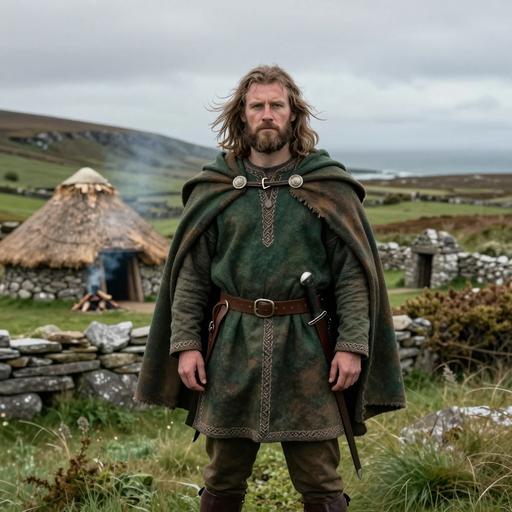
Portrait reconstruction of VK170
Ancient Individual

A man buried in Isle of Man in the Middle Ages era

VK170
800 CE - 1000 CE
Male
Viking Age Isle of Man
Isle of Man
Scroll to begin
Chapter I

Identity

The biological and cultural markers that define this ancient individual

Sample ID

VK170

Date Range

800 CE - 1000 CE

Biological Sex

Male

mtDNA Haplogroup

HV9b*

Y-DNA Haplogroup

R1b1a1b1a1a1b

Cultural Period

Viking Age Isle of Man

Chapter II

Place

Where this individual was discovered

Country Isle of Man
Locality IsleOfMan. Balladoole
Coordinates 54.0800, -4.6800
Chapter III

Time

When this individual lived in the broader context of human history

VK170 800 CE - 1000 CE
Chapter IV

Story

The narrative of this ancient life

The Viking Age Isle of Man is a fascinating and multifaceted era marked by the interplay of Norse and Celtic cultures, both of which played significant roles in shaping the island's history, society, and cultural landscape. This period spans from about the late 8th century until the mid-11th century, a time when Norsemen, commonly referred to as Vikings, expanded across Europe in search of wealth, land, and new trading opportunities.

Historical Context and Settlement

The Isle of Man is strategically located in the Irish Sea, equidistant from England, Ireland, Scotland, and Wales, making it an attractive location for Viking explorers and settlers. The initial Norse incursions were likely raiding expeditions in search of plunder. However, around the early 9th century, these Norsemen began to settle on the island, integrating with and influencing the existing Celtic inhabitants.

The period of Norse settlement on the Isle of Man is characterized by the establishment of a hybrid Norse-Gaelic culture. The settlers were predominantly from Norway and the surrounding Viking-controlled regions, who brought with them their distinct pagan beliefs, language, social structures, and maritime skills, along with agricultural and fishing practices suited to the rugged geography of the island.

Political Structure

During the Viking Age, the Isle of Man was part of the Kingdom of the Isles, a sea-based kingdom that included the Hebrides, parts of mainland Scotland, and other islands in the vicinity. This grouping frequently swayed between the influence of the Norwegian kings and Irish or Scottish rulers, reflecting the dynamic political landscape of the time.

The political structure on the island itself underwent significant changes. The Norse established powerful local chieftaincies, which often led to conflicts as various leaders vied for control. One famous ruler from this period is Godred Crovan, a Norse-Gael king who established himself as ruler in the late 11th century after several military campaigns.

Cultural Influence

The Norse impact on the Isle of Man is best exemplified through the island's numerous archaeological remains and cultural artifacts. The most significant among these are the carved stone crosses and grave markers, which often feature a blend of Christian symbolism and Norse mythology. These stones are decorated with runic inscriptions and pictorial representations of Norse gods and mythological events, indicating the syncretic melding of beliefs.

The intermarriage between Norse settlers and the native Celtic population led to the unique Norse-Gaelic culture, with influences evident in the Manx language, place names, and folklore. Norse mythology and sagas also became woven into the fabric of Manx culture, leaving a rich legacy of tales and traditions.

Economic Life

Economically, the Isle of Man thrived during the Viking Age due to its position as a hub in the Viking trading network. The Norse were exceptional seafarers and traders, and the island's central location facilitated trade between Scandinavia, the British Isles, and beyond. Goods such as textiles, silver, and precious metals moved through Manx ports, fostering a vibrant and prosperous trading community.

Agriculture also played a crucial role, with the Norse introducing advanced farming techniques and animal husbandry practices. The island's economy during this time was a blend of agriculture, fishing, and trade, with a strong maritime orientation.

Religion and Society

The religious landscape of the Isle of Man during the Viking Age was one of transformation and syncretism. Initially pagan, the Norse settlers practiced their ancestral religion, which was rich in rituals and ceremonies dedicated to gods like Odin, Thor, and Freyja. However, over time, Christianity began to spread, largely influenced by Irish monks and missionaries. This led to a gradual conversion process, culminating in the establishment of a Christian society interwoven with remnants of Norse pagan customs.

Conclusion

The Viking Age on the Isle of Man was a time of cultural convergence and dynamic socio-political transformations. It left an indelible mark on the island, as seen in its archaeological sites, linguistic heritage, and cultural traditions. This era serves as a testament to the enduring influence of the Norse on the Isle of Man’s historical and cultural identity, an influence that continues to be celebrated and explored through ongoing research and preservation efforts.

Chapter V

Genetics

The genetic ancestry of this ancient individual

Ancient Genetic Admixture

This analysis compares the DNA profile of VK170 with ancient reference populations, showing the genetic composition in terms of prehistoric ancestral groups.

European Hunter-Gatherers 42.0%
Western Steppe Pastoralists 37.1%
Neolithic Farmers 15.8%
Ancient Asians 5.1%

Modern Genetic Admixture

This analysis compares the DNA profile with present-day reference populations, showing what percentage of genetic makeup resembles modern populations from different regions.

Europe 98.7%
Northwestern European 88.3%
English 36.4%
Scandinavian 23.0%
Finnish 16.3%
Northwestern European 12.6%
Eastern European 7.4%
Southern European 3.0%
Iberian 3.0%
America 0.9%
America 0.9%
Native American 0.9%

Closest Modern Populations

These are the modern populations showing the closest statistical alignment to A man buried in Isle of Man in the Middle Ages era, ranked by genetic distance. Lower distance values indicate closer statistical similarity.

1
Icelandic
1.9372
2
Norwegian
1.9576
3
Orcadian
1.9777
4
Danish
2.0551
5
Scottish
2.1336
6
Shetlandic
2.1815
7
Swedish
2.3287
8
Irish
2.3430
9
Dutch
2.3837
10
German Hamburg
2.4638
Chapter VI

Context

Other ancient individuals connected to this sample

Sources

References

Scientific publications and genetic data

Scientific Publication

Population genomics of the Viking world

Authors Margaryan A, Lawson DJ, Sikora M
Abstract

The maritime expansion of Scandinavian populations during the Viking Age (about AD 750-1050) was a far-flung transformation in world history1,2. Here we sequenced the genomes of 442 humans from archaeological sites across Europe and Greenland (to a median depth of about 1×) to understand the global influence of this expansion. We find the Viking period involved gene flow into Scandinavia from the south and east. We observe genetic structure within Scandinavia, with diversity hotspots in the south and restricted gene flow within Scandinavia. We find evidence for a major influx of Danish ancestry into England; a Swedish influx into the Baltic; and Norwegian influx into Ireland, Iceland and Greenland. Additionally, we see substantial ancestry from elsewhere in Europe entering Scandinavia during the Viking Age. Our ancient DNA analysis also revealed that a Viking expedition included close family members. By comparing with modern populations, we find that pigmentation-associated loci have undergone strong population differentiation during the past millennium, and trace positively selected loci-including the lactase-persistence allele of LCT and alleles of ANKA that are associated with the immune response-in detail. We conclude that the Viking diaspora was characterized by substantial transregional engagement: distinct populations influenced the genomic makeup of different regions of Europe, and Scandinavia experienced increased contact with the rest of the continent.

G25 Coordinates

The G25 coordinates for sample VK170 can be used for detailed admixture analysis in our G25 Studio tool.

VK170,0.13382778,0.12691226,0.06101774,0.05330686,0.04021924,0.0237412,0.00181126,0.00280694,0.00446162,-0.00582878,-0.0084774,0.00737318,-0.00275502,-0.0087024,0.016281,-0.00281808,-0.0130099,0.0007453,-0.00104438,-0.0005686,0.0067621,0.00317912,-0.00136306,0.0105136,-0.00245578
Analyze in G25 Studio
Use code for 40% off Expires Feb 26