Menu
Store
Blog
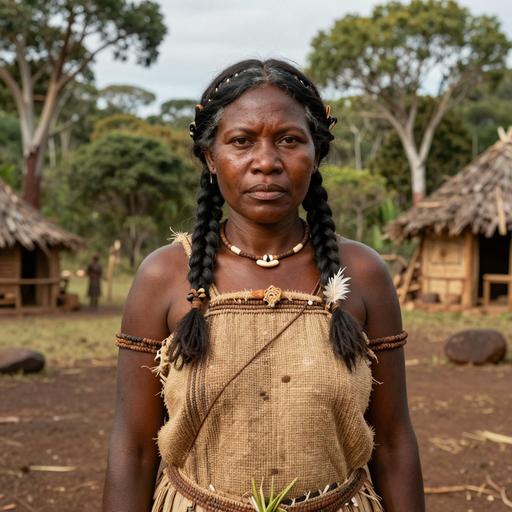
Portrait reconstruction of WPAH4_merged
Ancient Individual

A woman buried in Australia in the Indigenous era

WPAH4_merged
410 CE - 1788 CE
Female
Aboriginal North Queensland
Australia
Scroll to begin
Chapter I

Identity

The biological and cultural markers that define this ancient individual

Sample ID

WPAH4_merged

Date Range

410 CE - 1788 CE

Biological Sex

Female

mtDNA Haplogroup

P5a1a

Cultural Period

Aboriginal North Queensland

Chapter II

Place

Where this individual was discovered

Country Australia
Locality Weipa (North Queensland)
Chapter III

Time

When this individual lived in the broader context of human history

WPAH4_merged 410 CE - 1788 CE
Chapter IV

Story

The narrative of this ancient life

Aboriginal North Queensland encompasses a rich tapestry of cultures and histories that are among the oldest continuing traditions on Earth. The Aboriginal people of this region have lived in harmony with its diverse landscapes—ranging from the coastal areas and rainforests to the savannahs and river systems—for tens of thousands of years. This part of Australia is home to multiple Aboriginal groups, each with distinct languages, traditions, and connections to the land. This detailed description will explore various cultural, social, and environmental aspects of Aboriginal North Queensland.

Geographic Context

North Queensland spans a range of geographical features, including the Great Barrier Reef, tropical rainforests, and expansive savannah landscapes. The Aboriginal groups in this region, such as the Yidinji, Kuku Yalanji, and the Torres Strait Islanders, have developed unique ways to thrive and effectively manage these diverse ecosystems. The climate is predominantly tropical, with a distinct wet and dry season, influencing the livelihood and lifestyle of the Aboriginal peoples.

Cultural Heritage

Language and Communication

The region boasts a rich linguistic heritage, with numerous languages and dialects spoken. Language is a crucial cultural asset, serving as the primary vehicle for storytelling, law, and identity. While many languages have faced decline due to external influences and historical disruptions, revitalization efforts are ongoing. Language is not only a tool of communication but an art form and a repository of Indigenous knowledge, including botany, astronomy, and navigation.

Social Structure and Community

The Aboriginal people of North Queensland traditionally lived in extended family groups, often called clans or mobs, which are part of larger societal structures like nations or language groups. Social organization is complex, with a strong emphasis on kinship ties, which determine responsibilities and relationships within the community. Elders hold a vital role as custodians of stories and law, guiding both spiritual and practical aspects of life.

Spirituality and Connection to Land

Aboriginal spirituality is deeply rooted in the land, which is viewed as a living entity. The Dreamtime, or the Dreaming, is a foundational concept that refers to the period of creation as well as ongoing processes and events. It provides the framework for understanding the world and instructs how to live harmoniously with nature. Sacred sites throughout North Queensland are integral to spiritual practices and cultural identity, often associated with ancestral beings and stories.

Economy and Food Practices

Traditionally, the economy of Aboriginal North Queensland was based on a combination of hunting, gathering, and fishing. The environment provided a bountiful variety of resources, from bush tucker and medicinal plants to marine animals and freshwater species. Techniques such as fire-stick farming—using controlled burns to manage land and encourage growth—demonstrated sophisticated environmental management practices.

Arts and Craftsmanship

Art plays a significant role in Aboriginal culture as a means of storytelling and maintaining cultural practices. The region is known for its diverse artistic expressions, including painting, weaving, and sculpture. Traditional designs often feature symbols and patterns that convey stories or represent elements of the Dreaming. Body painting and ceremonial adornments are also common in rituals and dances, which reinforce community bonds.

Challenges and Resilience

Like Indigenous peoples worldwide, the Aboriginal communities of North Queensland have faced significant challenges due to colonization, including dispossession, introduced diseases, and cultural suppression. However, these communities have shown immense resilience and adaptability. Legal advancements, such as land rights and native title recognitions, have played a crucial role in the revival and maintenance of cultural heritage.

Contemporary Context

Today, Aboriginal North Queenslanders continue to navigate the complexities of modern society while striving to preserve their cultural heritage. Cultural festivals, education initiatives, and collaborations with governments and organizations are part of ongoing efforts to empower communities and promote cultural understanding. Initiatives in eco-tourism emphasize the sharing of cultural knowledge and environmental stewardship with visitors in a respectful and sustainable manner.

In summary, the Aboriginal cultures of North Queensland represent a vital and enduring legacy, illustrating deep connections to the natural world, resilience in the face of adversity, and a rich cultural heritage that continues to inspire both Indigenous and non-Indigenous Australians alike.

Chapter V

Context

Other ancient individuals connected to this sample

Sources

References

Scientific publications and genetic data

Scientific Publication

Ancient nuclear genomes enable repatriation of Indigenous human remains

Authors Wright JL, Wasef S, Heupink TH
Abstract

After European colonization, the ancestral remains of Indigenous people were often collected for scientific research or display in museum collections. For many decades, Indigenous people, including Native Americans and Aboriginal Australians, have fought for their return. However, many of these remains have no recorded provenance, making their repatriation very difficult or impossible. To determine whether DNA-based methods could resolve this important problem, we sequenced 10 nuclear genomes and 27 mitogenomes from ancient pre-European Aboriginal Australians (up to 1540 years before the present) of known provenance and compared them to 100 high-coverage contemporary Aboriginal Australian genomes, also of known provenance. We report substantial ancient population structure showing strong genetic affinities between ancient and contemporary Aboriginal Australian individuals from the same geographic location. Our findings demonstrate the feasibility of successfully identifying the origins of unprovenanced ancestral remains using genomic methods.

Use code for 40% off Expires Mar 01