Menu
Store
Blog
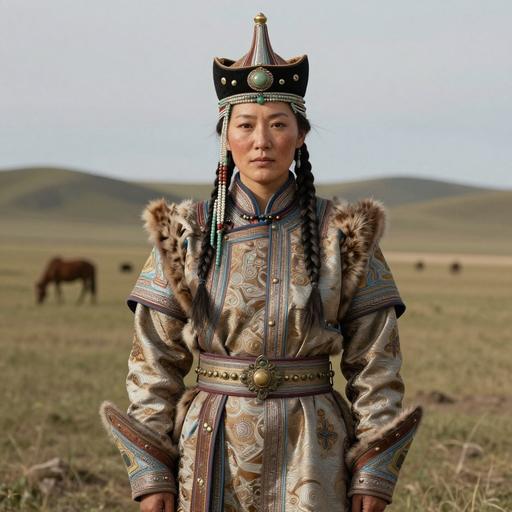
Portrait reconstruction of ZAR002
Ancient Individual

A woman buried in Mongolia in the Middle Ages era

ZAR002
1000 CE - 1500 CE
Female
Late Medieval Bulgan, Mongolia
Mongolia
Scroll to begin
Chapter I

Identity

The biological and cultural markers that define this ancient individual

Sample ID

ZAR002

Date Range

1000 CE - 1500 CE

Biological Sex

Female

mtDNA Haplogroup

F1

Cultural Period

Late Medieval Bulgan, Mongolia

Chapter II

Place

Where this individual was discovered

Country Mongolia
Locality Bulgan. Zaraa Tolgoi
Chapter III

Time

When this individual lived in the broader context of human history

ZAR002 1000 CE - 1500 CE
Chapter IV

Story

The narrative of this ancient life

The Late Medieval period in Bulgan, Mongolia, is an era deeply intertwined with the waning years of the Mongol Empire. Bulgan is a province located in northern Mongolia, an area historically significant due to its geographical positioning and its role within the broader context of Mongol history, culture, and administration.

Historical Context: During the Late Medieval period, approximately from the late 14th to the early 16th centuries, the region of Bulgan was under the influence of the Mongol Empire, which at its zenith was the largest contiguous empire in history. The Empire's fragmentation began in the mid-13th century, leading to a period known as the Pax Mongolica, where trade and cultural exchange flourished along the Silk Road, albeit with regional tensions and power struggles.

By the late medieval period, the Empire had fragmented into several khanates, and while Bulgan did not serve as the epicenter of Mongol power, it was nevertheless integral to the socio-political landscape of the era. Bulgan, with its fertile valleys and strategic location, was important for pastoralism and served as a waypoint for trade routes that traversed central and northern Asia.

Society and Culture: The social structure of late medieval Bulgan was deeply influenced by the nomadic and semi-nomadic lifestyle of the Mongol people, who were traditionally organized into tribes and clans. Livestock, particularly horses, sheep, goats, and camels, was central to their way of life, both economically and culturally. Herding was the main occupation, and the people's lives were tailored around the seasonal migrations necessary for grazing their animals.

The Mongol society in Bulgan was characterized by a strong hierarchical structure which was patriarchal and clan-based. Social cohesion and governance were maintained through a system of traditional laws known as the Yassa, instituted by Genghis Khan. The Yassa fostered a sense of order, unity, and identity among the diverse tribes, even as the political landscape shifted with the waning influence of the centralized Mongol authority.

Religion and Belief Systems: Religious practices in Bulgan during this period were a mix of traditional Mongol shamanistic beliefs and the influences of Tibetan Buddhism, which began to take root during the late medieval period. Shamans played a critical role in the community, acting as spiritual leaders who conducted rituals and served as intermediaries between the physical and spiritual worlds. Over time, however, Buddhism began to gain predominance, influencing local customs, art, architecture, and even politics.

Economy and Trade: Economically, Bulgan was part of a vast network of trade routes that facilitated the exchange of goods, culture, and technology across the Eurasian continent. While primarily pastoral, the region also engaged in limited agriculture, benefiting from its fertile areas. The Mongol Empire's control over the Silk Road helped Bulgan receive and transmit goods such as silk, spices, textiles, and precious metals, although by the late medieval period, this control was diminished as regional powers arose.

Architecture and Art: In terms of architecture, the late medieval period in Bulgan would have seen a blend of traditional yurts or gers, the portable, felt-covered dwellings of the Mongols, and more permanent structures influenced by Buddhist architecture as monasteries began to appear. Art was predominantly expressed through textiles, weaponry, and religious iconography, reflecting both the nomadic lifestyle and the growing influence of Buddhism.

Political Structures: Politically, Bulgan was influenced by the power struggles of neighboring regions and the shifting alliances within the broader Mongol territories. Local governance was often administered by tribal leaders or princes who swore allegiance to a greater khanate, participating in the complex web of loyalties and betrayals characteristic of Mongol politics during this era.

In conclusion, late medieval Bulgan was a tapestry of traditional Mongol customs, emerging Buddhist practices, and the resultant cultural synthesis of these influences. It depicted a society in transition, shaped by its imperial past, yet moving gradually into a new phase influenced by both indigenous traditions and external cultures.

Chapter V

Genetics

The genetic ancestry of this ancient individual

Ancient Genetic Admixture

This analysis compares the DNA profile of ZAR002 with ancient reference populations, showing the genetic composition in terms of prehistoric ancestral groups.

Ancient Asians 64.6%
Neolithic Farmers 14.3%
Western Steppe Pastoralists 11.1%
Ancient Native Americans 5.7%
Ancient Oceanians 4.3%

Modern Genetic Admixture

This analysis compares the DNA profile with present-day reference populations, showing what percentage of genetic makeup resembles modern populations from different regions.

Asia 83.6%
Chinese & Southeast Asian 62.4%
Chinese 49.3%
Indonesian Khmer Thai Myanma 13.1%
Northern Asian 16.9%
Mongolian 14.5%
Siberian 2.4%
Central Asian, Northern Indian & Pakistani 4.2%
Indian 4.2%
Europe 16.5%
Southern European 12.8%
Italian 11.0%
Balkan 1.8%
Northwestern European 2.3%
Finnish 1.6%
Scandinavian 0.7%
Eastern European 1.4%

Closest Modern Populations

These are the modern populations showing the closest statistical alignment to A woman buried in Mongolia in the Middle Ages era, ranked by genetic distance. Lower distance values indicate closer statistical similarity.

1
Dongxiang
10.6238
2
Kirghiz China
11.0945
3
Kazakh China
11.1145
4
Kirghiz
11.3826
5
Salar
11.3953
6
Kazakh Xinjiang
11.7293
7
Dungan
11.8139
8
Kirghiz Tajikistan Pamir
11.8651
9
Kazakh
12.1920
10
Yuku
12.3852
Chapter VI

Context

Other ancient individuals connected to this sample

Sources

References

Scientific publications and genetic data

Scientific Publication

A Dynamic 6,000-Year Genetic History of Eurasia's Eastern Steppe

Authors Jeong C, Wang K, Wilkin S
Abstract

The Eastern Eurasian Steppe was home to historic empires of nomadic pastoralists, including the Xiongnu and the Mongols. However, little is known about the region's population history. Here, we reveal its dynamic genetic history by analyzing new genome-wide data for 214 ancient individuals spanning 6,000 years. We identify a pastoralist expansion into Mongolia ca. 3000 BCE, and by the Late Bronze Age, Mongolian populations were biogeographically structured into three distinct groups, all practicing dairy pastoralism regardless of ancestry. The Xiongnu emerged from the mixing of these populations and those from surrounding regions. By comparison, the Mongols exhibit much higher eastern Eurasian ancestry, resembling present-day Mongolic-speaking populations. Our results illuminate the complex interplay between genetic, sociopolitical, and cultural changes on the Eastern Steppe.

G25 Coordinates

The G25 coordinates for sample ZAR002 can be used for detailed admixture analysis in our G25 Studio tool.

ZAR002,0.04269238,-0.27188606,0.01466768,-0.02760832,0.0424512,0.02015252,-0.01053674,-0.01337588,-0.0099727,-0.00749044,-0.0178915,-0.00665242,0.00929616,-0.0139099,-0.00471332,-0.00195788,-0.00200144,-0.00036928,-0.00608356,-0.0106589,0.00950252,0.01025986,0.00886868,0.0009794,-4.431E-05
Analyze in G25 Studio
Use code for 40% off Expires Feb 27