Menu
Store
Blog
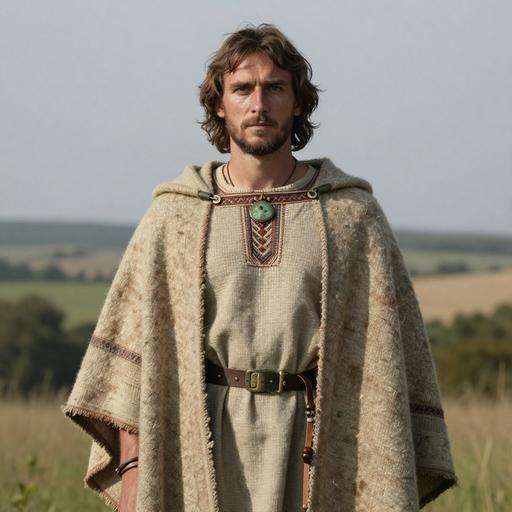
Portrait reconstruction of BR2
Ancient Individual

A man buried in Hungary in the Bronze Age era

BR2
987 BCE - 833 BCE
Male
Piliny-Kyjatice Culture
Hungary
Scroll to begin
Chapter I

Identity

The biological and cultural markers that define this ancient individual

Sample ID

BR2

Date Range

987 BCE - 833 BCE

Biological Sex

Male

mtDNA Haplogroup

K1a1a

Y-DNA Haplogroup

J-Y17946

Cultural Period

Piliny-Kyjatice Culture

Chapter II

Place

Where this individual was discovered

Country Hungary
Locality Ludas-Varjú-dűlő (Heves County, Gyöngyös)
Coordinates 47.7251, 20.0862
Chapter III

Time

When this individual lived in the broader context of human history

BR2 987 BCE - 833 BCE
Chapter IV

Story

The narrative of this ancient life

The Piliny-Kyjatice Culture is a fascinating archaeological culture that is situated within the broader context of the Urnfield cultures of the Late Bronze Age in Central Europe. The Piliny and Kyjatice cultures are often considered as interconnected phases or regional manifestations of the larger Urnfield cultural complex. This culture is primarily located in what is now northern Hungary and southern Slovakia, flourishing approximately between 1300 BCE and 700 BCE. The culture is named after the sites at Piliny in Hungary and Kyjatice in Slovakia where significant archaeological discoveries have been made.

Geographic and Chronological Context

Geographic Extent

The Piliny-Kyjatice Culture predominately spreads across the Upper Tisza Basin, extending into areas that are now part of Slovakia. This region is characterized by its varied terrain, including fertile lowlands and forested highlands, providing diverse resources for prehistoric inhabitants. The natural boundaries formed by the rivers and mountains in the area played a significant role in shaping the settlement patterns.

Chronological Placement

The culture emerges during the Late Bronze Age, a period characterized by significant social and technological advancements. It marks an era when bronze became extensively used for tools, weapons, and ornaments. The integration into the Urnfield Culture, known for its distinctive cremation burial practices, marks a significant cultural and societal evolution during this time.

Cultural Characteristics

Settlements

The Piliny-Kyjatice Culture is known for extensive fortified settlements, usually located on hilltops or elevated terrains. These sites reveal that inhabitants placed a high value on defensible positions, which suggests concerns over security, possibly due to intergroup conflicts or external threats. Dwellings within these settlements were typically constructed using wood and clay, suggesting a semi-permanent residential pattern aligned with an agrarian lifestyle.

Economy and Subsistence

Agriculture played a critical role in the economy of the Piliny-Kyjatice Culture. The cultivation of cereals, such as wheat and barley, along with the rearing of domesticated animals, including cattle, pigs, and sheep, formed the subsistence base. Additionally, evidence of hunting and foraging indicates a diverse diet supplemented by wild fauna and flora.

Craftsmanship, particularly in metalwork, was highly developed. The production of bronze tools and ornaments indicates not only a proficiency in metalworking but also a well-established trade network that extended across Central and Eastern Europe. Pottery from this culture is of notable interest, characterized by well-made and decorated vessels that have been found in both domestic and burial contexts.

Burial Practices

One of the defining features of the Piliny-Kyjatice Culture is its funerary customs, which align with the broader Urnfield tradition of cremation. The deceased were cremated, and their remains were placed in urns, often accompanied by grave goods that included pottery, weapons, and personal ornaments. These funerary rites reflect complex beliefs surrounding death and the afterlife, where ancestors played a significant role in the social and religious spheres.

Art and Symbols

Artifacts from the Piliny-Kyjatice Culture showcase skilled artistry in metalwork and ceramics. Ornamentation often included geometric patterns, spirals, and motifs that may hold symbolic or decorative purposes. The designs on pottery and metal items suggest a complex aesthetic sense and possibly encoded cultural meanings.

Social Structure and Organization

The social hierarchy in the Piliny-Kyjatice Culture is inferred from burial customs and the distribution of wealth in grave goods. Evidence suggests the presence of a stratified society with elites who wielded control over resources and trade. The construction of fortifications indicates organized communal efforts, possibly under the leadership of chieftains or other authority figures.

Interaction with Neighboring Cultures

The Piliny-Kyjatice Culture was not isolated; rather, it was dynamic and interacted with neighboring cultures such as the Lusatian, Gáva, and the broader Urnfield continuum. These interactions are evident in the exchange of goods and ideas, which facilitated cultural advancements and technological innovations.

Legacy

The Piliny-Kyjatice Culture laid some of the foundational elements for the subsequent Iron Age cultures in the region. As the Bronze Age transitioned into the Iron Age, cultural and technological shifts led to further developments in social organization and material culture in Central Europe.

In summary, the Piliny-Kyjatice Culture is an exemplary representation of the Late Bronze Age societal and cultural formations in Central Europe. It provides crucial insights into the complexities of prehistoric human life, including social structure, economic practices, artistic development, and interactions with contemporary cultures.

Chapter V

Context

Other ancient individuals connected to this sample

Sources

References

Scientific publications and genetic data

Scientific Publication

Genome flux and stasis in a five millennium transect of European prehistory

Authors Gamba C, Jones ER, Teasdale MD
Abstract

The Great Hungarian Plain was a crossroads of cultural transformations that have shaped European prehistory. Here we analyse a 5,000-year transect of human genomes, sampled from petrous bones giving consistently excellent endogenous DNA yields, from 13 Hungarian Neolithic, Copper, Bronze and Iron Age burials including two to high (~22 × ) and seven to ~1 × coverage, to investigate the impact of these on Europe's genetic landscape. These data suggest genomic shifts with the advent of the Neolithic, Bronze and Iron Ages, with interleaved periods of genome stability. The earliest Neolithic context genome shows a European hunter-gatherer genetic signature and a restricted ancestral population size, suggesting direct contact between cultures after the arrival of the first farmers into Europe. The latest, Iron Age, sample reveals an eastern genomic influence concordant with introduced Steppe burial rites. We observe transition towards lighter pigmentation and surprisingly, no Neolithic presence of lactase persistence.

Use code for 40% off Expires Feb 27