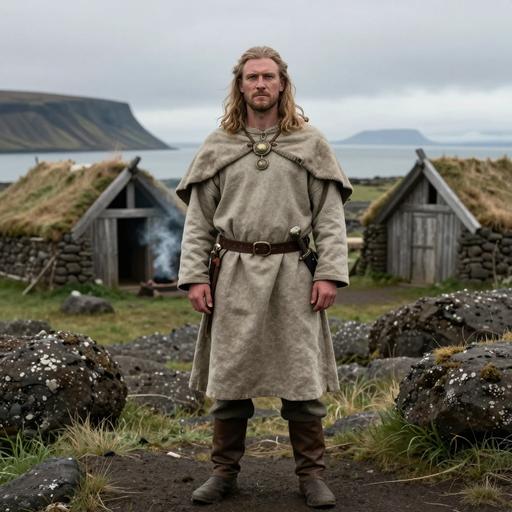
The Pre-Christian period in Iceland, predominantly defined by its Norse culture, spans from the early settlement of the island around the late 9th century until the formal adoption of Christianity in the year 1000 AD. This era, rich in cultural and historical significance, offers a unique glimpse into the lives, beliefs, and societal structures of the early Icelandic settlers, who were largely of Norse origin.
Settlement and Society
The initial settlement of Iceland, beginning around 874 AD, was primarily undertaken by Norse Vikings and people from the wider Scandinavian region, particularly from Norway. This migration was driven by a combination of factors, including political unrest, ambition for new land, and reports of uninhabited, fertile land. Icelandic sagas such as the \Landnámabók" give accounts of these early settlers, known as the "landnámsmenn," and detail the process of land claims and establishment of settlements along the coastlines and arable valleys.
The society that emerged in Iceland during this time was marked by a loose, chieftain-led clan system. The absence of a centralized monarchy meant local chieftains, known as "goðar," held significant power. They acted as both religious and political leaders, overseeing communities and resolving disputes. The Althing, established around 930 AD, became one of the earliest forms of national parliament, where chieftains and freemen gathered annually at Þingvellir to legislate and adjudicate.
Religion and Beliefs
Pre-Christian Icelandic religion was deeply rooted in Norse paganism, with a pantheon of gods and goddesses led by Odin, Thor, and Freyja, among others. This polytheistic belief system was steeped in mythological and cosmological narratives, explaining natural phenomena, human existence, and ethical guidance. Rituals, offerings, and sacrifices were integral to religious practices, often conducted at natural sites considered sacred, such as waterfalls, mountains, or specific groves.
Mythological stories, or myths encapsulated in the Poetic and Prose Eddas, were intrinsic to Icelandic cultural and social life. They emphasized values such as honor, loyalty, and courage. Key mythological concepts such as Yggdrasil, the world tree, and Ragnarök, the prophesied apocalypse, framed their worldview, intertwining daily life with the legendary exploits and interactions of deities and legendary heroes.
Economy and Livelihood
The Icelandic economy during the pre-Christian period was primarily subsistence-based, with agriculture, fishing, herding, and hunting as the mainstay of livelihoods. The challenging terrain and climate necessitated a reliance on hardy cattle, sheep, and horses. The settlers cultivated grains where possible, such as barley, and wild resources like fish, bird eggs, and seal were crucial for survival.
Craftsmanship thrived in areas like metalwork, woodcarving, and textile production, with woolen goods playing an essential trade role. Although isolated geographically, Iceland engaged in trade with neighboring regions, exchanging local produce and crafted items for necessary imports like timber, iron, and luxury goods.
Art and Literature
The artistic and literary culture of pre-Christian Iceland leans heavily on the oral tradition that cultivated the Icelandic sagas and poems. These narratives preserved not only historical events and genealogies but also the Norse myths that shaped the cultural identity. Skaldic poetry, a highly sophisticated form of poetic expression, was used to commemorate great deeds and entertain chieftains and their courts.
Art in pre-Christian Iceland also reflected Norse styles, with intricate carvings found on items like combs, weapons, and tools, depicting scenes from mythology or everyday life in interlace and geometric motifs reminiscent of broader Viking art.
Transition to Christianity
The eventual shift to Christianity, adjudicated at the Althing, marked a significant cultural transition. While the conversion was largely peaceful and pragmatic, it signaled the end of an era defined by Norse pagan practices. Yet, the rich heritage left by the pre-Christian period continued to influence Icelandic culture profoundly, visible even today in its literature, folklore, and national identity.
In conclusion, the pre-Christian period in Iceland was defined by a vibrant Norse culture, characterized by its societal structures, religious beliefs, and the settlers’ ability to adapt to and thrive in a challenging environment. This era laid the foundational cultural and historical identity of Iceland, whose echoes continue to resonate throughout Icelandic society and heritage."