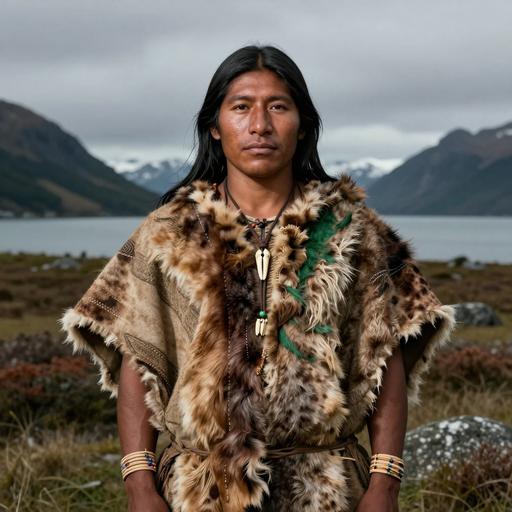
The Yamana, also known as Yaghan people, were indigenous to the region surrounding the Beagle Channel, which is located at the southernmost tip of South America in what is now Tierra del Fuego. Approximately 1500 years ago, the Yamana culture flourished in this harsh and rugged environment. The Beagle Channel region, named after the HMS Beagle which navigated through the area in the early 19th century, provided unique ecological niches that supported the way of life of its indigenous inhabitants. Here, we delve into an extensive description of the Yamana culture during this period:
Geography and Environment
The Beagle Channel area is characterized by a dramatic landscape of fjords, mountains, marine channels, and islands. This challenging environment greatly influenced Yamana life. The climate is characterized by cold temperatures, strong winds, and frequent rain and snow, which shaped the Yamana's adaptation strategies. The region is rich in marine resources, including fish, sea mammals, and shellfish, which were central to Yamana subsistence.
Subsistence and Economy
The Yamana were primarily hunter-gatherers with a heavy reliance on maritime resources. They were skilled navigators and developed impressive canoe technology, using canoes made from bark to traverse the waterways, hunt, and fish. They harvested seals, sea lions, and whales, utilizing every part of the animal for food, clothing, or tools. Fish, shellfish, and other sea creatures augmented their diet, while the land provided limited vegetation like berries and roots.
Social Organization
The Yamana society was organized around small, semi-nomadic bands that traveled the coastal and island regions. These bands were typically extended family units, numbering between 5 to 50 individuals. Social structures were relatively egalitarian, with decisions made through consensus. Leadership might emerge based on experience and knowledge, particularly in navigation and hunting skills, but there was no rigid hierarchy.
Shelter and Clothing
Given the cold climate, the Yamana wore minimal clothing, relying on fires to keep warm. When necessary, they used animal skins such as guanaco fur for cloaks and feet wrapped in sealskin for warmth. To protect against the elements, they built temporary shelters called \tupas," small dome-shaped structures made from bent branches and covered with animal skins or bark, providing insulation from the wind and rain.
Spiritual Beliefs and Practices
The Yamana held a deep spiritual connection with the natural world. They believed in a world inhabited by spirits and saw their land as a sacred entity filled with ancients spirits. Rituals and ceremonies were closely tied to their subsistence activities, particularly hunting, which was seen as a spiritual process requiring respect for animals. Shamanistic practices were integral, with shamans acting as healers and spiritual leaders, mediating between the human and spirit world.
Language and Oral Tradition
The Yamana language, part of the Chonan language family, is characterized by a rich vocabulary particularly concerning navigation and marine life. Oral tradition was key in passing down knowledge, history, myths, and cultural values. Stories often explained natural and spiritual phenomena, teaching moral lessons and cultural heritage through generations.
Relationship with Environment and Technology
Adaptation to their harsh environment was a hallmark of Yamana culture. Their technology was finely tuned to their surroundings, especially their maritime expertise. They constructed canoes from bark, using techniques that suited the available materials and environmental conditions. They developed specialized tools from bone, stone, and wood for hunting and processing their catch.
Decline and Legacy
While thriving for centuries, European contact in the 19th century brought diseases, cultural disruption, and displacement, severely affecting the Yamana population. Despite this, the legacy of the Yamana persists today, both in the cultural memory of Tierra del Fuego's indigenous communities and in the archaeological record. Efforts continue to preserve their language and cultural history, honoring the resilience and adaptability of this remarkable seafaring people.
The Beagle Channel Yamana culture exemplifies a profound connection with a challenging landscape, showcasing the adaptability and ingenuity of indigenous cultures in South America before the colonial era."