Menu
Store
Blog
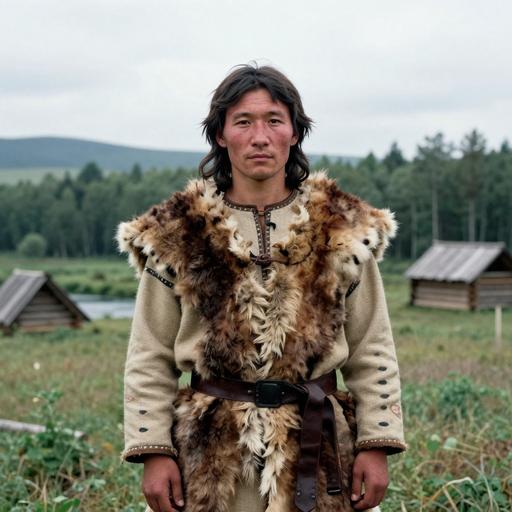
Portrait reconstruction of I1965
Ancient Individual

A man buried in Russia in the Neolithic era

I1965
4037 BCE - 3797 BCE
Male
Northern West Siberian
Russia
Scroll to begin
Chapter I

Identity

The biological and cultural markers that define this ancient individual

Sample ID

I1965

Date Range

4037 BCE - 3797 BCE

Biological Sex

Male

mtDNA Haplogroup

Z1

Y-DNA Haplogroup

C-F1699

Cultural Period

Northern West Siberian

Chapter II

Place

Where this individual was discovered

Country Russia
Locality Ust'-Isha (Altai Krai, Krasnogorsky District, Ust'-Isha Village)
Coordinates 52.1639, 85.9604
Chapter III

Time

When this individual lived in the broader context of human history

I1965 4037 BCE - 3797 BCE
Chapter IV

Story

The narrative of this ancient life

The Northern West Siberian Forest Neolithic era, which roughly spans from around 4000 to 2000 BCE, represents a fascinating and richly textured chapter in the prehistoric period of the vast Siberian region. Characterized by unique adaptations to a challenging environment, this era is vital for understanding the evolution of human societies in the taiga and tundra landscapes. Here's an extensive description of this culture:

Geography and Environment

The Northern West Siberian Forest Neolithic cultures thrived in a region dominated by the expansive boreal forests, interspersed with numerous rivers, lakes, and swamps. This area, part of the greater Siberian expanse, includes portions of present-day Russia covering the Ob and Yenisei River basins. The taiga, a biome characterized by coniferous forests, is the primary landscape, with harsh winters, short summers, and a cool, moist climate. These geographic and climatic conditions shaped the cultural and technological development of the societies that dwelled here.

Subsistence and Economy

The economy of these Neolithic societies largely rested upon a mixed subsistence strategy. Hunting, fishing, and gathering were crucial for survival, with local fauna including reindeer, elk, bear, and various bird species, as well as abundant fish stocks in the rivers and lakes. The people of this era developed sophisticated tools for hunting and fishing, such as spears, harpoons, and nets, crafted from bone, antler, and stone.

Gathering played a complementary role, with communities exploiting the forest's resources like berries, nuts, and roots. There is also evidence of early forms of plant cultivation, although it was not as developed as in more southerly Neolithic cultures. These subsistence activities were often informed by the seasonal availability of resources, leading to potential patterns of semi-nomadism.

Material Culture and Technology

The material culture of the Northern West Siberian Forest Neolithic is defined by its distinct ceramic and lithic technologies. Pottery, often with pointed bases and decorated with pit or comb impressions, is typical of this era. These ceramics were used for cooking and storage, reflecting the increasing sedentism compared to earlier purely hunter-gatherer cultures.

Stone tool technology saw the continued use and refinement of axes, scrapers, and blades, essential for forest-clearing and wood-working. The people also worked with organic materials like wood, bone, and antler, producing a diverse array of tools, ornaments, and weapons.

Social Structure and Settlement Patterns

Information on social structures during this period is largely inferential, pieced together from archaeological evidence. These communities likely operated on a relatively egalitarian basis, common in foraging societies. The mobility required by their subsistence strategies would have encouraged fluid social structures, though the advent of more permanent settlements may have initiated changes.

Settlements, often situated near water sources, ranged from temporary camps to more permanent villages, depending on resource availability and season. Semi-subterranean dwellings or log houses insulated against the cold winters have been discovered, indicating an adaptation to exceptionally harsh environmental conditions.

Spiritual and Cultural Life

The spiritual life of the Northern West Siberian Forest Neolithic people is discernible through their burial practices and art. Graves often contained tools, ornaments, and offerings, suggesting a belief in an afterlife. Animism and shamanistic practices would have played a significant role in their worldviews, with animals likely representing spiritual entities or ancestors.

The artistry included carvings of animals and anthropomorphic figures, indicating a symbolic and possibly ritualistic dimension to their art. Totemic practices, possibly linked to clan identity or spiritual beliefs, may have been part of their cultural expression.

Interactions and Legacy

Evidence of trade networks is seen in the long-distance exchange of materials such as flint and various ornamental items, suggesting interactions and contacts with neighboring cultures to the east and west. These exchanges would have facilitated not only material trade but also the flow of ideas and innovations.

The Northern West Siberian Forest Neolithic era set the stage for subsequent cultural developments in the region, influencing the Metal Age tribes and enduring into the historical period. The adaptability and resilience of these peoples in exploiting and managing their environment speaks to the profound human capacity for innovation in even the most challenging landscapes.

In conclusion, the Northern West Siberian Forest Neolithic culture offers a compelling glimpse into the adaptability and ingenuity of prehistoric communities as they navigated a vast and unforgiving environment. Their legacy is etched into the archaeological landscape of Siberia, providing critical insights into the broader narrative of human prehistory.

Chapter V

Context

Other ancient individuals connected to this sample

Sources

References

Scientific publications and genetic data

Scientific Publication

Three assays for in-solution enrichment of ancient human DNA at more than a million SNPs

Authors Rohland N, Mallick S, Mah M
Abstract

The strategy of in-solution enrichment for hundreds of thousands of single-nucleotide polymorphisms (SNPs) has been used to analyze >70% of individuals with genome-scale ancient DNA published to date. This approach makes it economical to study ancient samples with low proportions of human DNA and increases the rate of conversion of sampled remains into interpretable data. So far, nearly all such data have been generated using a set of bait sequences targeting about 1.24 million SNPs (the "1240k reagent"), but synthesis of the reagent has been cost-effective for only a few laboratories. In 2021, two companies, Daicel Arbor Biosciences and Twist Bioscience, made available assays that target the same core set of SNPs along with supplementary content. We test all three assays on a common set of 27 ancient DNA libraries and show that all three are effective at enriching many hundreds of thousands of SNPs. For all assays, one round of enrichment produces data that are as useful as two. In our testing, the "Twist Ancient DNA" assay produces the highest coverages, greatest uniformity on targeted positions, and almost no bias toward enriching one allele more than another relative to shotgun sequencing. We also identify hundreds of thousands of targeted SNPs for which there is minimal allelic bias when comparing 1240k data to either shotgun or Twist data. This facilitates coanalysis of the large data sets that have been generated using 1240k and Twist capture, as well as shotgun sequencing approaches.

Use code for 40% off Expires Mar 01