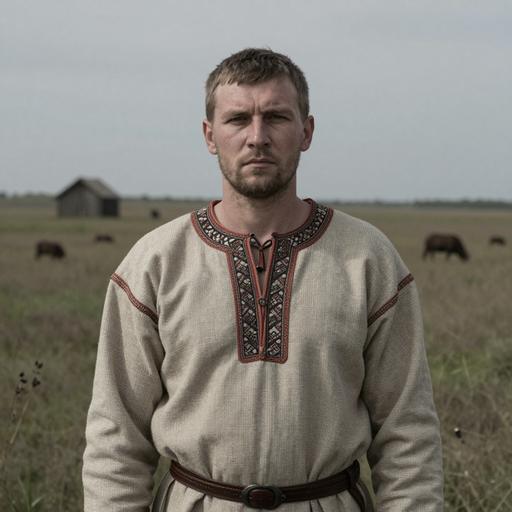
Medieval Kolyma refers to the region surrounding the Kolyma River in what is now northeastern Siberia, Russia, during the medieval period. This era is characterized by the intersection of Paleo-Siberian and emerging influences from neighboring areas, reflecting a unique cultural and social evolution against the challenging backdrop of Siberia's harsh climate.
Geography and Environment
The Kolyma region is known for its subarctic climate, marked by long, brutally cold winters and short, mild summers. The terrain is dominated by permafrost, tundra, taiga forests, and numerous rivers and lakes. The harsh environment significantly influenced the livelihoods of its inhabitants.
Inhabitants
The primary inhabitants during this period were likely the indigenous Paleo-Siberian peoples, such as the Yukaghir and possibly early Chukchi and Evenki groups. These groups were distinct from the later, more populous Yukaghir of historical accounts. Their way of life centered around a nomadic or semi-nomadic existence, heavily reliant on hunting, fishing, and reindeer herding.
Culture and Social Structure
The social structure of medieval Kolyma's Paleo-Siberian peoples was typically organized around small, kin-based groups. Leadership was likely informal and based on personal prowess and age. Storytelling, oral tradition, and shamanistic beliefs played vital roles in maintaining cultural identity and transmitting knowledge.
Spiritual Beliefs
Shamanism was central to spiritual life. Shamans, as intermediaries between the human and spirit worlds, conducted rituals and ceremonies to ensure successful hunts, protect the community from malevolent spirits, and cure illnesses. Animism was prevalent, with the natural world, animals, and celestial bodies all regarded as having spiritual significance.
Material Culture
Given the environmental constraints, the material culture was adapted to the cold climate. Clothing was made from animal skins and furs, providing essential insulation. Dwellings were likely temporary structures, such as skin tents, designed for mobility.
Tools and implements were crafted from available materials like bone, antler, and stone. The technology included sleds and canoes, enabling efficient movement across snow and water.
Economy and Subsistence
The economy was subsistence-based, relying on hunting Siberian wildlife, including deer, elk, and fish, which were abundant in the rivers. Trade with neighboring groups may have occurred, though evidence is sparse. Such exchanges likely involved goods difficult to source locally, such as metal tools, which were precious and often reworked from earlier items or obtained from trade networks extending towards the south or west.
Interaction with Other Cultures
Medieval Kolyma seemed relatively isolated due to its geographical challenges. However, there could have been interactions with nearby Siberian cultures, facilitating an exchange of ideas and goods. These contacts might have introduced new technologies or cultural practices, albeit slowly and sporadically.
Legacy and Transition
The medieval era in this remote part of Siberia eventually transitioned into more documented historical periods, with increased Russian exploration and eventual incorporation into the expanding Russian Empire. This brought significant cultural changes, integrating Kolyma more fully into broader Siberian and Russian historical narratives.
Conclusion
Medieval Kolyma represents a fascinating period of adaptation and resilience. The Paleo-Siberian peoples of this region developed a unique cultural identity forged in one of Earth's harshest climates, sustaining themselves through a blend of ancient practices and resourcefulness. While much about them remains enveloped in mystery, ongoing archaeological and anthropological studies continue to shed light on their intriguing history.