Menu
Store
Blog
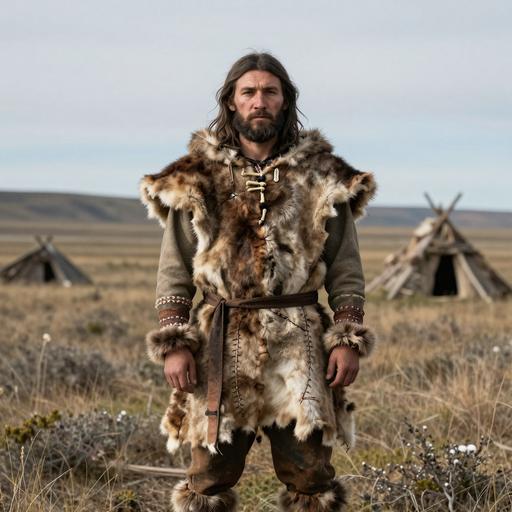
Portrait reconstruction of Yana1
Ancient Individual

A man buried in Russia in the Pleistocene era

Yana1
30250 BCE - 29550 BCE
Male
Upper Paleolithic Yana, Russia
Russia
Scroll to begin
Chapter I

Identity

The biological and cultural markers that define this ancient individual

Sample ID

Yana1

Date Range

30250 BCE - 29550 BCE

Biological Sex

Male

mtDNA Haplogroup

U2'3'4'7'8'9

Y-DNA Haplogroup

P-FT344715

Cultural Period

Upper Paleolithic Yana, Russia

Chapter II

Place

Where this individual was discovered

Country Russia
Locality Yana RHS
Chapter III

Time

When this individual lived in the broader context of human history

Yana1 30250 BCE - 29550 BCE
Chapter IV

Story

The narrative of this ancient life

The Upper Paleolithic era marks a significant chapter in human history, characterized by the development of advanced tools, art, and societal structures. The Yana River region in Russia, situated in the Siberian Arctic, provides a fascinating glimpse into the life and culture of Upper Paleolithic humans, roughly dating from 40,000 to 10,000 years ago. This era is pivotal as it represents a time when Homo sapiens were expanding across Europe and Asia, and the Yana site's archaeological discoveries have contributed to our understanding of human adaptation to extreme environments.

Geographical Context

The Yana River area is located above the Arctic Circle, presenting a harsh climate with long, cold winters and short, cool summers. During the Upper Paleolithic period, the region was part of the landmass known as Beringia, which included parts of present-day Russia and Alaska. This land bridge facilitated migration between Asia and North America, making the Yana site particularly important in understanding prehistoric migration patterns.

Archaeological Discoveries

In the Yana River region, several significant archaeological sites have been discovered, with one of the most notable being the Yana RHS (Rhinoceros Horn Site). Excavations have revealed a wealth of artifacts, including sophisticated tools, ornaments, and remnants of dwellings. These discoveries underscore the ingenuity and adaptability of humans during this era.

Tools and Technology

The inhabitants of the Yana region were adept at crafting tools primarily from bone, ivory, and stone. The presence of rhinoceros and mammoth bones suggests a reliance on large game for both sustenance and materials. Tools such as spear points, knives, and scrapers indicate a complex hunting and butchering strategy. The use of microblades, small and sharp stone fragments set into bone or wooden shafts, exemplifies the technological advancements of the time.

Art and Ornamentation

Ornamental artifacts, including pendants made from animal teeth and meticulously carved ivory beads, reflect the cultural and symbolic aspects of Yana society. These adornments could have played roles in social or spiritual practices, indicating a society rich in ceremonial or religious life. The evidence of art and personal decoration highlights the cognitive and creative development characteristic of Upper Paleolithic cultures.

Societal Structure and Lifestyle

The people of the Upper Paleolithic Yana were likely organized in small bands or tribes that were highly mobile, following herds of large game such as mammoths, woolly rhinoceroses, and reindeer. Their lifestyle was adapted to the Arctic environment, often moving to exploit seasonal resources. The discovery of semi-permanent structures suggests that some groups returned to the same sites periodically, a testament to their understanding of the land and resources.

Based on the archaeological evidence, it is probable that these communities had sophisticated social structures with division of labor based not only on age and gender but likely on skill and experience as well. The presence of diverse tools indicates varied daily tasks and specialized roles within the group.

Environmental Adaptation

Surviving in the severe climates of the Siberian Arctic required significant adaptation. The Yana River people developed strategies to hunt animals efficiently in these conditions, utilizing the natural geography to their advantage. They would have needed effective clothing and shelter to withstand the cold, suggesting an intricate knowledge of animal skins and insulating materials.

Conclusion

The Upper Paleolithic Yana culture of Russia exhibits a remarkable example of human adaptation and survival in one of the planet's most demanding environments. The artifacts uncovered from the region depict a society of humans who were innovative and resourceful, equipped with advanced technology and rich cultural traditions. Their story is a testament to the enduring spirit and complexity of early human societies, providing a valuable window into the prehistoric past and the evolutionary journey of our species.

Chapter V

Context

Other ancient individuals connected to this sample

Sources

References

Scientific publications and genetic data

Scientific Publication

The population history of northeastern Siberia since the Pleistocene

Authors Sikora M, Pitulko VV, Sousa VC
Abstract

Northeastern Siberia has been inhabited by humans for more than 40,000 years but its deep population history remains poorly understood. Here we investigate the late Pleistocene population history of northeastern Siberia through analyses of 34 newly recovered ancient genomes that date to between 31,000 and 600 years ago. We document complex population dynamics during this period, including at least three major migration events: an initial peopling by a previously unknown Palaeolithic population of 'Ancient North Siberians' who are distantly related to early West Eurasian hunter-gatherers; the arrival of East Asian-related peoples, which gave rise to 'Ancient Palaeo-Siberians' who are closely related to contemporary communities from far-northeastern Siberia (such as the Koryaks), as well as Native Americans; and a Holocene migration of other East Asian-related peoples, who we name 'Neo-Siberians', and from whom many contemporary Siberians are descended. Each of these population expansions largely replaced the earlier inhabitants, and ultimately generated the mosaic genetic make-up of contemporary peoples who inhabit a vast area across northern Eurasia and the Americas.

Use code for 40% off Expires Feb 27