Menu
Store
Blog
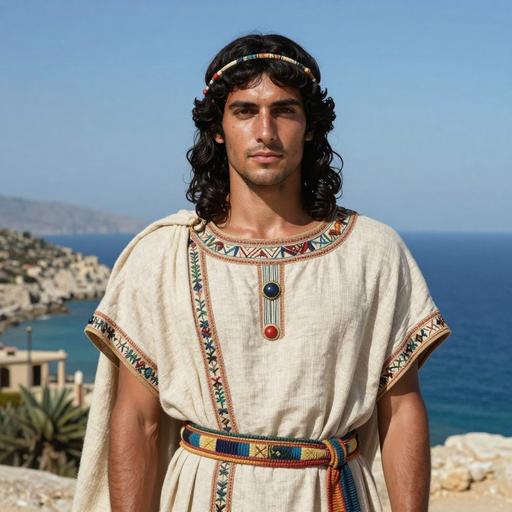
Portrait reconstruction of kro009
Ancient Individual

A man buried in Greece in the Bronze Age era

kro009
1268 BCE - 1060 BCE
Male
Late Minoan Culture
Greece
Scroll to begin
Chapter I

Identity

The biological and cultural markers that define this ancient individual

Sample ID

kro009

Date Range

1268 BCE - 1060 BCE

Biological Sex

Male

mtDNA Haplogroup

H5u1

Y-DNA Haplogroup

R-FGC45993

Cultural Period

Late Minoan Culture

Chapter II

Place

Where this individual was discovered

Country Greece
Locality Heraklion (Crete)
Coordinates 35.2395, 24.9883
Chapter III

Time

When this individual lived in the broader context of human history

kro009 1268 BCE - 1060 BCE
Chapter IV

Story

The narrative of this ancient life

The Late Minoan culture represents the final phases of the Minoan civilization on the island of Crete, spanning from approximately 1600 BC to 1100 BC. This era marks the height and eventual decline of a society known for its artistic achievements, architectural innovations, and extensive trade networks. Here's an extensive look into various aspects of the Late Minoan culture:

Historical Context

  • Timeline and Phases:

    • The Late Minoan (LM) period is traditionally divided into three sub-phases: Late Minoan I (1600-1450 BC), Late Minoan II (1450-1400 BC), and Late Minoan III (1400-1100 BC).
    • This period witnessed significant events such as natural disasters, possibly including the volcanic eruption on the nearby island of Thera, which had widespread ramifications throughout the Aegean.
  • Political Landscape:

    • Although earlier periods suggest a largely peaceful society, the Late Minoan era saw increased fortifications and influences from foreign powers, indicating geopolitical shifts and possible conflicts.
    • By LM III, the Minoans came under the influence or direct control of Mycenaean Greeks, as indicated by the introduction of Linear B script, which was used for administrative purposes.

Society and Culture

  • Social Structure:

    • Unlike many contemporaneous civilizations, Minoan society exhibited signs of egalitarianism with a decentralized power structure. The society was likely organized around a theocratic system with priest-kings or queens, reflected in the religious motifs found in art and architecture.
    • The presence of large-scale palace complexes, such as those at Knossos, Phaistos, and Malia, implies a complex hierarchy and a degree of social stratification.
  • Economy and Trade:

    • The Late Minoan economy was robust, with agriculture (grains, olives, and grapes) forming the backbone. The island's geographic location made it a central hub in maritime trade networks connecting Egypt, the Near East, and other Aegean cultures.
    • Minoans traded goods such as pottery, saffron, textiles, and crafts for precious metals and other luxuries, contributing to their wealth and the cosmopolitan nature of the society.

Art and Architecture

  • Artistic Achievements:

    • Late Minoan art is renowned for its naturalistic and fluid style, featuring vibrant frescoes depicting religious ceremonies, nature, and everyday life. The \Prince of the Lilies" fresco and those from Akrotiri on Thera are exemplary.
    • Pottery from this period, such as the famous Kamares ware, exhibited complex patterns and motifs, indicating high levels of craftsmanship.
  • Architecture:

    • Minoan architecture peaked with the construction of large, complex palatial structures featuring advanced engineering, such as intricate drainage systems and multistoried buildings.
    • The Palace at Knossos is the most famous, with its sprawling layout, central courtyard, storerooms, and elaborate frescoes.

Religion and Beliefs

  • Deities and Rituals:

    • Late Minoans practiced polytheism with an emphasis on goddess worship, possibly matrilinear, reflecting the prominence of female figures, such as the "Snake Goddess," in their religious iconography.
    • Religious rituals often took place in open-air sanctuaries, hilltop shrines, and caves. Bull-leaping and other ceremonial activities are depicted frequently, suggesting their centrality in Minoan religious life.
  • Funerary Practices:

    • The Minoans practiced burial rituals involving larnakes (terracotta chests), tombs, and tholos (beehive) structures, which sometimes housed multiple burials.
    • Grave goods and decorated sarcophagi indicate beliefs in an afterlife, although much of their mythology remains speculative due to the lack of decipherable written records.

Decline and Legacy

  • Decline Factors:

    • A combination of natural disasters, including earthquakes and the possible effects of the Thera eruption, along with internal decline and external pressures like Mycenaean conquest, contributed to their downfall in the Late Minoan III phase.
  • Cultural Influence:

    • The influence of Minoan culture on surrounding regions, particularly Mycenaean Greece, is significant. Elements of Minoan art, architecture, and religious practices were integrated and adapted, leaving a lasting legacy in the broader ancient Mediterranean world.

In conclusion, the Late Minoan culture represents a complex, dynamic period characterized by impressive achievements in art, architecture, and trade, with a society rooted in religious and social systems distinctly different from contemporaneous civilizations. Despite their eventual decline, the Minoans left an indelible mark on history, influencing the cultures that followed in the Aegean region."

Chapter V

Context

Other ancient individuals connected to this sample

Sources

References

Scientific publications and genetic data

Scientific Publication

Ancient DNA reveals admixture history and endogamy in the prehistoric Aegean

Authors Skourtanioti E, Ringbauer H, Gnecchi Ruscone GA
Abstract

The Neolithic and Bronze Ages were highly transformative periods for the genetic history of Europe but for the Aegean-a region fundamental to Europe's prehistory-the biological dimensions of cultural transitions have been elucidated only to a limited extent so far. We have analysed newly generated genome-wide data from 102 ancient individuals from Crete, the Greek mainland and the Aegean Islands, spanning from the Neolithic to the Iron Age. We found that the early farmers from Crete shared the same ancestry as other contemporaneous Neolithic Aegeans. In contrast, the end of the Neolithic period and the following Early Bronze Age were marked by 'eastern' gene flow, which was predominantly of Anatolian origin in Crete. Confirming previous findings for additional Central/Eastern European ancestry in the Greek mainland by the Middle Bronze Age, we additionally show that such genetic signatures appeared in Crete gradually from the seventeenth to twelfth centuries BC, a period when the influence of the mainland over the island intensified. Biological and cultural connectedness within the Aegean is also supported by the finding of consanguineous endogamy practiced at high frequencies, unprecedented in the global ancient DNA record. Our results highlight the potential of archaeogenomic approaches in the Aegean for unravelling the interplay of genetic admixture, marital and other cultural practices.

Use code for 40% off Expires Mar 01