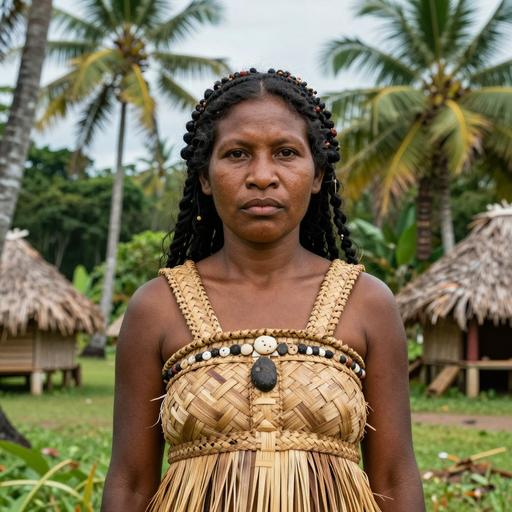
Vanuatu, located in the South Pacific Ocean, is an archipelago that has a rich history deeply intertwined with the movements and cultures of Austronesian peoples. Around 2,200 years ago, Vanuatu was settled by these seafaring Austronesians, who would later contribute significantly to the cultural and genetic tapestry of the Pacific Islands.
Settlement and Culture
Origins and Settlement:
The Austronesian expansion, which began around 5,000 years ago, saw these peoples spread across vast distances in the Pacific Ocean. Their expansion is one of the most remarkable feats of human migration. By 2,200 years ago, Austronesian navigators had reached and settled in Vanuatu. These early settlers were part of the Lapita culture, renowned for their advanced navigation skills, distinctive pottery, and thriving maritime economy.
Lapita Culture:
The Lapita people are considered the direct ancestors of the Polynesians, Micronesians, and some coastal Melanesians. They are best known archaeologically for their intricately decorated pottery, which features geometric patterns and anthropomorphic motifs. This pottery serves as a crucial marker for tracing the spread of Austronesian peoples across the Pacific. By 2,200 BP (Before Present), the Lapita cultural influence in Vanuatu was evolving into new local styles, but aspects of the Lapita heritage still persisted.
Social Organization:
Vanuatuan society of the time would likely have been organized into small, kin-based communities that were part of larger clan systems. Leadership roles were probably held by chiefs, who gained authority through hereditary lines and demonstrated skills in leadership, warfare, oracles, and negotiation. The society was likely hierarchical, with a complex social structure that emphasized kinship, reciprocal relations, and community cooperation.
Subsistence and Economy:
The Austronesians in Vanuatu practiced an economy based on a combination of agriculture, fishing, and trade. They cultivated root crops like taro and yam, which were staple foods alongside fruits like bananas and coconuts. The volcanic soil and tropical climate of Vanuatu are ideal for agriculture, permitting a diverse range of crops. Fishing, both from coastal areas and using advanced canoe technology for pelagic (open-sea) catches, supplemented their diet and economy.
Trade and Interaction:
2,200 years ago, Vanuatu was part of wide trade networks extending across the Pacific. The exchange of goods such as pottery, shell ornaments, obsidian, and valuable stones facilitated cultural interaction and dissemination of ideas. These networks were crucial for maintaining connections with other Austronesian communities, as well as with the indigenous Melanesian populations.
Art, Religion, and Technology
Art and Craftsmanship:
The artistic expression of Vanuatu's inhabitants around 2,200 years ago was evident in their pottery, wood carvings, and the use of body adornments like tattoos and jewelry, crafted from shells and stones. This art was often deeply symbolic, intertwined with spiritual beliefs and social status within the community.
Religious Beliefs:
The spiritual life of these early Vanuatuan societies was richly animistic. They revered natural elements and sought to maintain harmonious relationships with various spiritual entities believed to inhabit the world around them. Ancestor worship also held a central place in their cosmology, with rituals and ceremonies intended to honor and gain favor from the spirits of the forebears.
Technological Proficiency:
One of the defining features of Austronesian peoples, including those in Vanuatu, was their seafaring technology. They constructed sophisticated outrigger canoes, which allowed them to undertake long-distance voyages across the ocean. Their knowledge of celestial navigation, understanding of ocean currents, and weather patterns were highly advanced, enabling them to explore and settle islands across vast marine distances.
Conclusion
The era around 2,200 years ago was a dynamic period in Vanuatu's history, marked by the blending and transformation of Austronesian cultural traits with the unique ecological and social landscape of the islands. These early Austronesians laid the foundational layers of culture, economy, and social structure that would continue to evolve over the millennia, ultimately shaping the diverse and culturally rich society that Vanuatu is known for today.