Menu
Store
Blog
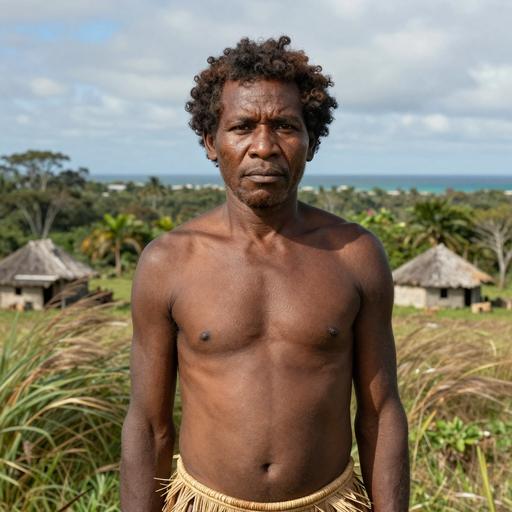
Portrait reconstruction of MH8_merged
Ancient Individual

A man buried in Australia in the Indigenous era

MH8_merged
410 CE - 1788 CE
Male
Aboriginal Australians of Queensland
Australia
Scroll to begin
Chapter I

Identity

The biological and cultural markers that define this ancient individual

Sample ID

MH8_merged

Date Range

410 CE - 1788 CE

Biological Sex

Male

mtDNA Haplogroup

P5a1a

Y-DNA Haplogroup

Not available

Cultural Period

Aboriginal Australians of Queensland

Chapter II

Place

Where this individual was discovered

Country Australia
Locality Mapoon (Queensland, Cape York)
Chapter III

Time

When this individual lived in the broader context of human history

MH8_merged 410 CE - 1788 CE
Chapter IV

Story

The narrative of this ancient life

The Aboriginal Australians of Queensland represent a diverse and rich cultural heritage that has thrived for tens of thousands of years. This vibrant community consists of various groups, each with its unique languages, customs, and traditions shaped by the region's landscapes, from tropical rainforests to arid deserts.

Geographical Context: Queensland is located in the northeastern part of Australia, characterized by a wide range of ecosystems including coastal regions, mountain ranges, and savanna lands. This geographical diversity has played a crucial role in shaping the lifestyles and cultures of the Aboriginal groups residing in the area, such as the Torres Strait Islanders in the far north and other mainland groups.

Cultural Diversity: The Aboriginal people of Queensland are not a monolithic group but rather consist of numerous distinct communities, each with its identity and language. Some of the prominent Aboriginal groups in Queensland include the Yidinji, the Kalkadoon, the Kuku Yalanji, and the Yirrganydji. Each of these groups has developed unique language dialects, spiritual beliefs, and social structures. The Torres Strait Islanders, though often grouped with Aboriginal Australians, have distinct cultural practices influenced by their seafaring heritage.

Language: Aboriginal languages in Queensland are varied, with many groups speaking their distinct dialects. Before European colonization, it is estimated that over 100 languages were spoken in the region, reflecting a rich tapestry of linguistic diversity. However, the effects of colonization have led to the endangerment and extinction of many of these languages. Revival and maintenance efforts are ongoing in various communities to preserve and teach traditional languages to younger generations.

Spirituality and Belief Systems: Aboriginal Australians of Queensland, like other Aboriginal groups across Australia, have a deep spiritual connection with the land. The Dreamtime or Dreaming is a central element of their spiritual belief system, encompassing the creation stories that explain the origins of the earth, its people, and animals. These stories are not just myths but are integrated into daily life, guiding social practices and relationships with nature. Sacred sites are scattered throughout Queensland, serving as places of ceremony and storytelling.

Art and Expression: Art is a vital part of cultural expression among Queensland's Aboriginal communities, reflecting deep spiritual and ancestral connections. Aboriginal art from Queensland is varied and includes rock paintings, bark paintings, body painting, and more contemporary forms such as acrylic paintings and installations. Traditional motifs and symbols are used to convey stories, laws, and traditions.

Social Structure and Community Life: Queensland Aboriginal communities have traditionally been organized into complex kinship systems that govern social interactions, marriage, and community responsibilities. These systems are integral to maintaining group cohesion and ensuring the transmission of knowledge and culture across generations.

Euro-Australian Contact and Colonization: The arrival of Europeans in the 18th and 19th centuries had devastating impacts on Aboriginal communities in Queensland, as it did throughout Australia. Colonization brought about dispossession, the introduction of new diseases, and violent conflict, leading to significant population declines and disruption of traditional lifestyles. Government policies throughout the 19th and 20th centuries, including the forced removal of children known as the Stolen Generations, have caused lasting trauma.

Contemporary Issues and the Path Forward: Today, many Aboriginal Australians in Queensland, as elsewhere, continue to face challenges including socio-economic disadvantages, health disparities, and systemic discrimination. However, there is also a strong push towards cultural revitalization, land rights recognition, and political representation. Aboriginal communities are actively engaged in cultural education, language revival projects, and efforts to pass on traditional knowledge and practices to younger generations.

The Aboriginal Australians of Queensland stand as a testament to resilience and cultural richness. Their enduring traditions and contemporary contributions continue to shape the cultural landscape of Queensland and wider Australia.

Chapter V

Context

Other ancient individuals connected to this sample

Sources

References

Scientific publications and genetic data

Scientific Publication

Ancient nuclear genomes enable repatriation of Indigenous human remains

Authors Wright JL, Wasef S, Heupink TH
Abstract

After European colonization, the ancestral remains of Indigenous people were often collected for scientific research or display in museum collections. For many decades, Indigenous people, including Native Americans and Aboriginal Australians, have fought for their return. However, many of these remains have no recorded provenance, making their repatriation very difficult or impossible. To determine whether DNA-based methods could resolve this important problem, we sequenced 10 nuclear genomes and 27 mitogenomes from ancient pre-European Aboriginal Australians (up to 1540 years before the present) of known provenance and compared them to 100 high-coverage contemporary Aboriginal Australian genomes, also of known provenance. We report substantial ancient population structure showing strong genetic affinities between ancient and contemporary Aboriginal Australian individuals from the same geographic location. Our findings demonstrate the feasibility of successfully identifying the origins of unprovenanced ancestral remains using genomic methods.

Use code for 40% off Expires Mar 01