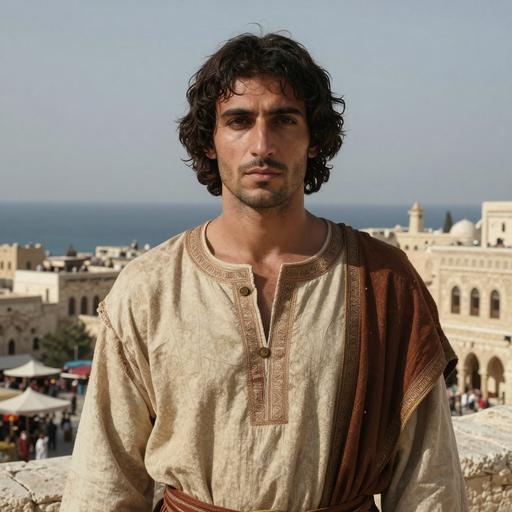
During the Islamic Golden Age, roughly spanning from the 8th to the 13th centuries, Medieval Lebanon was a region of significant cultural, economic, and political dynamism. This era in Lebanon was marked by a complex interplay of various influences, including the legacy of ancient civilizations, Islamic expansion, and the vibrant local cultures.
Political Landscape
Umayyad and Abbasid Rule:
- Initially, the Umayyad Caliphate, with its capital in Damascus, exerted control over the region. Their reign saw the integration of Lebanon into a broader Islamic world.
- Following the Abbasid Revolution in the mid-8th century, the Abbasid Caliphate took control, redirecting the political focus towards Baghdad. While this shifted attention away from Damascus, Lebanon remained strategically important, buffered by the coastal and mountainous terrains.
Local Dynasties:
- Various local powers emerged, including the Druze communities in Mount Lebanon and the Shiite communities in the northern regions. These groups played a pivotal role in local governance, sometimes in alignment with or defiance against Caliphal authority.
Crusader Interactions:
- The arrival of the Crusaders in the late 11th century introduced a new dimension to Lebanon's medieval era. Castles and fortifications, like the Krak des Chevaliers, were established, influencing local politics and economies.
Economic Activities
Trade and Commerce:
- Lebanon’s strategic position along the Mediterranean Sea made it a key node in trading networks. Cities like Tripoli, Beirut, and Sidon thrived as trading hubs, facilitating exchanges between Europe, Africa, and Asia.
- The production and export of silk and textiles became significant, with Beirut and Tripoli emerging as important centers for these industries.
Agriculture:
- The fertile Bekaa Valley supported agricultural production, with olive oil, wine, and grains as staples. This agrarian base was crucial for supporting the urban populations and local economies.
Cultural and Intellectual Life
Multicultural Tapestry:
- Medieval Lebanon was a melting pot of ethnicities and religions. Arabs, Armenians, Maronites, Druze, and others coexisted, creating a culturally rich and diverse society.
- This diversity was reflected in the architectural styles, linguistic expressions, and culinary traditions of the region.
Centers of Learning:
- Influenced by the broader Islamic Golden Age, Lebanon saw the development of educational institutions. Scholars and scribes contributed to a thriving intellectual climate, particularly in the fields of astronomy, medicine, and philosophy.
- Monastic centers, particularly the Maronite monasteries, played a crucial role in preserving and cultivating Syriac and Christian literature.
Artistic Expression:
- Islamic art and architecture flourished, with intricate mosaics and calligraphy adorning religious and public buildings.
- The Crusader influence introduced Romanesque and Gothic elements into Lebanese architecture, further enriching the visual culture.
Religious and Social Dynamics
Islamization and Religious Diversity:
- While Islam became the dominant religion following the Arab conquests, Lebanon maintained a tapestry of religious practices. Christian communities, especially the Maronites, retained significant populations and influence.
- Sufi orders also began to spread, emphasizing mysticism and attracting diverse followers.
Social Hierarchies:
- Society was structured around tribal and familial affiliations, with various clans exerting local influence.
- There was a degree of social mobility facilitated by trade and education, though traditional hierarchies often persisted.
Conclusion
Medieval Lebanon during the Islamic Golden Age was a vibrant and complex society that stood at the crossroads of civilizations. The interplay between local traditions and broader Islamic, Crusader, and Mediterranean influences created a unique cultural landscape. This period set the foundations for Lebanon’s rich historical tapestry, characterized by its diversity and resilience.