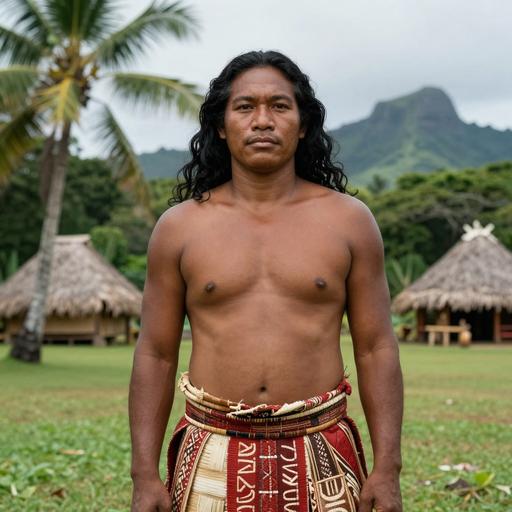
Four centuries ago, around the early 1600s, the islands of French Polynesia were vibrant, thriving communities with rich cultural traditions. Located in the South Pacific Ocean, French Polynesia is an overseas collectivity of France, comprising 118 dispersed islands and atolls, stretching over more than 2,000 kilometers. The culture at this time was primarily shaped by the Indigenous Polynesian people, whose ancestors had arrived in these islands hundreds of years prior.
Societal Structure and Organization
The societal structure of French Polynesia during this era was largely hierarchical, organized into distinct social classes. At the apex were the chieftains, known locally as \Ari'i" or "Ariki," who wielded considerable power and influence. These leaders were often considered sacred, believed to be endowed with "mana," a spiritual force that justified their authority. Beneath the chieftains were various classes, including skilled workers and warriors, who played crucial roles in sustaining the community.
Communities were often organized around extended family units or "familial clans," which managed land and resource use. Decisions within the clan were made collectively, although deference was given to the wisdom and leadership of clan elders and chiefs.
Economy and Subsistence
Polynesians four centuries ago were skilled navigators and fishermen, relying heavily on the ocean for sustenance. Fishing techniques were sophisticated, using tools like hooks, nets, and traps. Seafood was a crucial element of their diet, supplemented by agriculture. They cultivated crops like taro, breadfruit, yams, and coconuts, which were staples in their daily meals.
Land was communally owned and managed, with specific plots allocated to different families within a clan. This ensured that resources were shared equitably and sustainably, with careful attention paid to the environmental impacts of agriculture.
Navigation and Exploration
A significant hallmark of Polynesian culture during this era was their extraordinary skills in navigation and seafaring. Using large, double-hulled canoes known as "va'a," Polynesian navigators traveled vast distances across the Pacific without the use of modern instruments. They relied on their deep understanding of the stars, ocean swells, winds, and bird migrations.
These voyages allowed for trade and communication between islands, facilitating the exchange of goods, ideas, and cultural practices. This not only strengthened the cultural connections within the Polynesian Triangle but also showcased their unity as a far-reaching maritime society.
Spiritual and Religious Beliefs
Religion played a central role in the life of the Polynesians, with a pantheon of deities and a strong emphasis on ancestors. Worship and religious practices were closely linked to daily life and societal governance. Ceremonies were held in sacred places called "marae," which were open-air stone structures serving as the communal religious centers for rituals, feasts, and important community gatherings.
The concept of "mana" was ubiquitous, influencing their understanding of leadership, success, and personal power. Polynesians believed in the interconnectedness of the spiritual and natural worlds, attributing spiritual significance to natural phenomena and landscape features.
Art and Expression
Artistic expression flourished in various forms, from intricate carvings and tattoos to woven crafts and traditional dance. Body tattoos served not only as an art form but also as a social identifier, indicative of status, achievements, and familial ties. Carvings in wood and stone depicted deities, stories, and spiritual beliefs, often used in religious rituals and oral storytelling.
Music and dance were integral aspects of social life, offering a medium for storytelling, celebration, and spiritual expression. These performances were deeply symbolic, often reflecting significant cultural narratives and community values.
Conclusion
In summary, French Polynesia 400 years ago portrayed a society with a rich tapestry of culture, rooted in traditions that emphasized community, spirituality, and ecological balance. The Polynesian people of that era embraced their island environment, exhibited exceptional maritime prowess, and fostered a deeply communal way of life that emphasized respect for both the land and the sea. Their legacy is reflected today in the enduring cultural practices and values that continue to thrive across these idyllic islands."