Menu
Store
Blog
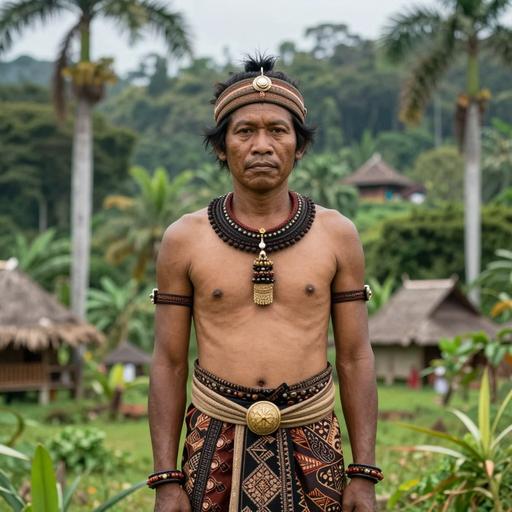
Portrait reconstruction of TOP002
Ancient Individual

A man buried in Indonesia in the Modern era

TOP002
1646 CE - 1950 CE
Male
Topogaro 250BP
Indonesia
Scroll to begin
Chapter I

Identity

The biological and cultural markers that define this ancient individual

Sample ID

TOP002

Date Range

1646 CE - 1950 CE

Biological Sex

Male

mtDNA Haplogroup

E2a

Y-DNA Haplogroup

Not available

Cultural Period

Topogaro 250BP

Chapter II

Place

Where this individual was discovered

Country Indonesia
Locality Sulawesi. Topogaro
Chapter III

Time

When this individual lived in the broader context of human history

TOP002 1646 CE - 1950 CE
Chapter IV

Story

The narrative of this ancient life

The Topogaro culture you are referring to is part of the broader Austronesian cultural and linguistic family that historically inhabited various regions of Southeast Asia, including Sulawesi in Indonesia. While there is limited specific information available about a distinct \Topogaro" culture as of 250 Before Present (BP), which translates to around 1700 CE, we can provide a detailed description of what the general cultural, social, and historical context might have been for Austronesian communities in Sulawesi during this time period.

Geographical Context

Sulawesi, historically known as Celebes, is a large island in central Indonesia, characterized by its mountainous terrain, intricate coastal lines, and diverse ecosystems. The region's geography significantly influenced the lifestyle, economy, and social organization of its inhabitants.

Austronesian Influence

The Austronesian peoples, known for their seafaring abilities, had spread across much of Southeast Asia, the Pacific islands, and parts of Madagascar by this period. By 250 BP, Austronesian cultures had established themselves firmly in Sulawesi, engaging in complex social structures and sophisticated agricultural practices.

Social Structure

The societies in Sulawesi around this time were typically organized into small chiefdoms or communities governed by local rulers, often with a hierarchical structure based on kinship and status. Social stratification was evident, with distinctions between nobility, commoners, and in some instances, enslaved individuals.

Economy and Subsistence

Agriculture was a primary subsistence strategy, with rice and sago being staple crops. Shifting cultivation (swidden farming) was common, along with fishing, hunting, and gathering. These economies were supplemented by trade, both within Sulawesi and with other regions. The strategic location of Sulawesi made it a hub for trade routes connecting the Pacific and Indian Oceans.

Trade and External Influences

During this period, Sulawesi was part of a vibrant trading network that connected to the wider Indonesian archipelago, Southeast Asia, China, and beyond. The exchange of goods included spices, gold, textiles, and pottery. This network facilitated cultural exchanges, introducing new ideas, technologies, and religious practices, such as Hinduism, Buddhism, and Islam.

Religious and Cultural Practices

Religious practices in 1700 CE Sulawesi were diverse, reflecting a mix of indigenous beliefs and external influences. Animism and ancestor worship were prevalent, alongside growing Islamic influence, especially in coastal regions due to trade interactions. Ceremonial activities often involved complex rituals, music, dance, and art, playing crucial roles in community bonding and social life.

Language and Art

The Austronesian languages spoken in Sulawesi at the time were incredibly diverse, with numerous dialects reflecting the island's complex cultural tapestry. Artistic expression flourished in forms such as weaving, carving, and metalwork. Oral literature, music, and dance were integral to preserving history and stories, often passed down through generations.

Challenges and Adaptations

Communities faced challenges such as environmental changes, competition over resources, and occasional conflicts with neighboring groups or external traders. These challenges required adaptability, fostering innovations in agricultural practices, community organization, and conflict resolution.

Conclusion

The Topogaro period in Sulawesi provides a snapshot of Austronesian culture marked by rich social diversity, economic dynamism, and cultural exchange. While specific details about a distinct Topogaro identity are scarce, understanding the broader regional context provides valuable insights into the Austronesian peoples' way of life during this era. The blend of indigenous traditions and external influences creates a complex cultural mosaic, emblematic of Southeast Asia's historical interactions and transformations."

Chapter V

Context

Other ancient individuals connected to this sample

Sources

References

Scientific publications and genetic data

Scientific Publication

Ancient genomes from the last three millennia support multiple human dispersals into Wallacea

Authors Oliveira S, Nägele K, Carlhoff S
Abstract

Previous research indicates that human genetic diversity in Wallacea-islands in present-day Eastern Indonesia and Timor-Leste that were never part of the Sunda or Sahul continental shelves-has been shaped by complex interactions between migrating Austronesian farmers and indigenous hunter-gatherer communities. Yet, inferences based on present-day groups proved insufficient to disentangle this region's demographic movements and admixture timings. Here, we investigate the spatio-temporal patterns of variation in Wallacea based on genome-wide data from 16 ancient individuals (2600-250 years BP) from the North Moluccas, Sulawesi and East Nusa Tenggara. While ancestry in the northern islands primarily reflects contact between Austronesian- and Papuan-related groups, ancestry in the southern islands reveals additional contributions from Mainland Southeast Asia that seem to predate the arrival of Austronesians. Admixture time estimates further support multiple and/or continuous admixture involving Papuan- and Asian-related groups throughout Wallacea. Our results clarify previously debated times of admixture and suggest that the Neolithic dispersals into Island Southeast Asia are associated with the spread of multiple genetic ancestries.

Use code for 40% off Expires Feb 27