Menu
Store
Blog
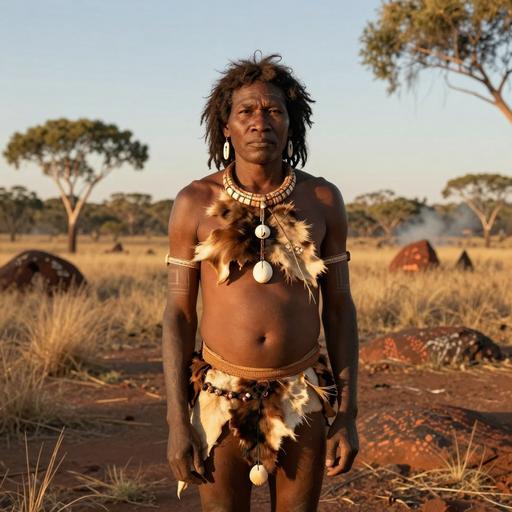
Portrait reconstruction of WLH4_L3
Ancient Individual

A man buried in Australia in the Indigenous era

WLH4_L3
410 CE - 1788 CE
Male
Aboriginal Australians of New South Wales
Australia
Scroll to begin
Chapter I

Identity

The biological and cultural markers that define this ancient individual

Sample ID

WLH4_L3

Date Range

410 CE - 1788 CE

Biological Sex

Male

mtDNA Haplogroup

S2a1a

Y-DNA Haplogroup

Not available

Cultural Period

Aboriginal Australians of New South Wales

Chapter II

Place

Where this individual was discovered

Country Australia
Locality Willandra Lakes Region (New South Wales)
Chapter III

Time

When this individual lived in the broader context of human history

WLH4_L3 410 CE - 1788 CE
Chapter IV

Story

The narrative of this ancient life

Aboriginal Australians of New South Wales represent a rich and diverse cultural group with a history that spans tens of thousands of years. This region, covering what is now the southeastern part of Australia, is home to many distinct Aboriginal nations, each with their own languages, customs, and traditions. The era of traditional Aboriginal life in New South Wales is deeply intertwined with the land, spirituality, art, and social structures that governed these communities for millennia.

Historical Context

Aboriginal Australians are believed to have settled in New South Wales over 40,000 years ago, with archaeological evidence indicating complex societies with intricate knowledge of the local environment. Prior to European colonization in the late 18th century, it is estimated that the New South Wales area was populated by more than 30 distinct Aboriginal nations, including but not limited to the Eora, Darug, Gundungurra, Wiradjuri, and Yuin peoples.

Spiritual Connection to Land

A defining characteristic of Aboriginal culture in New South Wales is the profound spiritual connection to the land. The Dreaming or Dreamtime is a central tenet of Aboriginal spirituality, embodying the creation stories, laws, and values that guide Aboriginal life. These stories recount the actions of ancestral beings who shaped the landscape and established the moral and social order. Every feature of the landscape—rivers, mountains, and trees—is imbued with spiritual significance, and Aboriginal groups see themselves as custodians of their land.

Social Organization

Aboriginal society in New South Wales was traditionally organized into complex kinship systems that governed community interactions and responsibilities. Kinship determined social relations, marriage partners, and even the sharing of food. These networks ensured that resources were distributed equitably and maintained social harmony.

Clan groups would often live semi-nomadically, moving in accordance with seasonal changes and resource availability. This mobility facilitated a deep understanding of the local ecosystems, and clans managed their land through practices like fire-stick farming, which promoted plant growth and attracted game.

Art and Cultural Expression

Art is a vital component of Aboriginal culture in New South Wales, serving both aesthetic and functional purposes. Rock engravings, paintings, body art, and carvings are traditional art forms, often serving as records of the Dreaming stories and historical events. Aboriginal artists use natural materials, such as ochre and charcoal, to create symbols that convey complex stories and cultural teachings.

Music and dance are also integral to Aboriginal culture, often performed during ceremonies and gatherings. Traditional musical instruments include the didgeridoo and clapsticks, which accompany songlines—songs that carry the stories of the Dreaming and track the geography of the land.

Language

Before European contact, more than 70 Aboriginal languages were spoken across New South Wales, reflecting the diverse ethnic landscape. Languages like Darug, Wiradjuri, Gumbaynggirr, and Bundjalung are just a few examples, each capturing unique aspects of cultural and environmental knowledge. However, colonization and subsequent policies led to significant language loss, though revitalization efforts are ongoing.

Impact of Colonization

The arrival of Europeans in 1788 had a devastating impact on Aboriginal communities in New South Wales. Colonization brought diseases, dispossession, and violence, severely diminishing population numbers and disrupting traditional ways of life. Government policies, such as the establishment of missions and reserves and the forced removal of children (known as the Stolen Generations), further eroded cultural practices and connections to land.

Contemporary Culture and Revitalization

Despite historical challenges, Aboriginal Australians in New South Wales continue to maintain and revitalize their cultural heritage. Community-led initiatives focus on language revitalization, cultural education, and land rights. Festivals, art exhibitions, and community gatherings celebrate Aboriginal culture and increase awareness among non-Indigenous Australians.

Land rights movements and native title claims have been instrumental in restoring land access to Aboriginal groups. Organizations like the New South Wales Aboriginal Land Council advocate for cultural preservation and socio-economic advancement for Aboriginal communities.

In summary, the Aboriginal Australians of New South Wales possess a culture that is deeply rooted in the land, spirituality, and community. Their resilience and commitment to preserving their heritage continue to shape their identity and influence the broader Australian cultural landscape.

Chapter V

Context

Other ancient individuals connected to this sample

Sources

References

Scientific publications and genetic data

Scientific Publication

Ancient nuclear genomes enable repatriation of Indigenous human remains

Authors Wright JL, Wasef S, Heupink TH
Abstract

After European colonization, the ancestral remains of Indigenous people were often collected for scientific research or display in museum collections. For many decades, Indigenous people, including Native Americans and Aboriginal Australians, have fought for their return. However, many of these remains have no recorded provenance, making their repatriation very difficult or impossible. To determine whether DNA-based methods could resolve this important problem, we sequenced 10 nuclear genomes and 27 mitogenomes from ancient pre-European Aboriginal Australians (up to 1540 years before the present) of known provenance and compared them to 100 high-coverage contemporary Aboriginal Australian genomes, also of known provenance. We report substantial ancient population structure showing strong genetic affinities between ancient and contemporary Aboriginal Australian individuals from the same geographic location. Our findings demonstrate the feasibility of successfully identifying the origins of unprovenanced ancestral remains using genomic methods.

Use code for 40% off Expires Mar 01