Zum Hauptinhalt springen
mtDNA · Mütterliche Linie

H5

mtDNA Haplogroup H5

Ein Referenzprofil für einen Abstammungszweig. Gemeinsame Haplogruppen begründen weder eine familiäre Beziehung noch eine kulturelle Identität.

Referenzprofil

Hintergrund des Zweigs

Historischer Kontext für den mtDNA-Abstammungszweig H5

Origins and Evolution

mtDNA haplogroup H5 is a defined subclade within the broader macro-haplogroup H, which dominates the maternal gene pool of modern Europe. Based on phylogenetic position relative to other H subclades and published coalescence estimates for H lineages, H5 most likely originated in Western Eurasia in the Late Glacial to early Holocene period (roughly ~12–14 kya), after the Last Glacial Maximum. H5 derives from an intermediate node often annotated as H5'36 in PhyloTree; that intermediate clade helps connect upstream haplogroup H to the radiating H5 sublineages.

Like other H lineages, H5 reflects a mix of deep postglacial re-expansion within Europe and subsequent interactions with Near Eastern populations during the Neolithic and later periods. The lineage diversified into several subclades during the early Holocene and later prehistory, some of which show evidence of regional founder events.

Subclades

H5 has multiple downstream branches (commonly labeled H5a, H5b, H5c, etc., in different revisions of PhyloTree). These subclades vary in geographic distribution and time depth:

  • H5a: A notable subclade that has been reported at elevated frequencies in some Ashkenazi Jewish maternal lineages and in parts of southern Europe; evidence points to at least one regional founder event for H5a in the Holocene.
  • H5b / H5c: Other sublineages are observed more sporadically across southern and eastern Europe and the Near East, sometimes concentrated in Mediterranean or Balkan samples.

Subclade discovery and nomenclature continue to refine as full mitogenomes accumulate; some internal branches are still being characterized and may be catalogued under intermediate nodes such as H5'36 in phylogenetic compilations.

Geographical Distribution

H5 is primarily a Western Eurasian maternal lineage. Present-day and ancient DNA studies report H5 at low-to-moderate frequencies across Europe, with pockets of higher frequency in parts of the Mediterranean basin, the Balkans, and certain Near Eastern and Caucasus populations. Lower frequencies appear in North Africa and Central Asia, consistent with secondary dispersals and historical gene flow.

  • Highest relative concentrations: Iberian Peninsula, Italy, Balkans, parts of the Caucasus and Near East (variable by subclade).
  • Present but rarer: Northern and Eastern Europe, North Africa, and Central Asia.

Historical and Cultural Significance

H5 is informative for reconstructing post‑glacial recolonization and Holocene population dynamics in Europe. Because it predates or overlaps the early Neolithic, H5 lineages may have been part of indigenous postglacial hunter‑gatherer groups that later admixed with incoming Neolithic farmers from the Near East, as well as later Bronze Age and historical migrations.

  • In some archaeological contexts, mtDNA H (including H5 and related subclades) occurs in Neolithic and Bronze Age samples, indicating continuity and admixture rather than strict replacement.
  • Specific subclades (e.g., H5a) show evidence of founder effects in certain modern populations (notably some Jewish mitochondrial founder lineages and localized Mediterranean groups), making them useful for fine-scale maternal ancestry and demographic inference.

Conclusion

mtDNA H5 is a Western Eurasian maternal lineage that likely arose in the Late Glacial to early Holocene and subsequently diversified across Europe and the Near East. Its distribution and subclade structure reflect a combination of postglacial expansion, Neolithic interactions, and later regional founder effects. Ongoing mitogenome sequencing and ancient DNA studies continue to refine the internal branching of H5 and its precise demographic history.

Wichtige Punkte

  • Origins and Evolution
  • Subclades
  • Geographical Distribution
  • Historical and Cultural Significance
  • Conclusion
Referenzprofil

Baum und Verwandtschaft

Phylogenetischer Kontext und Subkladen

Entwicklungsweg

Folgen Sie den erfassten übergeordneten Zweigen bis H5. Die Daten sind Schätzungen und können sich ändern, wenn Referenzdaten überarbeitet werden.

Schritte Haplogruppe Altersschätzung Archäologische Epoche Vergangene Zeit Unmittelbare Nachkommen Getestete moderne Nachkommen Antike Verknüpfungen
1 H5 Aktuell ~12,000 years ago Mesolithic 12,500 Jahre 14 473 23
2 H5'36 - - - 2 482 0
3 H ~25,000 years ago Paleolithic 25,000 Jahre 78 9,404 991
4 HV ~30,000 years ago Paleolithic 30,000 Jahre 14 11,092 228
5 R0 ~15,000 years ago Mesolithic 15,000 Jahre 2 11,230 4
6 R ~55,000 years ago Paleolithic 55,000 Jahre 17 22,830 57
7 NA - - - 1 22,830 0
8 N ~60,000 years ago Paleolithic 60,000 Jahre 16 26,150 13
9 L3 ~70,000 years ago Paleolithic 70,000 Jahre 7 30,162 6
10 L3'4 - - - 2 30,212 0
11 L3'4'6 - - - 2 30,216 0
12 L2'3'4'6 - - - 2 31,333 0
13 L2'3'4'5'6'7 - - - 2 31,349 0
14 L1'2'3'4'5'6'7 - - - 2 31,852 0
15 L ~160,000 years ago Paleolithic 160,000 Jahre 2 32,236 5

Geschwisterzweige (1)

Weitere Zweige derselben übergeordneten Haplogruppe

Referenzprofil

Verbreitung weltweit

Geografische Verbreitung und moderne Präsenz

Erfasster Ursprung

Western Eurasia (Europe / Near East)

Moderne Verbreitung

The populations where mtDNA haplogroup H5 is found include:

  1. Iberian populations (Spain, Portugal)
  2. Italian and southern European populations
  3. Balkan populations (Greece, Albania, Balkans broadly)
  4. Near Eastern and Caucasus populations
  5. Ashkenazi and some other Jewish communities
  6. Northern and Eastern European populations (at lower frequencies)
  7. North African populations (low frequency, likely secondary)
  8. Central Asian samples (sporadic, low frequency)
Historischer Kontext

Ein Zweig durch die Zeit

Geschätzte Entstehung in einer breiten historischen Zeitleiste. Zeitmarken liefern Kontext und implizieren keine Verbindung zu bestimmten Kulturen.

  1. ~12.5k Jahre zurück

    Haplogruppe H5

    Geschätzte Entstehung dieses mtDNA-Zweigs; Daten und Orte sind Referenzschätzungen.

    Dieser Zweig
  2. ~10k Jahre zurück

    Neolithische Revolution

    Beginn der Landwirtschaft und feste Siedlungen

  3. ~5k Jahre zurück

    Bronzezeit

    Metallverarbeitung, Schrift und frühe Zivilisationen

  4. ~3k Jahre zurück

    Eisenzeit

    Eisenwerkzeuge und ausgedehnte Handelsnetze

  5. ~2.5k Jahre zurück

    Klassische Antike

    Blüte griechischer und römischer Kulturen

  6. Gegenwart

    Gegenwart

    Moderne Zeit

Referenzprofil

Archäologischer Kontext

Erfasste archäologische Zuordnungen für den mtDNA-Zweig H5

Erfasste Zuordnungen

Diese Bezeichnungen beschreiben archäologische Kontexte erfasster Referenzproben mit Bezug zu H5. Eine Zuordnung bedeutet nicht, dass alle Träger einer Kultur angehörten oder einer bestimmten Migrationsroute folgten.

Alföld Linear Pottery Anatolian Neolithic Gumelnița Körös Culture Krepost Culture Lengyel Culture Linear Pottery Culture Malak Preslavets Culture Starčevo Culture Swiss Neolithic Usatove
Kulturzuordnungen basieren auf dem archäologischen Kontext antiker DNA-Proben und können regionale Verknüpfungen in bestimmten Zeiträumen widerspiegeln.
Referenzprofil

Probencatalog

3 direkte Träger und 20 Subkladen-Träger der Haplogruppe H5

10 angezeigt · 23 passende Proben

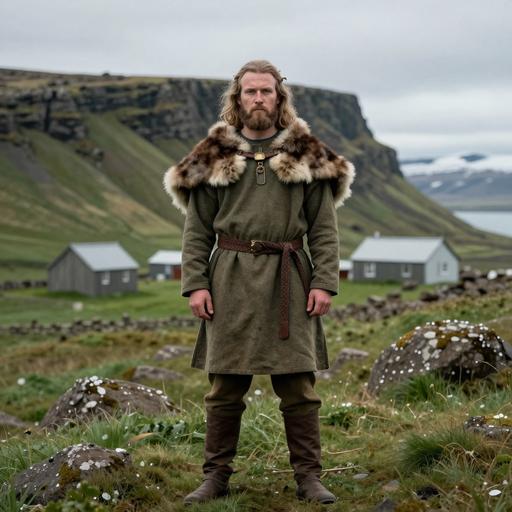
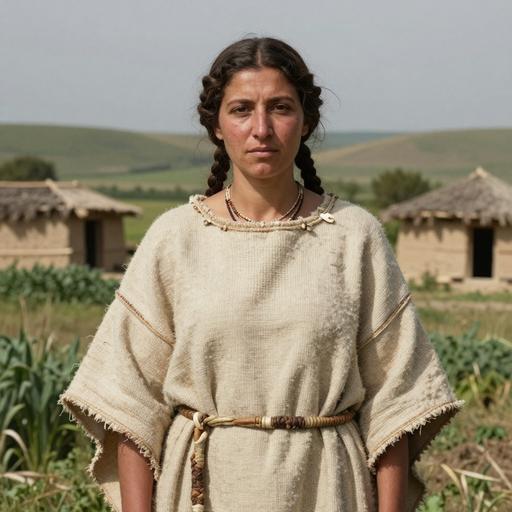
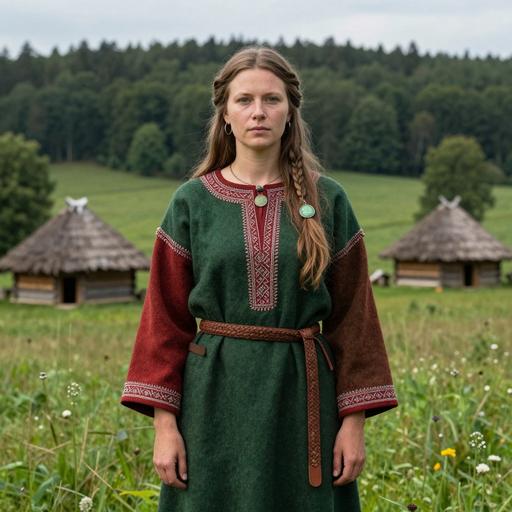
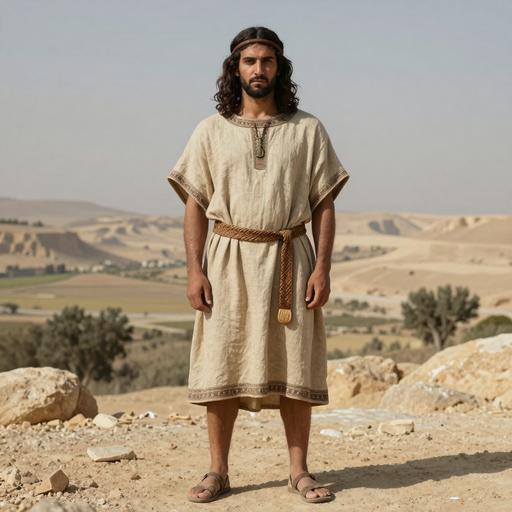
Porträts sind KI-generierte Illustrationen. Probenbezeichnungen und Zugangs-IDs identifizieren die Referenzdatensätze.

Porträt Probe Land Epoche Datum Kultur mtDNA Übereinstimmung
KI-generiertes illustratives Porträt von Norse individual, Karlsnes, Iceland (950-1,050 CE)
Proben-ID: KNS-A1
Iceland Iceland PreChristian 950 CE - 1050 CE Norse Pagan H5 Direkt
KI-generiertes illustratives Porträt von Celtic individual, Scotland. Orkney. Isbister, United Kingdom (2,572-2,348 BCE)
Proben-ID: I2932
United Kingdom Scotland N 2572 BCE - 2348 BCE Scottish Neolithic H5 Direkt
KI-generiertes illustratives Porträt von Anatolian Neolithic individual, Northwest Anatolia. Marmara. Barcın, Turkey (6,381-6,088 BCE)
Proben-ID: I1580
Turkey Turkey N 6381 BCE - 6088 BCE Anatolian Neolithic H5 Direkt
KI-generiertes illustratives Porträt von IA Przeworsk individual, Gaski (Kuyavian-Pomeranian Province, Inowrocław County, Gniewkowo), Poland (100-300 CE)
Proben-ID: PCA0011
Poland Przeworsk Culture 100-300 CE Przeworsk H5'36 Subklade
KI-generiertes illustratives Porträt von England LIA individual, England. Somerset. North Perrott. North Perrott Manor, United Kingdom (149 BCE-65 CE)
Proben-ID: I11144
United Kingdom England LIA 149 calBCE - 65 calCE (2035±30 BP, SUERC-94968) British Late Iron Age H5'36 Subklade
KI-generiertes illustratives Porträt von Hautsde France IA individual, Bucy-le-Long "la Heronnière" (Hauts-de-France Region, Aisne Department, Soissons arrondissement), France (350-300 BCE)
Proben-ID: BLH447
France Iron Age Culture of Aisne 350-300 BCE Aisne H5a1 ? Subklade
KI-generiertes illustratives Porträt von England MIA individual, England. Somerset. Ham Hill, United Kingdom (387-198 BCE)
Proben-ID: I19656
United Kingdom England MIA 387-198 calBCE (2226±30 BP, SUERC-73828) Middle Iron Age British H5'36 Subklade
KI-generiertes illustratives Porträt von Scythian individual, Slobodzeya District. Glinoe, Moldova (395-206 BCE)
Proben-ID: scy300
Moldova Scythian Period Glinoe, Moldova 395 BCE - 206 BCE Scythian H5b8 Subklade
KI-generiertes illustratives Porträt von Scythian individual, Slobodzeya District. Glinoe, Moldova (395-206 BCE)
Proben-ID: scy300
Moldova The Scythian Culture 395 BCE - 206 BCE H5b8* Subklade
KI-generiertes illustratives Porträt von Tuscany IA a IA b Etruscan individual, Tuscany. Grosseto. Vetulonia, Italy (750-406 BCE)
Proben-ID: VET001
Italy Etruscan Grosseto, Italy 750-406 calBCE (2433±29 BP, MAMS-40637) Etruscan H5'36 Subklade
MATERNAL LINEAGE · ANCIENT DNA

Ancient lineage evidence map

Follow parent clades toward this branch and explore where ancient carriers were found.

Loading ancient observations…

Markers are archaeological find locations. A dashed connector is an uncertain, proposed geographic transition between consecutive branches supported by multiple dated observations; it is not an exact travel route, birthplace or proof of direct descent. Parent-clade samples may belong to other descendant branches. Gaps remain where evidence is insufficient. Sample dates differ from haplogroup formation dates.

Referenzprofil

Trägerverteilungskarte

Geografische Verteilung von 23 antiken DNA-Proben (direkte und Subkladen-Träger von H5)

Direkter Träger Subkladen-Träger
Zeitraumfilter
Alle Zeiträume
Alle Proben werden angezeigt
Referenzprofil

Zeitliche Verteilung

Verteilung der Träger über archäologische Epochen

Referenzprofil

Geografische Verteilung

Anzahlen nach erfasstem Probenland. Sie spiegeln die verfügbare Referenzauswahl wider, nicht Bevölkerungshäufigkeiten.

Referenzprofil

Verteilung Land × Epoche

Vergleichen Sie erfasste Probenanzahlen nach Ländern und archäologischen Epochen. Wählen Sie eine belegte Zelle, um eine Probe anzusehen.

Daten

Daten und Herkunft

Quellenangaben und Datenqualität

Zuletzt aktualisiert 2026-06-14
Konfidenzwert 50/100
Abdeckung Low

Datenquelle

Klassifikation, geschätzte Daten und geografischer Kontext spiegeln die erfassten Referenzdaten wider und können sich bei überarbeiteten Belegen ändern. Die Probenabdeckung ist ungleichmäßig; erfasste Orte und archäologische Zuordnungen begründen weder persönliche Herkunft noch kulturelle Identität.

Eine Haplogruppe beschreibt eine einzelne mütterliche oder väterliche Linie. Welcher Zweig sich vorhersagen lässt, hängt von den Markern in der DNA-Datei ab. So analysieren wir DNA