Zum Hauptinhalt springen
mtDNA · Mütterliche Linie

H5M

mtDNA Haplogroup H5M

Ein Referenzprofil für einen Abstammungszweig. Gemeinsame Haplogruppen begründen weder eine familiäre Beziehung noch eine kulturelle Identität.

Referenzprofil

Hintergrund des Zweigs

Historischer Kontext für den mtDNA-Abstammungszweig H5M

Origins and Evolution

H5M is a daughter lineage of mtDNA haplogroup H5, which itself derives from the broadly distributed European and West Asian haplogroup H. Given the phylogenetic position of H5 and its estimated coalescence in the late Pleistocene to early Holocene, H5M most plausibly arose after the diversification of H5, probably in the early Holocene (roughly 8–10 kya) in the Near East / West Asia region. As a downstream branch of H5, H5M bears the characteristic H5 mutations with additional private mutations that define the M branch.

Because H5M is a relatively low‑frequency lineage in modern populations, its dating is less precisely constrained than high-frequency clades; molecular-clock estimates and the geographic distribution of related H5 subclades support a Holocene origin linked to post‑glacial resettlement and early farming expansions out of West Asia into Europe.

Subclades (if applicable)

H5M appears to be a terminal or narrowly branching subclade of H5 in current phylogenies: it is defined by a small set of diagnostic mutations and has relatively few well‑documented downstream branches. Where researchers have sequenced full mitochondrial genomes, H5M samples show limited internal diversity compared with older H5 subclades such as H5a, consistent with a more recent or more localized expansion and possible founder events in certain regions. As with many rare mtDNA clades, discovery of additional complete mitogenomes could reveal previously unrecognized substructure.

Geographical Distribution

H5M is detected at low to moderate frequencies where H5 in general is present, with strongest representation in regions closest to the proposed origin. Modern and limited ancient sample records indicate occurrences in:

  • Southern Europe (notably Italy and parts of the Balkans)
  • The Near East and Anatolia
  • The Caucasus (Armenia, Georgia)
  • Western and Eastern Europe at lower frequencies and patchy distributions
  • North Africa and Mediterranean islands at low frequencies

The pattern suggests a Near Eastern origin with dispersal into Europe along coastal and inland corridors used by Neolithic farmers and later population movements. The clade is generally rare and often appears in low numbers in population surveys, consistent with localized founder effects rather than a continent‑wide expansion.

Historical and Cultural Significance

The distribution and age of H5M fit a model in which many H‑derived lineages expanded with early Holocene demographic changes, especially the spread of agriculture from Anatolia and the Levant into Europe. While some H5 subclades (for example H5a) show clear founder signals in specific historical populations (including certain Jewish communities), H5M does not currently show a broad, high‑frequency association with any single archaeological culture. Instead, its presence in Neolithic and later contexts likely reflects small founder events and regional continuity.

Because H5M is uncommon in modern datasets and appears only sporadically in ancient DNA reports, it has not been tied to a single major prehistoric migration event (e.g., Corded Ware or Yamnaya expansions) as a diagnostic marker. Rather, it provides useful resolution for fine‑scale studies of maternal ancestry, regional demographic continuity, and micro‑history in southern Europe, the Caucasus, and adjacent Near Eastern zones.

Conclusion

H5M is a rare, regionally informative branch of H5 arising in the early Holocene near the Near East / West Asia and carried into neighboring regions by Neolithic and later movements. Its low frequency and limited substructure make it especially valuable for high‑resolution phylogeographic studies and for reconstructing local maternal lineages, but the clade requires more complete mitogenomes and ancient DNA sampling to refine its internal topology, age estimates, and precise prehistoric trajectories.

Wichtige Punkte

  • Origins and Evolution
  • Subclades (if applicable)
  • Geographical Distribution
  • Historical and Cultural Significance
  • Conclusion
Referenzprofil

Baum und Verwandtschaft

Phylogenetischer Kontext und Subkladen

Entwicklungsweg

Folgen Sie den erfassten übergeordneten Zweigen bis H5M. Die Daten sind Schätzungen und können sich ändern, wenn Referenzdaten überarbeitet werden.

Schritte Haplogruppe Altersschätzung Archäologische Epoche Vergangene Zeit Unmittelbare Nachkommen Getestete moderne Nachkommen Antike Verknüpfungen
1 H5M Aktuell ~9,000 years ago Neolithic 9,000 Jahre 0 14 0
2 H5 ~12,000 years ago Mesolithic 12,500 Jahre 14 473 23
3 H5'36 - - - 2 482 0
4 H ~25,000 years ago Paleolithic 25,000 Jahre 78 9,404 991
5 HV ~30,000 years ago Paleolithic 30,000 Jahre 14 11,092 228
6 R0 ~15,000 years ago Mesolithic 15,000 Jahre 2 11,230 4
7 R ~55,000 years ago Paleolithic 55,000 Jahre 17 22,830 57
8 NA - - - 1 22,830 0
9 N ~60,000 years ago Paleolithic 60,000 Jahre 16 26,150 13
10 L3 ~70,000 years ago Paleolithic 70,000 Jahre 7 30,162 6
11 L3'4 - - - 2 30,212 0
12 L3'4'6 - - - 2 30,216 0
13 L2'3'4'6 - - - 2 31,333 0
14 L2'3'4'5'6'7 - - - 2 31,349 0
15 L1'2'3'4'5'6'7 - - - 2 31,852 0
16 L ~160,000 years ago Paleolithic 160,000 Jahre 2 32,236 5

Subkladen (0)

Endzweig ohne erfasste Subkladen

Geschwisterzweige (13)

Weitere Zweige derselben übergeordneten Haplogruppe

Referenzprofil

Verbreitung weltweit

Geografische Verbreitung und moderne Präsenz

Erfasster Ursprung

Near East / West Asia

Moderne Verbreitung

The populations where MTDNA haplogroup H5M is found include:

  1. Southern European populations (Italy, Greece and parts of the Balkans)
  2. Western European populations (France, Iberia at low to moderate levels)
  3. Eastern European and Balkan populations (Poland, Ukraine, Balkans at low levels)
  4. Near Eastern and Anatolian populations (Turkey, Levant)
  5. Caucasus populations (Armenia, Georgia, Azerbaijan)
  6. Jewish communities (rare occurrences; H5 more broadly includes lineages with founder effects but H5M is less prominent)
  7. North African populations (Maghreb and Mediterranean North Africa at low frequencies)
  8. Small frequencies in parts of Central Asia and Mediterranean islands
Historischer Kontext

Ein Zweig durch die Zeit

Geschätzte Entstehung in einer breiten historischen Zeitleiste. Zeitmarken liefern Kontext und implizieren keine Verbindung zu bestimmten Kulturen.

  1. ~10k Jahre zurück

    Neolithische Revolution

    Beginn der Landwirtschaft und feste Siedlungen

  2. ~9k Jahre zurück

    Haplogruppe H5M

    Geschätzte Entstehung dieses mtDNA-Zweigs; Daten und Orte sind Referenzschätzungen.

    Dieser Zweig
  3. ~5k Jahre zurück

    Bronzezeit

    Metallverarbeitung, Schrift und frühe Zivilisationen

  4. ~3k Jahre zurück

    Eisenzeit

    Eisenwerkzeuge und ausgedehnte Handelsnetze

  5. ~2.5k Jahre zurück

    Klassische Antike

    Blüte griechischer und römischer Kulturen

  6. Gegenwart

    Gegenwart

    Moderne Zeit

Referenzprofil

Archäologischer Kontext

Erfasste archäologische Zuordnungen für den mtDNA-Zweig H5M

Erfasste Zuordnungen

Diese Bezeichnungen beschreiben archäologische Kontexte erfasster Referenzproben mit Bezug zu H5M. Eine Zuordnung bedeutet nicht, dass alle Träger einer Kultur angehörten oder einer bestimmten Migrationsroute folgten.

Alföld Linear Pottery Anatolian Neolithic Austria_Avar Körös Culture Krepost Culture Lengyel Culture Linear Pottery Culture Malak Preslavets Culture Starčevo Culture
Kulturzuordnungen basieren auf dem archäologischen Kontext antiker DNA-Proben und können regionale Verknüpfungen in bestimmten Zeiträumen widerspiegeln.
Referenzprofil

Probencatalog

4 direkte Träger der Haplogruppe H5M

4 angezeigt · 4 passende Proben

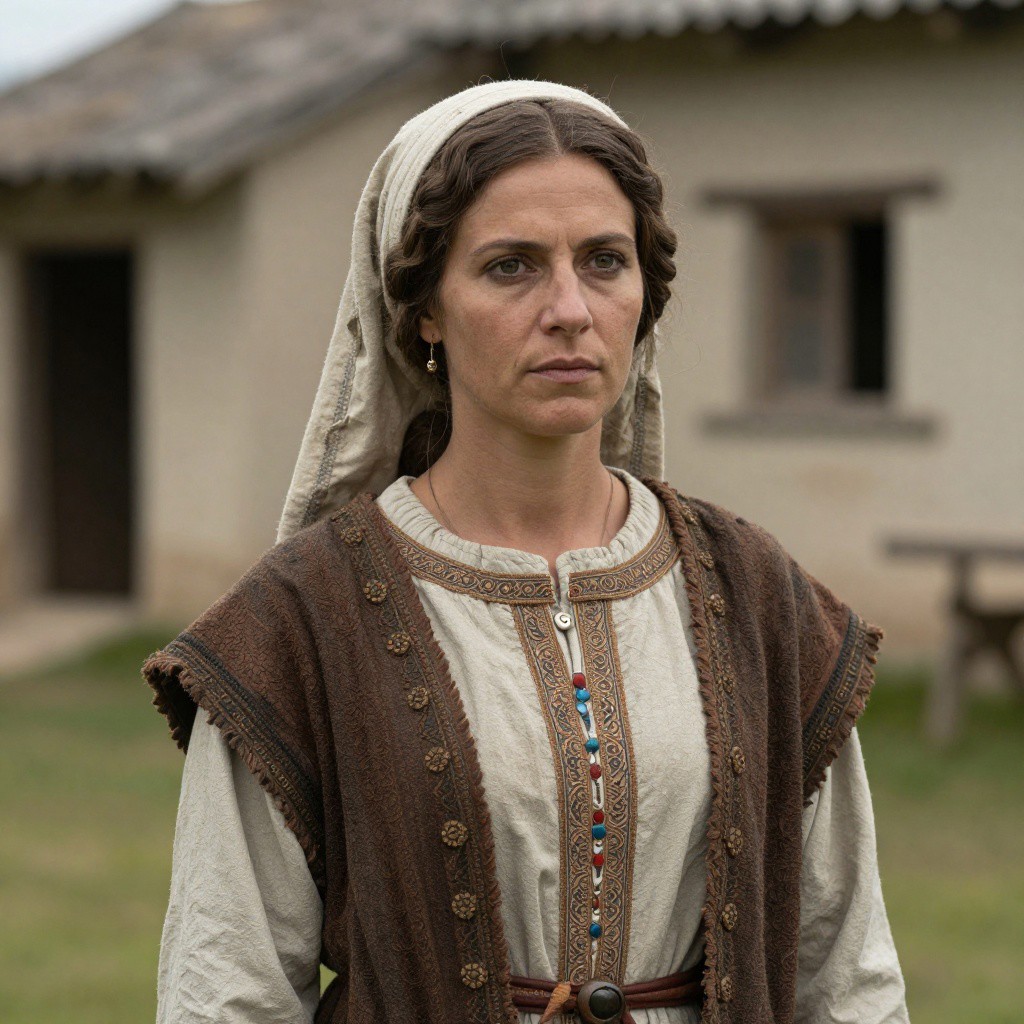
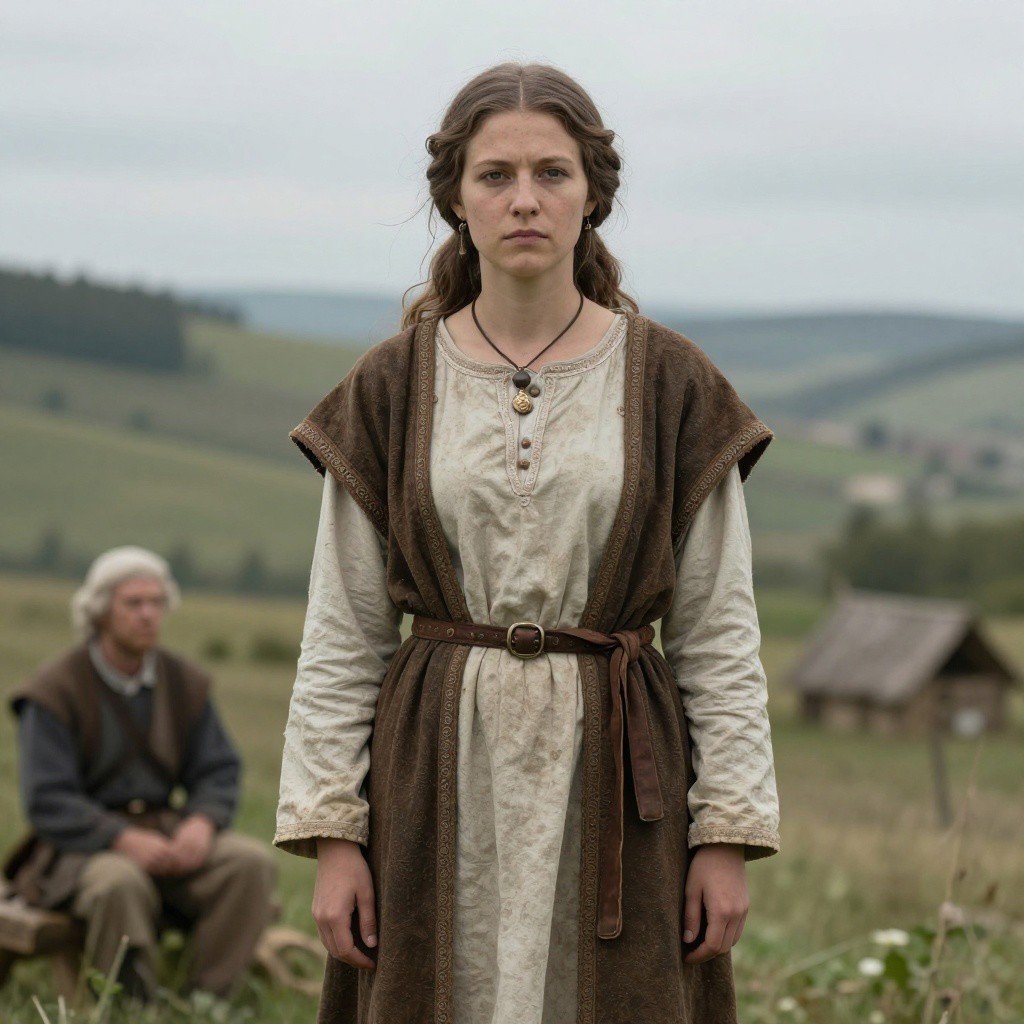
Porträts sind KI-generierte Illustrationen. Probenbezeichnungen und Zugangs-IDs identifizieren die Referenzdatensätze.

Porträt Probe Land Epoche Datum Kultur mtDNA Übereinstimmung
KI-generiertes illustratives Porträt von Avar individual, Mödling-An der Goldenen Stiege (Lower Austria, Mödling District), Austria (650-800 CE)
Proben-ID: MGS013
Austria Austria Avar 650-800 CE Austria_Avar H5m Direkt
KI-generiertes illustratives Porträt von Avar individual, Mödling-An der Goldenen Stiege (Lower Austria, Mödling District), Austria (650-800 CE)
Proben-ID: MGS014
Austria Austria Avar 650-800 CE Austria_Avar H5m Direkt
KI-generiertes illustratives Porträt von Avar individual, Mödling-An der Goldenen Stiege (Lower Austria, Mödling District), Austria (650-800 CE)
Proben-ID: MGS135
Austria Austria Avar 650-800 CE Austria_Avar H5m Direkt
KI-generiertes illustratives Porträt von Avar individual, Mödling-An der Goldenen Stiege (Lower Austria, Mödling District), Austria (650-800 CE)
Proben-ID: MGS380
Austria Austria Avar 650-800 CE Austria_Avar H5m Direkt
MATERNAL LINEAGE · ANCIENT DNA

Ancient lineage evidence map

Follow parent clades toward this branch and explore where ancient carriers were found.

Loading ancient observations…

Markers are archaeological find locations. A dashed connector is an uncertain, proposed geographic transition between consecutive branches supported by multiple dated observations; it is not an exact travel route, birthplace or proof of direct descent. Parent-clade samples may belong to other descendant branches. Gaps remain where evidence is insufficient. Sample dates differ from haplogroup formation dates.

Referenzprofil

Trägerverteilungskarte

Geografische Verteilung von 4 antiken DNA-Proben (direkte und Subkladen-Träger von H5M)

Direkter Träger
Zeitraumfilter
Alle Zeiträume
Alle Proben werden angezeigt
Referenzprofil

Zeitliche Verteilung

Verteilung der Träger über archäologische Epochen

Referenzprofil

Geografische Verteilung

Anzahlen nach erfasstem Probenland. Sie spiegeln die verfügbare Referenzauswahl wider, nicht Bevölkerungshäufigkeiten.

Referenzprofil

Verteilung Land × Epoche

Vergleichen Sie erfasste Probenanzahlen nach Ländern und archäologischen Epochen. Wählen Sie eine belegte Zelle, um eine Probe anzusehen.

Daten

Daten und Herkunft

Quellenangaben und Datenqualität

Zuletzt aktualisiert 2026-04-20
Konfidenzwert 50/100
Abdeckung Low

Datenquelle

Klassifikation, geschätzte Daten und geografischer Kontext spiegeln die erfassten Referenzdaten wider und können sich bei überarbeiteten Belegen ändern. Die Probenabdeckung ist ungleichmäßig; erfasste Orte und archäologische Zuordnungen begründen weder persönliche Herkunft noch kulturelle Identität.

Eine Haplogruppe beschreibt eine einzelne mütterliche oder väterliche Linie. Welcher Zweig sich vorhersagen lässt, hängt von den Markern in der DNA-Datei ab. So analysieren wir DNA