Zum Hauptinhalt springen
mtDNA · Mütterliche Linie

U2E3

mtDNA Haplogroup U2E3

Ein Referenzprofil für einen Abstammungszweig. Gemeinsame Haplogruppen begründen weder eine familiäre Beziehung noch eine kulturelle Identität.

Referenzprofil

Hintergrund des Zweigs

Historischer Kontext für den mtDNA-Abstammungszweig U2E3

Origins and Evolution

mtDNA haplogroup U2E3 sits as a downstream lineage of U2EA within the broader mtDNA U2 clade. The deeper haplogroup U2 is an ancient West Eurasian maternal lineage with substructure found both in Europe and South Asia. Based on its placement under U2EA and comparisons with the time depth of sibling U2 subclades, U2E3 most plausibly arose in West Eurasia during the late Paleolithic to early Holocene (roughly the Mesolithic to early Neolithic, on the order of ~10–15 kya), though this estimate is tentative because U2E3 remains sparsely sampled in published datasets.

The evolutionary significance of U2E3 is mainly phylogenetic: it helps resolve finer branches inside the U2E/U2EA complex and can identify localized maternal line continuity or micro-expansions that broader U2 labels might obscure.

Subclades

As an intermediate clade, U2E3 may include downstream lineages (private mutations and subhaplogroups) that are currently undersampled or not yet fully described in Phylotree and recent literature. At present, the principal utility of the U2E3 label is to mark samples that share diagnostic mutations within U2EA but that do not fall into better-characterized subclades. Continued high-resolution mitogenome sequencing and inclusion of regionally diverse samples are required to define stable named subclades beneath U2E3.

Geographical Distribution

Observed occurrences of U2E3 are rare in the public literature and in population surveys. Where detected, U2E3-like mitotypes tend to appear at low frequency in parts of Europe (particularly eastern and northeastern Europe) and occasionally in adjacent regions of West/Central Asia and South Asia. Because sample sizes are small, the apparent distribution could reflect either a genuinely low-frequency, regionally patchy maternal lineage or simply undersampling of populations where it is more common.

Geographically informative points:

  • U2 as a whole shows a split distribution with both European and South Asian branches; U2E3 most likely belongs to the western cluster but may have pockets extending toward the Caucasus or South Asia.
  • Ancient DNA studies showing U2-lineage continuity in Mesolithic/Neolithic Europe suggest that U2E-type lineages could represent long-term local maternal continuity in some regions.

Historical and Cultural Significance

There are no strong culture-specific associations securely attributable to U2E3 because of sparse sampling. Reasonable inferences based on related haplogroups and the proposed time depth include:

  • Potential presence among Mesolithic hunter-gatherer groups in parts of Europe, representing continuity of pre-Neolithic maternal lines in some regions.
  • Possible low-frequency survival into Neolithic and later archaeological cultures through admixture with incoming farmer groups or through local persistence.

Until matched ancient samples or larger modern population surveys specifically report U2E3, cultural attributions remain speculative. Targeted ancient DNA screening in Mesolithic and early Neolithic remains from eastern Europe and the Caucasus would be the most informative approach.

Conclusion

U2E3 is best treated as a low-frequency, regionally patchy subclade of the U2 system whose primary current value is phylogenetic: it refines the branching structure within U2EA and highlights the need for more mitogenome data from understudied regions. Estimates placing its origin in the late Paleolithic–early Holocene (around ~10–15 kya) are plausible but should be refined as additional full mitogenomes and ancient DNA samples become available. Researchers and genetic genealogy projects should prioritize full mitogenome sequencing and broader geographic sampling where U2EA/U2E signals are detected to resolve U2E3's internal structure and historical dynamics.

Wichtige Punkte

  • Origins and Evolution
  • Subclades
  • Geographical Distribution
  • Historical and Cultural Significance
  • Conclusion
Referenzprofil

Baum und Verwandtschaft

Phylogenetischer Kontext und Subkladen

Entwicklungsweg

Folgen Sie den erfassten übergeordneten Zweigen bis U2E3. Die Daten sind Schätzungen und können sich ändern, wenn Referenzdaten überarbeitet werden.

Schritte Haplogruppe Altersschätzung Archäologische Epoche Vergangene Zeit Unmittelbare Nachkommen Getestete moderne Nachkommen Antike Verknüpfungen
1 U2E3 Aktuell ~12,000 years ago Neolithic 12,000 Jahre 2 6 0
2 U2EA - - - 3 158 0
3 U2E ~18,000 years ago Mesolithic 18,000 Jahre 1 236 45
4 U2A ~22,000 years ago Mesolithic 22,000 Jahre 4 756 6
5 U2 ~45,000 years ago Paleolithic 45,000 Jahre 3 829 37
6 U2'3'4'7'8'9 - - - 5 3,500 0
7 U ~46,000 years ago Paleolithic 46,000 Jahre 5 5,557 110
8 R ~55,000 years ago Paleolithic 55,000 Jahre 17 22,830 57
9 NA - - - 1 22,830 0
10 N ~60,000 years ago Paleolithic 60,000 Jahre 16 26,150 13
11 L3 ~70,000 years ago Paleolithic 70,000 Jahre 7 30,162 6
12 L3'4 - - - 2 30,212 0
13 L3'4'6 - - - 2 30,216 0
14 L2'3'4'6 - - - 2 31,333 0
15 L2'3'4'5'6'7 - - - 2 31,349 0
16 L1'2'3'4'5'6'7 - - - 2 31,852 0
17 L ~160,000 years ago Paleolithic 160,000 Jahre 2 32,236 5

Geschwisterzweige (2)

Weitere Zweige derselben übergeordneten Haplogruppe

Referenzprofil

Verbreitung weltweit

Geografische Verbreitung und moderne Präsenz

Erfasster Ursprung

West Eurasia

Moderne Verbreitung

The populations where mtDNA haplogroup U2E3 is found include:

  1. Eastern European populations (e.g., Slavic and Baltic groups, reported at low frequency)
  2. Balkans and Southeast Europe (sporadic occurrences in regional datasets)
  3. Near-Caucasus and West-Central Asia (isolated detections or probable presence)
  4. South Asia (northwestern regions recorded at very low frequency or requiring confirmation)
Historischer Kontext

Ein Zweig durch die Zeit

Geschätzte Entstehung in einer breiten historischen Zeitleiste. Zeitmarken liefern Kontext und implizieren keine Verbindung zu bestimmten Kulturen.

  1. ~12k Jahre zurück

    Haplogruppe U2E3

    Geschätzte Entstehung dieses mtDNA-Zweigs; Daten und Orte sind Referenzschätzungen.

    Dieser Zweig
  2. ~10k Jahre zurück

    Neolithische Revolution

    Beginn der Landwirtschaft und feste Siedlungen

  3. ~5k Jahre zurück

    Bronzezeit

    Metallverarbeitung, Schrift und frühe Zivilisationen

  4. ~3k Jahre zurück

    Eisenzeit

    Eisenwerkzeuge und ausgedehnte Handelsnetze

  5. ~2.5k Jahre zurück

    Klassische Antike

    Blüte griechischer und römischer Kulturen

  6. Gegenwart

    Gegenwart

    Moderne Zeit

Referenzprofil

Archäologischer Kontext

Erfasste archäologische Zuordnungen für den mtDNA-Zweig U2E3

Erfasste Zuordnungen

Diese Bezeichnungen beschreiben archäologische Kontexte erfasster Referenzproben mit Bezug zu U2E3. Eine Zuordnung bedeutet nicht, dass alle Träger einer Kultur angehörten oder einer bestimmten Migrationsroute folgten.

Austria_Avar Avar Catacomb Culture Koshkino-Boborykino Kostenki Culture Mesolithic Ukrainian Moldova_EBA_Yamnaya Ob River Culture Russia_Eneolithic_EBA_Caucasus Sunghir Culture
Kulturzuordnungen basieren auf dem archäologischen Kontext antiker DNA-Proben und können regionale Verknüpfungen in bestimmten Zeiträumen widerspiegeln.
Referenzprofil

Probencatalog

3 direkte Träger und 2 Subkladen-Träger der Haplogruppe U2E3

5 angezeigt · 5 passende Proben

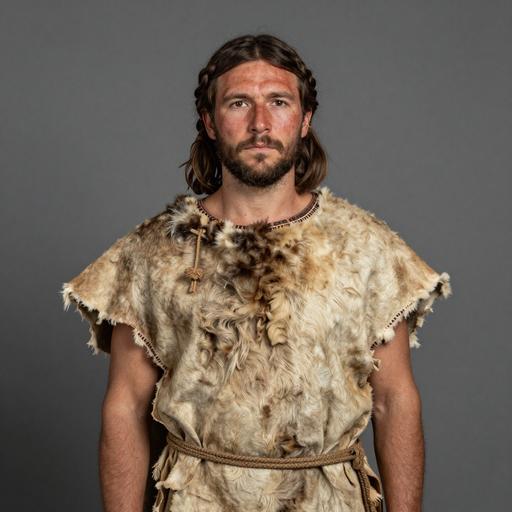
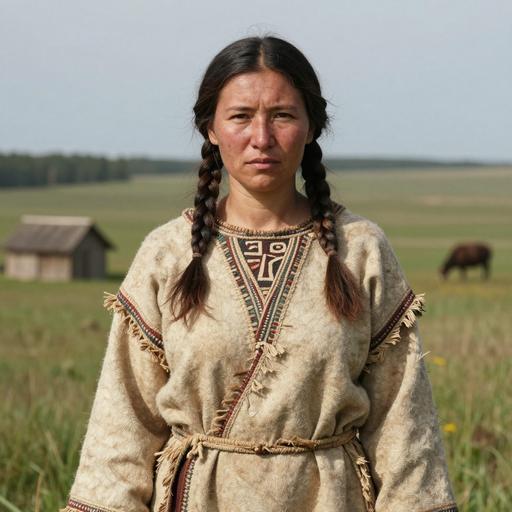
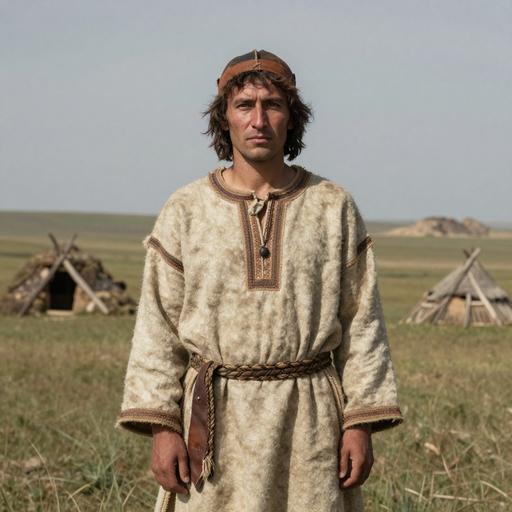
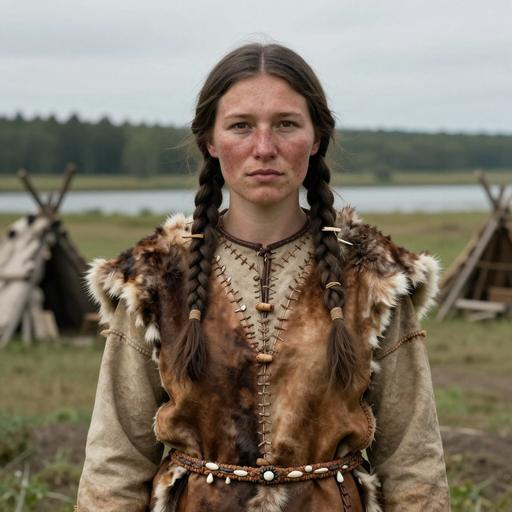
Porträts sind KI-generierte Illustrationen. Probenbezeichnungen und Zugangs-IDs identifizieren die Referenzdatensätze.

Porträt Probe Land Epoche Datum Kultur mtDNA Übereinstimmung
KI-generiertes illustratives Porträt von EBA Yamnaya individual, Slobodzeya (Transnistria, Camenca District, Sadki), Moldova (3,362-2,438 BCE)
Proben-ID: I12637
Moldova Moldova EBA Yamnaya 3300-2500 BCE Moldova_EBA_Yamnaya U2e3 Direkt
KI-generiertes illustratives Porträt von Novosibirsk Mesolithic individual, Vengerovo-2 (Novosibirsk Oblast, Vengerovsky District), Russia (6,218-5,928 BCE)
Proben-ID: NEO922
Russia Ob River Mesolithic Culture 6218-5928 calBCE (7191±46 BP, UBA-40130) Ob River Culture U2e3 Direkt
KI-generiertes illustratives Porträt von Proto-Ugric individual, Mergen-6 (Tyumen Oblast, Ishimsky District), Russia (6,370-6,034 BCE)
Proben-ID: NEO73
Russia Koshkino-Boborykino Culture 6370 BCE - 6034 BCE Koshkino-Boborykino U2e3 Direkt
KI-generiertes illustratives Porträt von Steppe Catacomb individual, Kaspi steppe. Šarachalsun 6, Russia (2,470-2,209 BCE)
Proben-ID: SA6003
Russia Russia Steppe Catacomb 2470-2209 calBCE (3890±40 BP, GIN-12400) Catacomb Culture U2e3a Subklade
KI-generiertes illustratives Porträt von Tyumen EN Mesolithic individual, Siberia. western. Tyumen Oblast, Russia (6,329-6,079 BCE)
Proben-ID: I1960
Russia Hunter-Gatherer Tyumen 6239-6084 calBCE (7388±26 BP) [R_combine: (7330±40 BP, Poz-82198), (7355±40 BP, OxA-33489), (7317±62 BP, UBA-39946)] Tyumen U2e3b1 Subklade
MATERNAL LINEAGE · ANCIENT DNA

Ancient lineage evidence map

Follow parent clades toward this branch and explore where ancient carriers were found.

Loading ancient observations…

Markers are archaeological find locations. A dashed connector is an uncertain, proposed geographic transition between consecutive branches supported by multiple dated observations; it is not an exact travel route, birthplace or proof of direct descent. Parent-clade samples may belong to other descendant branches. Gaps remain where evidence is insufficient. Sample dates differ from haplogroup formation dates.

Referenzprofil

Trägerverteilungskarte

Geografische Verteilung von 5 antiken DNA-Proben (direkte und Subkladen-Träger von U2E3)

Direkter Träger Subkladen-Träger
Zeitraumfilter
Alle Zeiträume
Alle Proben werden angezeigt
Referenzprofil

Zeitliche Verteilung

Verteilung der Träger über archäologische Epochen

Referenzprofil

Geografische Verteilung

Anzahlen nach erfasstem Probenland. Sie spiegeln die verfügbare Referenzauswahl wider, nicht Bevölkerungshäufigkeiten.

Referenzprofil

Verteilung Land × Epoche

Vergleichen Sie erfasste Probenanzahlen nach Ländern und archäologischen Epochen. Wählen Sie eine belegte Zelle, um eine Probe anzusehen.

Daten

Daten und Herkunft

Quellenangaben und Datenqualität

Zuletzt aktualisiert 2026-06-14
Konfidenzwert 50/100
Abdeckung Low

Datenquelle

Klassifikation, geschätzte Daten und geografischer Kontext spiegeln die erfassten Referenzdaten wider und können sich bei überarbeiteten Belegen ändern. Die Probenabdeckung ist ungleichmäßig; erfasste Orte und archäologische Zuordnungen begründen weder persönliche Herkunft noch kulturelle Identität.