Menu
Currency
mtDNA Haplogroup • Maternal Lineage

U2E3

mtDNA Haplogroup U2E3

~12,000 years ago
West Eurasia
2 subclades
Scroll to explore
Chapter I

The Story

The journey of mtDNA haplogroup U2E3

Origins and Evolution

mtDNA haplogroup U2E3 sits as a downstream lineage of U2EA within the broader mtDNA U2 clade. The deeper haplogroup U2 is an ancient West Eurasian maternal lineage with substructure found both in Europe and South Asia. Based on its placement under U2EA and comparisons with the time depth of sibling U2 subclades, U2E3 most plausibly arose in West Eurasia during the late Paleolithic to early Holocene (roughly the Mesolithic to early Neolithic, on the order of ~10–15 kya), though this estimate is tentative because U2E3 remains sparsely sampled in published datasets.

The evolutionary significance of U2E3 is mainly phylogenetic: it helps resolve finer branches inside the U2E/U2EA complex and can identify localized maternal line continuity or micro-expansions that broader U2 labels might obscure.

Subclades

As an intermediate clade, U2E3 may include downstream lineages (private mutations and subhaplogroups) that are currently undersampled or not yet fully described in Phylotree and recent literature. At present, the principal utility of the U2E3 label is to mark samples that share diagnostic mutations within U2EA but that do not fall into better-characterized subclades. Continued high-resolution mitogenome sequencing and inclusion of regionally diverse samples are required to define stable named subclades beneath U2E3.

Geographical Distribution

Observed occurrences of U2E3 are rare in the public literature and in population surveys. Where detected, U2E3-like mitotypes tend to appear at low frequency in parts of Europe (particularly eastern and northeastern Europe) and occasionally in adjacent regions of West/Central Asia and South Asia. Because sample sizes are small, the apparent distribution could reflect either a genuinely low-frequency, regionally patchy maternal lineage or simply undersampling of populations where it is more common.

Geographically informative points:

  • U2 as a whole shows a split distribution with both European and South Asian branches; U2E3 most likely belongs to the western cluster but may have pockets extending toward the Caucasus or South Asia.
  • Ancient DNA studies showing U2-lineage continuity in Mesolithic/Neolithic Europe suggest that U2E-type lineages could represent long-term local maternal continuity in some regions.

Historical and Cultural Significance

There are no strong culture-specific associations securely attributable to U2E3 because of sparse sampling. Reasonable inferences based on related haplogroups and the proposed time depth include:

  • Potential presence among Mesolithic hunter-gatherer groups in parts of Europe, representing continuity of pre-Neolithic maternal lines in some regions.
  • Possible low-frequency survival into Neolithic and later archaeological cultures through admixture with incoming farmer groups or through local persistence.

Until matched ancient samples or larger modern population surveys specifically report U2E3, cultural attributions remain speculative. Targeted ancient DNA screening in Mesolithic and early Neolithic remains from eastern Europe and the Caucasus would be the most informative approach.

Conclusion

U2E3 is best treated as a low-frequency, regionally patchy subclade of the U2 system whose primary current value is phylogenetic: it refines the branching structure within U2EA and highlights the need for more mitogenome data from understudied regions. Estimates placing its origin in the late Paleolithic–early Holocene (around ~10–15 kya) are plausible but should be refined as additional full mitogenomes and ancient DNA samples become available. Researchers and genetic genealogy projects should prioritize full mitogenome sequencing and broader geographic sampling where U2EA/U2E signals are detected to resolve U2E3's internal structure and historical dynamics.

Key Points

  • Origins and Evolution
  • Subclades
  • Geographical Distribution
  • Historical and Cultural Significance
  • Conclusion
Chapter II

Tree & Relationships

Phylogenetic context and subclades

Evolution Path

This haplogroup's evolutionary journey from its earliest ancestor to the present.

Steps Haplogroup Age Estimate Archaeology Era Time Passed Immediate Descendants Tested Modern Descendants Ancient Connections
1 U2E3 Current ~12,000 years ago 🌾 Neolithic 12,000 years 2 5 0
2 U2EA 3 142 0
3 U2E ~18,000 years ago 🏹 Mesolithic 18,000 years 1 194 45
4 U2A ~22,000 years ago 🏹 Mesolithic 22,000 years 4 689 6
5 U2 ~45,000 years ago 🦴 Paleolithic 45,000 years 3 758 37
6 U2'3'4'7'8'9 5 2,860 0
7 U ~46,000 years ago 🦴 Paleolithic 46,000 years 5 4,314 110
8 R ~55,000 years ago 🦴 Paleolithic 55,000 years 17 17,854 57
9 NA 1 17,854 0
10 N ~60,000 years ago 🦴 Paleolithic 60,000 years 16 20,371 13
11 L3 ~70,000 years ago 🦴 Paleolithic 70,000 years 7 23,542 6
12 L3'4 2 23,581 0
13 L3'4'6 2 23,584 0
14 L2'3'4'6 2 24,475 0
15 L2'3'4'5'6'7 2 24,488 0
16 L1'2'3'4'5'6'7 2 24,903 0
17 L ~160,000 years ago 🦴 Paleolithic 160,000 years 2 25,205 5

Siblings (2)

Other branches from the same parent haplogroup

Chapter III

Where in the World

Geographic distribution and modern presence

Place of Origin

West Eurasia

Modern Distribution

The populations where mtDNA haplogroup U2E3 is found include:

  1. Eastern European populations (e.g., Slavic and Baltic groups, reported at low frequency)
  2. Balkans and Southeast Europe (sporadic occurrences in regional datasets)
  3. Near-Caucasus and West-Central Asia (isolated detections or probable presence)
  4. South Asia (northwestern regions recorded at very low frequency or requiring confirmation)
CHAPTER IV

When in Time

Your haplogroup in the context of human history

~12k years ago

Haplogroup U2E3

Your mtDNA haplogroup emerged in West Eurasia

West Eurasia
~10k years ago

Neolithic Revolution

Agriculture begins, settled communities form

~5k years ago

Bronze Age

Metalworking, writing, and early civilizations

~3k years ago

Iron Age

Iron tools, expanded trade networks

~2k years ago

Classical Antiquity

Greek and Roman civilizations flourish

Present

Present Day

Modern era

Your Haplogroup
Historical Era
Chapter IV-B

Linked Cultures

Ancient cultures associated with mtDNA haplogroup U2E3

Cultural Heritage

These ancient cultures have been linked to haplogroup U2E3 based on matching ancient DNA samples from archaeological excavations. The presence of this haplogroup in these cultures provides insights into the migrations and population movements of populations carrying this haplogroup.

Avar Catacomb Culture Koshkino-Boborykino Kostenki Culture Mesolithic Ukrainian Ob River Culture Sunghir Culture
Culture assignments are based on archaeological context of ancient DNA samples and may represent regional associations during specific time periods.
Chapter V

Sample Catalog

2 direct carriers and 2 subclade carriers of haplogroup U2E3

4 / 4 samples
Portrait Sample Country Era Date Culture mtDNA Match
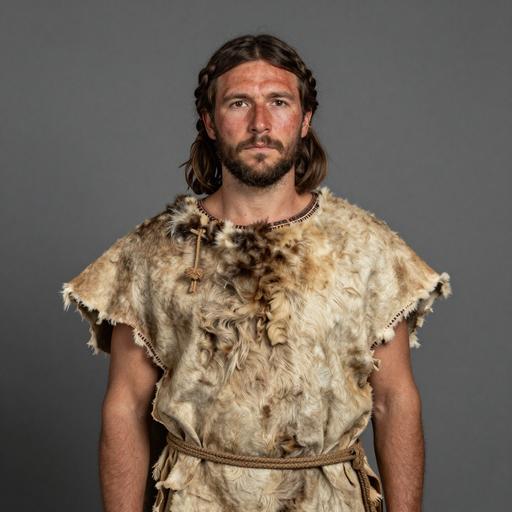
Portrait of ancient individual NEO922 from Russia, dated 6218 BCE - 5928 BCE
NEO922
Russia Ob River Mesolithic Culture 6218 BCE - 5928 BCE Ob River Culture U2e3 Direct
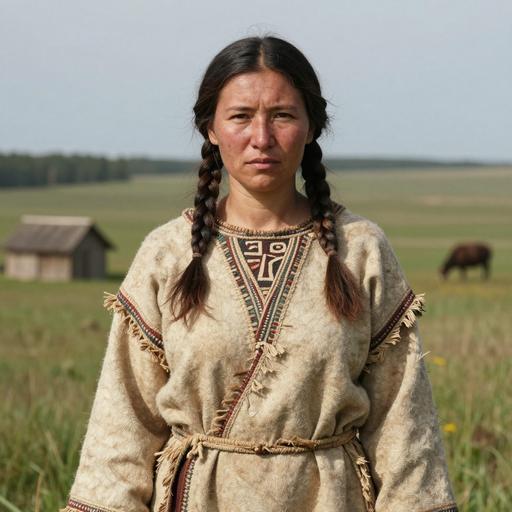
Portrait of ancient individual NEO73 from Russia, dated 6370 BCE - 6034 BCE
NEO73
Russia Koshkino-Boborykino Culture 6370 BCE - 6034 BCE Koshkino-Boborykino U2e3 Direct
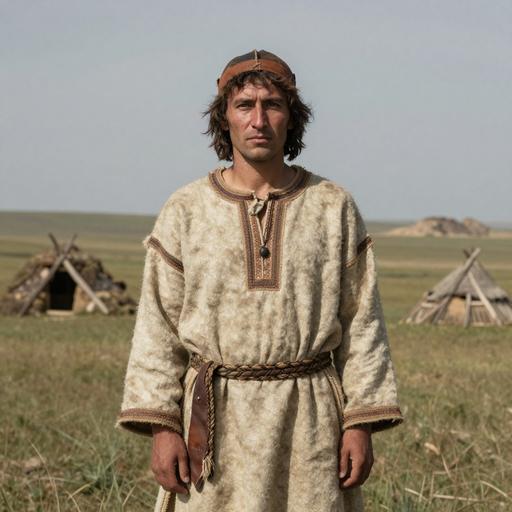
Portrait of ancient individual SA6003 from Russia, dated 2470 BCE - 2209 BCE
SA6003
Russia Catacomb Culture, Russian Steppe 2470 BCE - 2209 BCE Catacomb Culture U2e3a Downstream
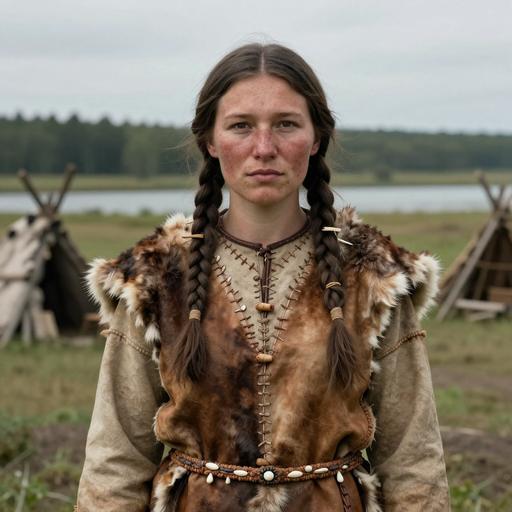
Portrait of ancient individual I1960 from Russia, dated 6329 BCE - 6079 BCE
I1960
Russia Hunter-Gatherer Tyumen 6329 BCE - 6079 BCE Tyumen U2e3b1 Downstream
Chapter VI

Carrier Distribution Map

Geographic distribution of 4 ancient DNA samples (direct and subclade carriers of U2E3)

Direct carrier Subclade carrier
Time Period Filter
All Time Periods
Showing all samples
Chapter VII

Temporal Distribution

Distribution of carriers across archaeological periods

Chapter VIII

Geographic Distribution

Distribution by country of origin (direct and subclade carriers shown by default)

Chapter IX

Country × Era Distribution

Cross-tabulation of carrier countries and archaeological periods (direct and subclade carriers shown by default)

Data

Data & Provenance

Source information and data quality

Last Updated 2026-06-14
Confidence Score 50/100
Coverage Low
Data Source

We use the latest phylotree for MTDNA haplogroup classification and data.