Aller au contenu principal
mtDNA · lignée Maternelle

L1C3B1A

mtDNA Haplogroup L1C3B1A

Profil de référence pour une branche de lignée. Des haplogroupes partagés n'établissent pas de lien familial ni d'identité culturelle.

Profil de référence

Contexte de la branche

Contexte historique de la branche de lignée mtDNA L1C3B1A

Origins and Evolution

mtDNA haplogroup L1C3B1A is a downstream subclade of L1C3B1, itself a Holocene lineage that emerged in Central / West-Central Africa. Based on the parent clade's estimated age (~6 kya) and the phylogenetic position of L1C3B1A as a more derived branch, a reasonable estimate places the origin of L1C3B1A in the mid-to-late Holocene (around ~4 kya). The lineage probably diversified within populations living in or adjacent to the Congo Basin rainforest, where small-scale, long-term population structure among rainforest hunter-gatherers (commonly referred to as Pygmy groups) and interacting agriculturalist neighbors promoted the persistence of distinctive maternal lineages.

Subclades (if applicable)

As a terminal or near-terminal subclade described under L1C3B1, L1C3B1A may contain further fine-scale branches detectable only with high-resolution whole mitogenome sequencing. Published population surveys tend to report L1C3B1 and identified downstream variants in limited numbers; continued mitogenome sampling of Central African rainforest and adjacent Bantu-speaking communities is required to resolve and name additional internal subclades within L1C3B1A.

Geographical Distribution

L1C3B1A is concentrated in Central and West-Central Africa, with the highest frequencies observed among rainforest hunter-gatherer groups (for example Mbuti, Aka, and Baka). It also occurs at lower frequencies among neighboring Bantu-speaking populations in Cameroon, Gabon, the Republic of the Congo and the Democratic Republic of the Congo, and in some West African groups. Due to the transatlantic slave trade and later diaspora movements, L1C3B1-derived lineages (including L1C3B1A or closely related haplotypes) appear sporadically in African-descended populations of the Americas. Rare detections in East African and North African / Near Eastern samples can reflect historical gene flow and recent admixture.

Historical and Cultural Significance

The distribution and phylogenetic placement of L1C3B1A link it to long-term maternal continuity among Central African rainforest communities. Its association with Pygmy groups reflects both deep local ancestry and demographic interactions (marriage, adoption, assimilation) with neighboring Bantu-speaking agriculturalists during and after the Bantu expansions (beginning ~3–4 kya). The presence of L1C3B1A or related L1C3B1 variants in the African diaspora documents its movement out of Africa during the last 500 years via the slave trade, where it contributes to maternal-line diversity in Afro-descended populations.

Conclusion

L1C3B1A is a derived Holocene maternal lineage centered on the Congo Basin and adjoining regions that is most characteristic of rainforest hunter-gatherers but also present among regional Bantu-speaking groups and, at lower frequency, in the African diaspora. Its current geographic pattern reflects a combination of local persistence in small, structured populations and later dispersal through interactions with expanding agricultural societies and historical migrations. Further mitogenome sequencing from Central African populations will improve resolution of its internal substructure and precise age estimates.

Points clés

  • Origins and Evolution
  • Subclades (if applicable)
  • Geographical Distribution
  • Historical and Cultural Significance
  • Conclusion
Profil de référence

Arbre et relations

Contexte phylogénétique et sous-clades

Voie évolutive

Suivez les branches parentes consignées jusqu'à L1C3B1A. Les dates sont des estimations et peuvent évoluer lorsque les données de référence sont révisées.

Étapes Haplogroupe Âge estimé Époque archéologique Temps écoulé Descendants immédiats Descendants modernes testés Liens anciens
1 L1C3B1A Actuel ~4,000 years ago Bronze Age 4,000 ans 0 0 1
2 L1C3B1 ~6,000 years ago Chalcolithic 6,000 ans 1 20 0
3 L1C3B ~8,000 years ago Neolithic 8,000 ans 1 21 0
4 L1C3B'C - - - 1 22 0
5 L1C3 ~25,000 years ago Paleolithic 25,000 ans 2 103 0
6 L1c ~80,000 years ago Paleolithic 80,000 ans 2 183 0
7 L1 ~150,000 years ago Paleolithic 150,000 ans 3 503 4
8 L1'2'3'4'5'6'7 - - - 2 31,852 0
9 L ~160,000 years ago Paleolithic 160,000 ans 2 32,236 5

Sous-clades (0)

Branche terminale, aucune sous-clade consignée

Profil de référence

Dans le monde

Distribution géographique et présence moderne

Origine consignée

Central / West-Central Africa

Distribution moderne

The populations where mtDNA haplogroup L1C3B1A is found include:

  1. Mbuti (Central African Pygmies)
  2. Aka and Baka (Central African Pygmy groups)
  3. Bantu-speaking populations in Cameroon, Gabon, Republic of the Congo and DR Congo
  4. Bakongo and Fang (Central/West-Central African groups)
  5. Yoruba and other West African populations (lower/moderate frequencies)
  6. African-descended populations in the Americas (African American, Afro-Caribbean)
  7. Occasional detections in East African groups (e.g., parts of the Great Lakes / Horn region)
  8. Low-frequency presence in North African and Near Eastern samples due to historical admixture
Contexte historique

Une branche dans le temps

Formation estimée sur une chronologie historique large. Les repères de période servent de contexte et n'impliquent pas de lien avec des cultures particulières.

  1. Il y a ~10k ans

    Révolution néolithique

    Début de l'agriculture et émergence de communautés sédentaires

  2. Il y a ~5k ans

    Âge du bronze

    Travail des métaux, écriture et premières civilisations

  3. Il y a ~4k ans

    Haplogroupe L1C3B1A

    Formation estimée de cette branche mtDNA ; les dates et les lieux sont des estimations de référence.

    Cette branche
  4. Il y a ~3k ans

    Âge du fer

    Outils en fer, réseaux d'échanges élargis

  5. Il y a ~2.5k ans

    Antiquité classique

    Floraison des civilisations grecque et romaine

  6. Aujourd'hui

    Aujourd'hui

    Époque moderne

Profil de référence

Contexte archéologique

Associations archéologiques consignées pour la branche mtDNA L1C3B1A

Associations consignées

Ces libellés décrivent des contextes archéologiques consignés pour des échantillons de référence liés à L1C3B1A. Une association n'établit pas que tous les porteurs appartenaient à une culture ni qu'ils ont suivi une route migratoire précise.

Bungule Corded Ware Jordanow-Michelsberg Culture Kindoki Makwasinyi Mtwapa Ngongo Mbata Slab Grave Culture St. Helena Colonial Unetice Culture
Les attributions culturelles reposent sur le contexte archéologique des échantillons d'ADN ancien et peuvent refléter des associations régionales à certaines périodes.
Profil de référence

Catalogue d'échantillons

1 porteur direct de l'haplogroupe L1C3B1A

1 affiché(s) · 1 échantillons correspondants

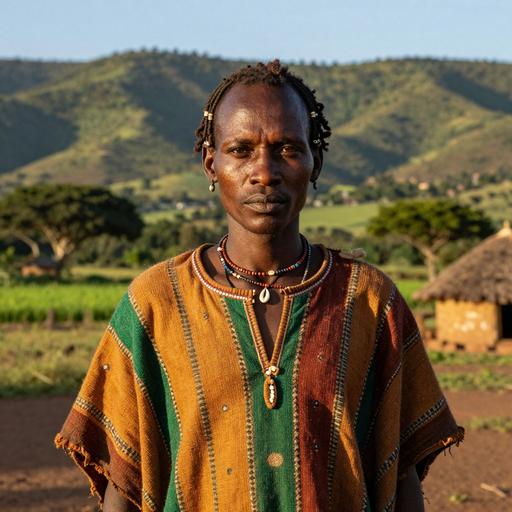
Les portraits sont des illustrations générées par IA. Les libellés d'échantillon et identifiants d'accès désignent les enregistrements de référence.

Portrait Échantillon Pays Époque Date Culture mtDNA Correspondance
Portrait illustratif généré par IA de Swahili individual, Makwasinyi (Taita-Taveta), Kenya (1,650-1,950 CE)
Identifiant d'échantillon : I17402
Kenya Makwasinyi (Kenya) 1650-1950 CE Makwasinyi L1c3b1a Direct
LIGNÉE MATERNELLE · ADN ANTIQUE

Carte des preuves de lignées antiques

Suivez les clades parents jusqu'à cette branche et explorez où des porteurs antiques ont été identifiés.

Chargement des observations antiques…

Les marqueurs indiquent des lieux de découvertes archéologiques. Un trait pointillé représente une transition géographique proposée et incertaine entre branches consécutives, appuyée sur plusieurs observations datées ; ce n'est pas un itinéraire exact, un lieu de naissance ni une preuve de descendance directe. Des échantillons de clades parents peuvent appartenir à d'autres branches descendantes. Des lacunes subsistent lorsque les preuves sont insuffisantes. Les dates d'échantillon diffèrent des dates de formation des haplogroupes.

Profil de référence

Carte de répartition des porteurs

Répartition géographique de 1 échantillon d'ADN ancien (porteurs directs et de sous-clade de L1C3B1A)

Porteur direct
Filtre de période
Toutes les périodes
Affichage de tous les échantillons
Profil de référence

Répartition temporelle

Répartition des porteurs selon les périodes archéologiques

Profil de référence

Répartition géographique

Effectifs par pays d'échantillon consigné. Ils reflètent la sélection de référence disponible, pas des fréquences de population.

Profil de référence

Répartition pays × époque

Comparez les effectifs d'échantillons consignés selon les pays et les périodes archéologiques. Sélectionnez une cellule renseignée pour examiner un échantillon.

Données

Données et provenance

Informations sur les sources et qualité des données

Dernière mise à jour 2026-02-16
Score de confiance 50/100
Couverture Low

Source des données

La classification, les dates estimées et le contexte géographique reflètent les données de référence consignées et peuvent évoluer lorsque les éléments sont révisés. La couverture d'échantillons est inégale ; les lieux consignés et les associations archéologiques n'établissent pas une origine personnelle ni une identité culturelle.