Aller au contenu principal
Y-DNA · lignée Paternelle

C

C (M130)

Y-DNA Haplogroup C

Profil de référence pour une branche de lignée. Des haplogroupes partagés n'établissent pas de lien familial ni d'identité culturelle.

Profil de référence

Contexte de la branche

Contexte historique de la branche de lignée Y-DNA C

Origins and Evolution

Y-DNA haplogroup C (defined by M130 and downstream markers) is one of the primary early non-African Y lineages that split from the CT lineage after the initial Out-of-Africa migrations. Current phylogenies place its origin in Eurasia roughly during the Upper Paleolithic (commonly estimated around 50–70 thousand years ago). From that ancestral node, haplogroup C underwent early diversification into geographically structured subclades that reflect ancient migrations along coastal and inland routes into East Asia, Siberia, and Oceania.

The deep branching pattern of C indicates an early split between lineages that later became rare in western Eurasia and those that predominated in East Asia and Oceania. This topology is consistent with an early Asian origin followed by population expansions and long-term regional differentiation. Some deeply divergent branches of C have been detected in ancient and modern samples across a wide area, indicating a long history of local continuity in parts of Asia and Oceania.

Subclades

Major subdivisions of haplogroup C show strong geographic structuring rather than uniform distribution:

  • C1 (and its internal branches): includes lineages that are relatively rare today but have been observed in isolated or relict populations, including some ancient European individuals and pockets in East Asia. Certain C1 branches have been reported in ancient European hunter-gatherer contexts and in parts of East and Southeast Asia.

  • C2 (often defined by M217 and related markers): is one of the most geographically widespread components, with high frequencies in many northern and eastern Asian groups (including Tungusic, Mongolic and some Siberian populations) and notable presence in parts of Central Asia. Some C2 lineages are also important components of the paternal gene pool in Indigenous peoples of the Russian Far East and neighboring areas.

  • Oceanian and Australo-Papuan branches: distinct C lineages are characteristic of Indigenous Australians, Papuan and Melanesian populations and contribute substantially to the paternal ancestry of these groups. These branches reflect early arrivals into Sahul and long-term isolation and drift.

Overall, the subclades of C reflect a combination of very old splits (Paleolithic) and later regional demographic events that amplified particular branches in local populations.

Geographical Distribution

Haplogroup C is unevenly distributed: it is relatively common and diverse in parts of East Asia, northern Asia and Oceania, while being rare in most of western Eurasia and Africa. Key concentration areas include coastal and island Southeast Asia, Papua New Guinea and Australia (distinct indigenous C lineages), and many Siberian and Mongolic/Tungusic-speaking groups where certain C2 branches reach appreciable frequencies. Scattered low-frequency occurrences are documented in South Asia and (rarely) in Europe, often reflecting ancient relict lineages or later gene flow.

Historical and Cultural Significance

Haplogroup C is most informative for reconstructing Paleolithic hunter-gatherer expansions in Asia and the initial peopling of Sahul. Its deep time depth and the geographic distribution of its subclades make it a marker for early eastward and southeastward human movements after the Out-of-Africa event. In some regions C lineages persist at high frequencies among groups with long-term continuity (for example, Indigenous Australian and Papuan populations), providing genetic evidence for early settlement and relative isolation.

In northeastern Asia, certain C2 lineages are associated with populations that later participated in Holocene interactions across the steppe and forest-steppe ecologies; these lineages help contextualize connections among Siberian, Mongolic and some Central Asian groups. C is less associated with the major Bronze Age steppe migrations that spread lineages like R1b/R1a across much of Eurasia, and more linked to earlier Paleolithic and Holocene regional histories.

Conclusion

Y-DNA haplogroup C is a foundational non-African paternal lineage whose internal diversity documents deep, regionally structured population history across Asia and Oceania. While individual subclades have very different local histories — from long-isolated Oceanian branches to widely distributed northern Asian lineages — together they illuminate early human movements in eastern Eurasia and the peopling of Sahul. Because of its antiquity and patchy modern distribution, haplogroup C is a key component in studies of Paleolithic dispersals and the genetic legacies of ancient hunter-gatherer populations.

Points clés

  • Origins and Evolution
  • Subclades
  • Geographical Distribution
  • Historical and Cultural Significance
  • Conclusion

Profil de référence

Arbre et relations

Contexte phylogénétique et sous-clades

Voie évolutive

Suivez les branches parentes consignées jusqu'à C. Les dates sont des estimations et peuvent évoluer lorsque les données de référence sont révisées.

Étapes Haplogroupe Âge estimé Époque archéologique Temps écoulé Descendants immédiats Descendants modernes testés Liens anciens
1 C Actuel ~60,000 years ago Paleolithic 60,000 ans 3 406 35
Profil de référence

Dans le monde

Distribution géographique et présence moderne

Origine consignée

Asia (likely Southeast Asia / southern Asia)

Distribution moderne

The populations where Y-DNA haplogroup C is found include:

  1. Indigenous Australian populations
  2. Papuan and Melanesian populations
  3. East Asian populations (e.g., some Japanese, Korean, Chinese groups)
  4. Northern Asian and Siberian groups (e.g., Yakut, Evenks, Mongolic and Tungusic peoples)
  5. Austronesian-speaking populations of Island Southeast Asia and Oceania
  6. Selected Central Asian groups
  7. Rare or relict occurrences in parts of Europe and among some Native American groups (localized subclades)

Présence régionale

Oceania (Australia, Papua New Guinea, Melanesia) High
East Asia Moderate
Northern Asia / Siberia Moderate
Southeast Asia Moderate
Central Asia Low
Western Europe Low
Northern Americas (select indigenous groups) Low
Contexte historique

Une branche dans le temps

Formation estimée sur une chronologie historique large. Les repères de période servent de contexte et n'impliquent pas de lien avec des cultures particulières.

  1. Il y a ~70k ans

    Sortie d'Afrique

    Grande migration des humains modernes hors d'Afrique

  2. Il y a ~60k ans

    Haplogroupe C

    Formation estimée de cette branche Y-DNA ; les dates et les lieux sont des estimations de référence.

    Cette branche
  3. Il y a ~50k ans

    Paléolithique supérieur

    Outils avancés, art et essor culturel

  4. Il y a ~20k ans

    Dernier maximum glaciaire

    Apogée de la dernière période glaciaire, populations isolées

  5. Il y a ~10k ans

    Révolution néolithique

    Début de l'agriculture et émergence de communautés sédentaires

  6. Il y a ~5k ans

    Âge du bronze

    Travail des métaux, écriture et premières civilisations

  7. Il y a ~3k ans

    Âge du fer

    Outils en fer, réseaux d'échanges élargis

  8. Il y a ~2.5k ans

    Antiquité classique

    Floraison des civilisations grecque et romaine

  9. Aujourd'hui

    Aujourd'hui

    Époque moderne

Profil de référence

Contexte archéologique

Associations archéologiques consignées pour la branche Y-DNA C

Associations consignées

Ces libellés décrivent des contextes archéologiques consignés pour des échantillons de référence liés à C. Une association n'établit pas que tous les porteurs appartenaient à une culture ni qu'ils ont suivi une route migratoire précise.

Buran-Kaya Chinese Paleolithic Kostenki Culture Paglicci Culture Pavlovian Culture Spanish Gravettian Sunghir Culture
Les attributions culturelles reposent sur le contexte archéologique des échantillons d'ADN ancien et peuvent refléter des associations régionales à certaines périodes.
Profil de référence

Catalogue d'échantillons

34 porteurs directs et 1 porteur de sous-clade de l'haplogroupe C

10 affiché(s) · 35 échantillons correspondants

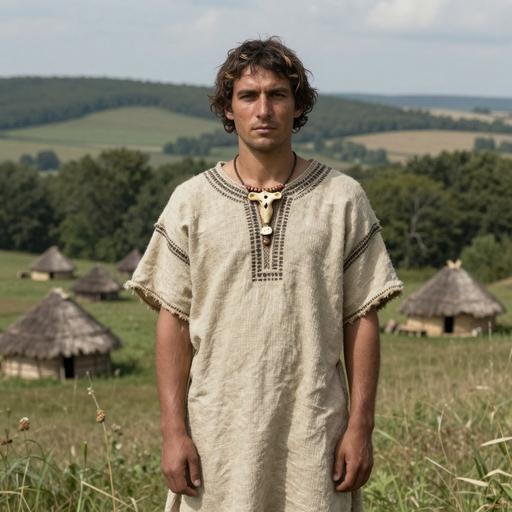
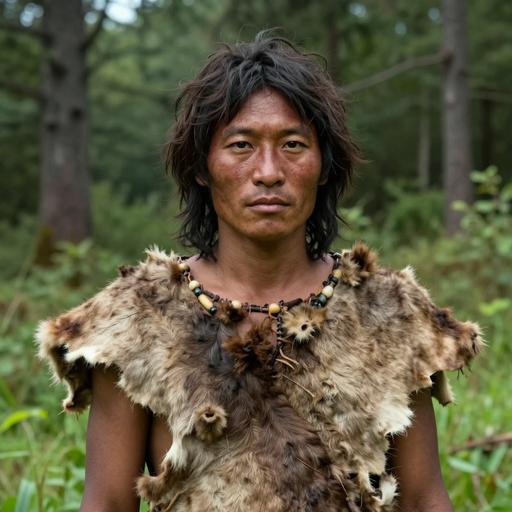
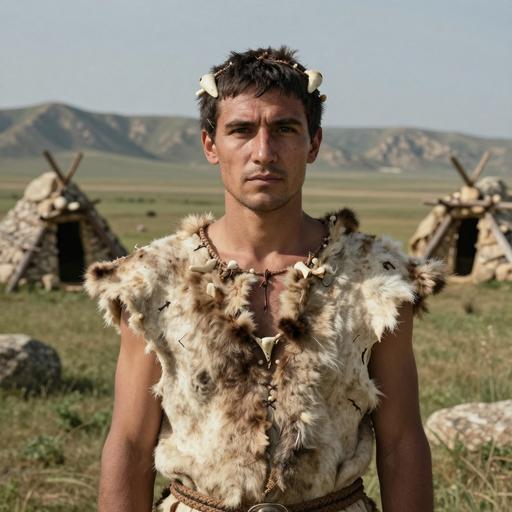
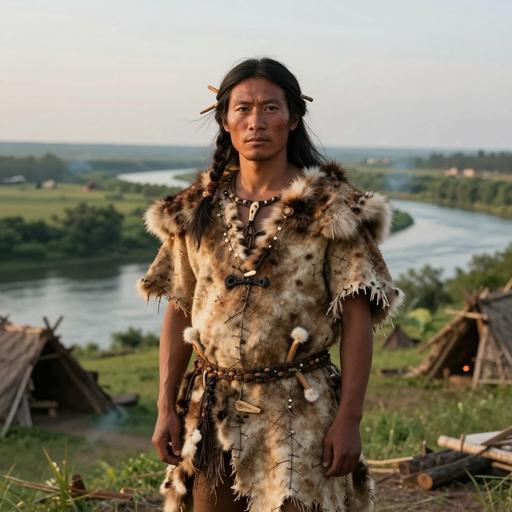
Les portraits sont des illustrations générées par IA. Les libellés d'échantillon et identifiants d'accès désignent les enregistrements de référence.

Portrait Échantillon Pays Époque Date Culture Y-DNA Correspondance
Portrait illustratif généré par IA de Contemporary individual, Kipchak. Turkic. Kazak Autonomous County of Aksay. Gansu. Y.haplogroup=C, China (c. 2,000 CE)
Identifiant d'échantillon : HK03
China Modern China 2000 CE Chinese C Direct
Portrait illustratif généré par IA de Contemporary individual, Kipchak. Turkic. Kazak Autonomous County of Aksay. Gansu. Y.haplogroup=C, China (c. 2,000 CE)
Identifiant d'échantillon : HK14
China Modern China 2000 CE Chinese C Direct
Portrait illustratif généré par IA de Contemporary individual, Mongolic. Sunan. Gansu. Y.haplogroup=C, China (c. 2,000 CE)
Identifiant d'échantillon : EYG18
China Modern China 2000 CE Chinese C Direct
Portrait illustratif généré par IA de Contemporary individual, Chinese. Sino-Tibetan. Jiangsu. Y.haplogroup=C, China (c. 2,000 CE)
Identifiant d'échantillon : Han2076
China Modern China 2000 CE Chinese C Direct
Portrait illustratif généré par IA de Contemporary individual, Chinese. Sino-Tibetan. Shandong. Y.haplogroup=C, China (c. 2,000 CE)
Identifiant d'échantillon : Han4
China Modern China 2000 CE Chinese C Direct
Portrait illustratif généré par IA de Contemporary individual, Chinese. Sino-Tibetan. Shandong. Y.haplogroup=C, China (c. 2,000 CE)
Identifiant d'échantillon : Han1616
China Modern China 2000 CE Chinese C Direct
Portrait illustratif généré par IA de Contemporary individual, Chinese. Sino-Tibetan. Shandong. Y.haplogroup=C, China (c. 2,000 CE)
Identifiant d'échantillon : Han1978
China Modern China 2000 CE Chinese C Direct
Portrait illustratif généré par IA de Contemporary individual, Chinese. Sino-Tibetan. Sichuan. Y.haplogroup=C, China (c. 2,000 CE)
Identifiant d'échantillon : Han1709
China Modern China 2000 CE Chinese C Direct
Portrait illustratif généré par IA de Contemporary individual, Chinese. Sino-Tibetan. Sichuan. Y.haplogroup=C, China (c. 2,000 CE)
Identifiant d'échantillon : Han2044
China Modern China 2000 CE Chinese C Direct
Portrait illustratif généré par IA de Contemporary individual, Tibetic. Bodish. Sino-Tibetan. Xunhua. Qinghai. Y.haplogroup=C, China (c. 2,000 CE)
Identifiant d'échantillon : XHTB20
China Modern China 2000 CE Chinese C Direct
LIGNÉE PATERNELLE · ADN ANTIQUE

Carte des preuves de lignées antiques

Suivez les clades parents jusqu'à cette branche et explorez où des porteurs antiques ont été identifiés.

Chargement des observations antiques…

Les marqueurs indiquent des lieux de découvertes archéologiques. Un trait pointillé représente une transition géographique proposée et incertaine entre branches consécutives, appuyée sur plusieurs observations datées ; ce n'est pas un itinéraire exact, un lieu de naissance ni une preuve de descendance directe. Des échantillons de clades parents peuvent appartenir à d'autres branches descendantes. Des lacunes subsistent lorsque les preuves sont insuffisantes. Les dates d'échantillon diffèrent des dates de formation des haplogroupes.

Profil de référence

Carte de répartition des porteurs

Répartition géographique de 35 échantillons d'ADN ancien (porteurs directs et de sous-clade de C)

Porteur direct Porteur de sous-clade
Filtre de période
Toutes les périodes
Affichage de tous les échantillons
Profil de référence

Répartition temporelle

Répartition des porteurs selon les périodes archéologiques

Profil de référence

Répartition géographique

Effectifs par pays d'échantillon consigné. Ils reflètent la sélection de référence disponible, pas des fréquences de population.

Profil de référence

Répartition pays × époque

Comparez les effectifs d'échantillons consignés selon les pays et les périodes archéologiques. Sélectionnez une cellule renseignée pour examiner un échantillon.

Données

Données et provenance

Informations sur les sources et qualité des données

Dernière mise à jour 2026-06-15

Source des données

La classification, les dates estimées et le contexte géographique reflètent les données de référence consignées et peuvent évoluer lorsque les éléments sont révisés. La couverture d'échantillons est inégale ; les lieux consignés et les associations archéologiques n'établissent pas une origine personnelle ni une identité culturelle.