Aller au contenu principal
Y-DNA · lignée Paternelle

P

P (K2b2)

Y-DNA Haplogroup P

Profil de référence pour une branche de lignée. Des haplogroupes partagés n'établissent pas de lien familial ni d'identité culturelle.

Profil de référence

Contexte de la branche

Contexte historique de la branche de lignée Y-DNA P

Origins and Evolution

Y-DNA haplogroup P is an important intermediate branch of the paternal phylogeny, arising within the K macrohaplogroup and giving rise to the major descendant lineages Q and R. Because Q and R are among the most successful Y-chromosome clades in Eurasian prehistory, haplogroup P occupies a key phylogenetic position linking older Upper Paleolithic lineages to later population expansions.

Most population-genetic models place the origin of P in northern Eurasia or Central Asia during the Upper Paleolithic, roughly 35 thousand years ago. Its precise homeland remains uncertain because the lineage likely diversified in a mobile hunter-gatherer context, and ancient DNA evidence for very early P is limited compared with its descendants. The split between P and its sister lineages reflects a major branching event in the Eurasian paternal tree, eventually leading to the spread of R1a, R1b, and Q across large portions of the world.

Subclades

Haplogroup P is best understood as a parent clade rather than a terminal lineage. Its two most important downstream branches are:

  • P1 (P-M45): the branch that gave rise to Q and R
  • Additional rare or basal substructure reported in some phylogenetic schemes, though most discussions of P focus on its role as the ancestor of Q and R

The descendants of P are far more common than P itself in modern populations, which is why P often appears today as a relatively rare intermediary haplogroup.

Geographical Distribution

Modern P lineages are generally rare and often appear at low frequency or as trace ancestry in populations across Central Asia, Siberia, South Asia, the Middle East, and parts of Eastern Europe. In many regions, P is detected through its downstream descendants rather than as the basal clade itself.

Its importance is therefore less about present-day frequency and more about historical impact. The descendant clades Q and R became dominant across enormous areas, including Europe, parts of western and central Asia, and the Americas. Haplogroup P is thus a deep ancestral node underlying several of the most consequential male-line dispersals in Eurasian prehistory.

Historical and Cultural Significance

Although haplogroup P itself is uncommon in ancient and modern datasets, it is central to the population history of Eurasia because it sits immediately upstream of the main paternal expansions associated with hunter-gatherer mobility, post-glacial recolonization, steppe dispersals, and later demographic turnovers.

Its descendant R lineages are strongly associated with Bronze Age expansions on the Eurasian steppe, while Q is especially important for ancient North Eurasian ancestry and the peopling of the Americas via Beringia. For this reason, haplogroup P functions as a foundational marker in reconstructing the deep structure of Eurasian paternal ancestry.

Conclusion

Y-DNA haplogroup P is a rare but highly significant intermediate paternal lineage that bridges early Upper Paleolithic Y-chromosome diversity and the later global success of haplogroups Q and R. Its presence in the phylogenetic tree marks one of the pivotal ancestral splits in human male history, with long-term consequences for the genetic structure of Eurasia and the Americas.

Points clés

  • Origins and Evolution
  • Subclades
  • Geographical Distribution
  • Historical and Cultural Significance
  • Conclusion
Profil de référence

Arbre et relations

Contexte phylogénétique et sous-clades

Voie évolutive

Suivez les branches parentes consignées jusqu'à P. Les dates sont des estimations et peuvent évoluer lorsque les données de référence sont révisées.

Étapes Haplogroupe Âge estimé Époque archéologique Temps écoulé Descendants immédiats Descendants modernes testés Liens anciens
1 P Actuel ~35,000 years ago Paleolithic 35,000 ans 3 194 19
Profil de référence

Dans le monde

Distribution géographique et présence moderne

Origine consignée

Northern Eurasia or Central Asia

Distribution moderne

The populations where Y-DNA haplogroup P is found include:

  1. Central Asian populations at low frequency
  2. Siberian and North Eurasian populations at low frequency
  3. South Asian populations at low frequency
  4. Middle Eastern populations at low frequency
  5. Eastern European populations at low frequency
  6. Populations carrying downstream Q and R lineages across Eurasia and the Americas

Présence régionale

Central Asia Low
Siberia Low
South Asia Low
Western Asia Low
Eastern Europe Low
Contexte historique

Une branche dans le temps

Formation estimée sur une chronologie historique large. Les repères de période servent de contexte et n'impliquent pas de lien avec des cultures particulières.

  1. Il y a ~50k ans

    Paléolithique supérieur

    Outils avancés, art et essor culturel

  2. Il y a ~35k ans

    Haplogroupe P

    Formation estimée de cette branche Y-DNA ; les dates et les lieux sont des estimations de référence.

    Cette branche
  3. Il y a ~20k ans

    Dernier maximum glaciaire

    Apogée de la dernière période glaciaire, populations isolées

  4. Il y a ~10k ans

    Révolution néolithique

    Début de l'agriculture et émergence de communautés sédentaires

  5. Il y a ~5k ans

    Âge du bronze

    Travail des métaux, écriture et premières civilisations

  6. Il y a ~3k ans

    Âge du fer

    Outils en fer, réseaux d'échanges élargis

  7. Il y a ~2.5k ans

    Antiquité classique

    Floraison des civilisations grecque et romaine

  8. Aujourd'hui

    Aujourd'hui

    Époque moderne

Profil de référence

Contexte archéologique

Associations archéologiques consignées pour la branche Y-DNA P

Associations consignées

Ces libellés décrivent des contextes archéologiques consignés pour des échantillons de référence liés à P. Une association n'établit pas que tous les porteurs appartenaient à une culture ni qu'ils ont suivi une route migratoire précise.

Chinese Neolithic Ganj Dareh Culture German Mesolithic Gumelnița Italian Epigravettian Unetice Yamnaya Yana Culture
Les attributions culturelles reposent sur le contexte archéologique des échantillons d'ADN ancien et peuvent refléter des associations régionales à certaines périodes.
Profil de référence

Catalogue d'échantillons

2 porteurs directs et 17 porteurs de sous-clade de l'haplogroupe P

10 affiché(s) · 19 échantillons correspondants

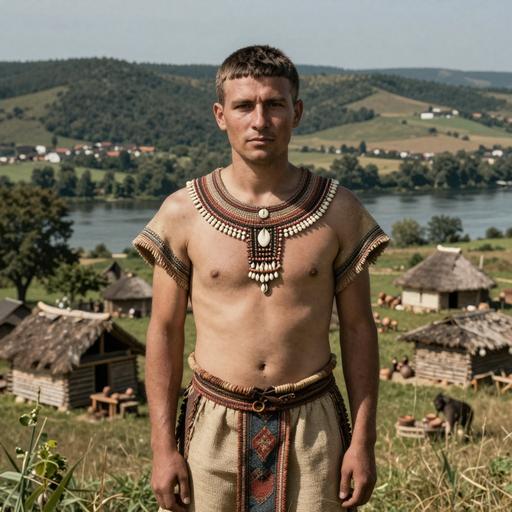
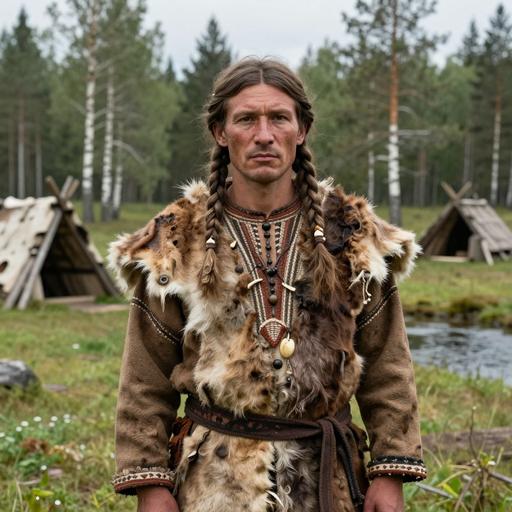
Les portraits sont des illustrations générées par IA. Les libellés d'échantillon et identifiants d'accès désignent les enregistrements de référence.

Portrait Échantillon Pays Époque Date Culture Y-DNA Correspondance
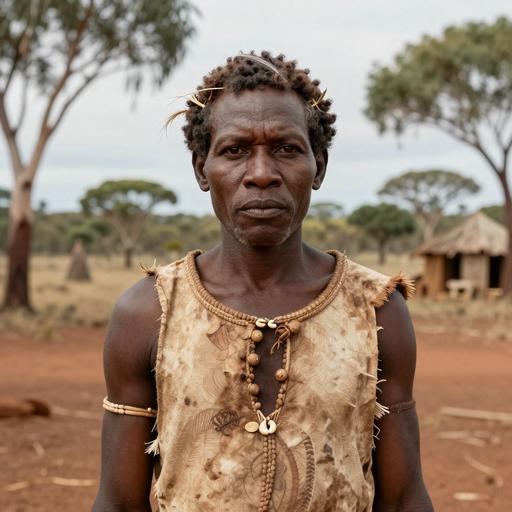
Portrait illustratif généré par IA de Aboriginal Australian individual, Mapoon (Queensland, Cape York), Australia (410-1,788 CE)
Identifiant d'échantillon : MH7_merged
Australia Aboriginal Australians of Queensland 410 CE - 1788 CE Queensland Aboriginal P Direct
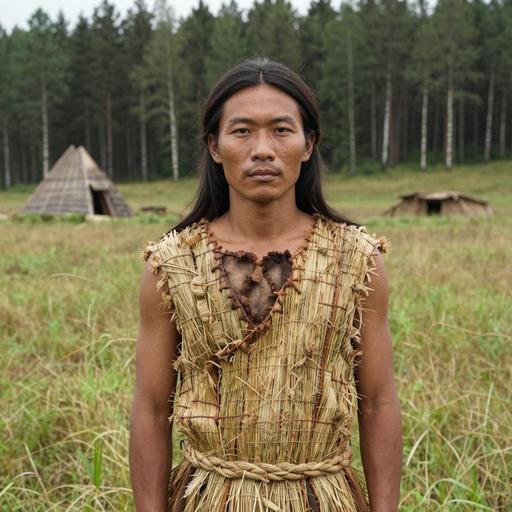
Portrait illustratif généré par IA de East Asian Neolithic individual, Amur River Basin, China (7,458-7,088 BCE)
Identifiant d'échantillon : NE45
China Early Neolithic China 7458 BCE - 7088 BCE Chinese Neolithic P Direct
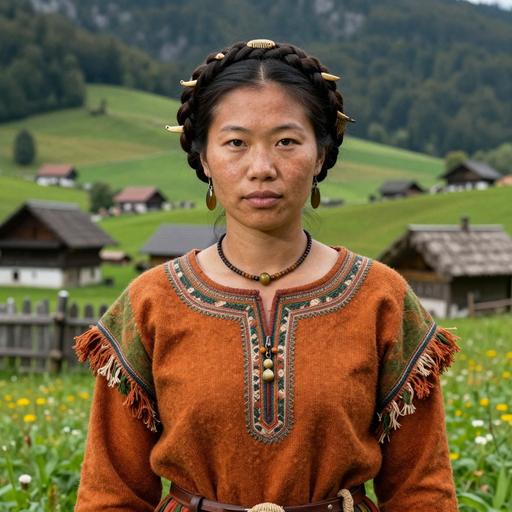
Portrait illustratif généré par IA de IA Wielbark individual, Kowalewko (Greater Poland Province, Oborniki), Poland (85-235 CE)
Identifiant d'échantillon : PCA0037
Poland Wielbark Culture 50-250 BCE Wielbark P140 Sous-clade
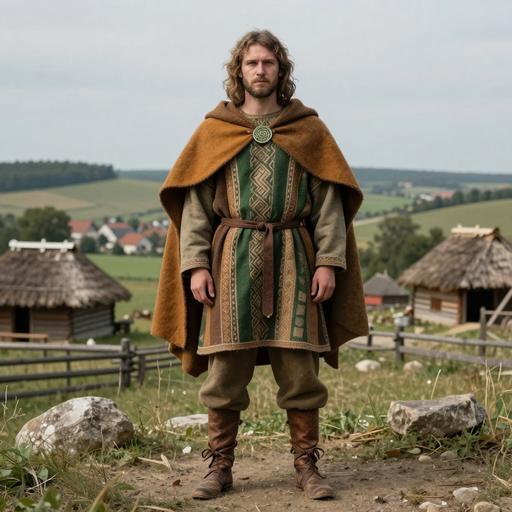
Portrait illustratif généré par IA de Roman Wielbark individual, Pruszcz Gdański (Pomeranian Province, Gdańsk, Pruszcz Gdański), Poland (100-300 CE)
Identifiant d'échantillon : PCA0480
Poland Wielbark Culture 100-300 CE Wielbark P109 Sous-clade
Portrait illustratif généré par IA de Roman Wielbark individual, Pruszcz Gdański (Pomeranian Province, Gdańsk, Pruszcz Gdański), Poland (100-300 CE)
Identifiant d'échantillon : PCA0481
Poland Wielbark Culture 100-300 CE Wielbark P220 Sous-clade
Portrait illustratif généré par IA de IA Wielbark individual, Masłomęcz (Lublin Province, Hrubieszów County, Hrubieszów), Poland (200-400 CE)
Identifiant d'échantillon : PCA0091
Poland Wielbark Culture 200-400 CE Wielbark P30 Sous-clade
Portrait illustratif généré par IA de Hallstatt individual, Asperg "Grafenbuehl" (Baden-Württemberg, Ludwigsburg), Germany (480-450 BCE)
Identifiant d'échantillon : APG003
Germany Hallstatt Culture 500-450 BCE Hallstatt P312 Sous-clade
Portrait illustratif généré par IA de Hallstatt individual, Asperg "Grafenbuehl" (Baden-Württemberg, Ludwigsburg), Germany (500-480 BCE)
Identifiant d'échantillon : APG001
Germany Hallstatt Culture 500-450 BCE Hallstatt P312 Sous-clade
Portrait illustratif généré par IA de Hallstatt individual, Eberdingen-Hochdorf "Biegel" (Baden-Württemberg, Ludwigsburg), Germany (530-520 BCE)
Identifiant d'échantillon : HOC001
Germany Hallstatt Culture 550-500 BCE Hallstatt P311 Sous-clade
Portrait illustratif généré par IA de IA individual, Poznań-Śródka (Greater Poland Province, Poznań), Poland (1,000-1,200 CE)
Identifiant d'échantillon : PCA0238
Poland Iron Age Poznań Środka Culture 1000-1200 CE Poznań Środka Culture P236 Sous-clade
LIGNÉE PATERNELLE · ADN ANTIQUE

Carte des preuves de lignées antiques

Suivez les clades parents jusqu'à cette branche et explorez où des porteurs antiques ont été identifiés.

Chargement des observations antiques…

Les marqueurs indiquent des lieux de découvertes archéologiques. Un trait pointillé représente une transition géographique proposée et incertaine entre branches consécutives, appuyée sur plusieurs observations datées ; ce n'est pas un itinéraire exact, un lieu de naissance ni une preuve de descendance directe. Des échantillons de clades parents peuvent appartenir à d'autres branches descendantes. Des lacunes subsistent lorsque les preuves sont insuffisantes. Les dates d'échantillon diffèrent des dates de formation des haplogroupes.

Profil de référence

Carte de répartition des porteurs

Répartition géographique de 19 échantillons d'ADN ancien (porteurs directs et de sous-clade de P)

Porteur direct Porteur de sous-clade
Filtre de période
Toutes les périodes
Affichage de tous les échantillons
Profil de référence

Répartition temporelle

Répartition des porteurs selon les périodes archéologiques

Profil de référence

Répartition géographique

Effectifs par pays d'échantillon consigné. Ils reflètent la sélection de référence disponible, pas des fréquences de population.

Profil de référence

Répartition pays × époque

Comparez les effectifs d'échantillons consignés selon les pays et les périodes archéologiques. Sélectionnez une cellule renseignée pour examiner un échantillon.

Données

Données et provenance

Informations sur les sources et qualité des données

Dernière mise à jour 2026-06-17

Source des données

La classification, les dates estimées et le contexte géographique reflètent les données de référence consignées et peuvent évoluer lorsque les éléments sont révisés. La couverture d'échantillons est inégale ; les lieux consignés et les associations archéologiques n'établissent pas une origine personnelle ni une identité culturelle.