Aller au contenu principal
Y-DNA · lignée Paternelle

R1B1A1B1B

Y-DNA Haplogroup R1B1A1B1B

Profil de référence pour une branche de lignée. Des haplogroupes partagés n'établissent pas de lien familial ni d'identité culturelle.

Profil de référence

Contexte de la branche

Contexte historique de la branche de lignée Y-DNA R1B1A1B1B

Origins and Evolution

Y-DNA haplogroup R1b1a1b1b is a subclade within the broader R1b paternal tree, one of the most studied Y-chromosome lineages in western Eurasia. Because it sits well below the major R1b branches that expanded dramatically during later prehistoric periods, this lineage is best understood as a deep, minor branch preserving older demographic structure in West Eurasia.

The most reasonable inference from its phylogenetic position is that R1b1a1b1b emerged in West Eurasia during the late Paleolithic to early Holocene, after the initial diversification of R1b but before the major Bronze Age expansions of better-known western European subclades. Its present-day rarity suggests that it did not undergo the large founder effects seen in lineages such as R1b-L21 or R1b-P312, but instead survived in scattered populations through drift, local continuity, and repeated regional admixture.

Subclades

As an intermediate branch, R1b1a1b1b is mainly important for connecting deeper R1b ancestry to later regional lineages. In many phylogenetic trees, subclades at this depth can be sparse, poorly sampled, or defined by a limited number of downstream mutations. That means the internal structure of the clade may still be incomplete in public datasets, and new sequencing studies may further refine its branching order.

Because this haplogroup is deep and uncommon, its subclades are more useful for reconstructing ancient population movements than for identifying a single archaeological culture. It likely represents a lineage that was once more widespread across western Eurasian hunter-gatherer or early Holocene populations, later persisting in pockets that became isolated by demographic change.

Geographical Distribution

R1b1a1b1b is expected to occur at low frequencies across a broad but discontinuous distribution. Based on the distribution of its parent clades and comparable ancient Y-DNA lineages, it is most plausibly found in:

  • Western Europe, especially among populations with deep prehistoric ancestry components
  • Southern Europe, including parts of the Iberian Peninsula, Italy, and the Balkans
  • The Caucasus and Anatolia, where deep West Eurasian paternal lineages can persist
  • The Levant and neighboring Near Eastern regions, reflecting ancient regional continuity and later gene flow
  • North Africa, where West Eurasian Y lineages can appear through prehistoric and historic contact
  • Central Asia and the steppe fringe, usually at low levels and often through complex admixture histories

Its geographic pattern is therefore best described as broad but sparse, with no single modern population serving as a clear center of gravity.

Historical and Cultural Significance

Unlike major R1b subclades that are strongly associated with the Bronze Age steppe expansions into Europe, R1b1a1b1b is more likely to reflect older substrate ancestry. This makes it relevant to discussions of the deep prehistory of western Eurasia, including post-glacial recolonization, early Holocene population structure, and the persistence of minor paternal lineages through later demographic turnovers.

It may have been present in groups ancestral to multiple later archaeological horizons, including Mesolithic foragers, early Neolithic contact populations, and later regional mixtures that formed during the Neolithic and Bronze Age. However, there is currently no strong evidence tying this specific subclade to one archaeological culture in the way that some younger R1b branches are linked to Bell Beaker or Yamnaya-derived expansions.

Interpretation in Population Genetics

From a population-genetic perspective, R1b1a1b1b is important because it illustrates that not all R1b lineages belong to the same expansionary history. The modern prominence of R1b in western Europe mostly reflects a few highly successful downstream branches, while deeper R1b subclades can preserve traces of older and more localized paternal diversity.

Its rarity today may be due to:

  • genetic drift in small populations
  • replacement by later founder lineages
  • regional bottlenecks and expansions
  • sampling limitations in ancient and modern datasets

As a result, this haplogroup should be viewed as a phylogenetic relic lineage rather than a marker of a large historically documented migration.

Conclusion

Y-DNA haplogroup R1b1a1b1b is a rare, deep branch of the West Eurasian R1b tree that likely originated in West Eurasia during the late Paleolithic or early Holocene. Its scattered low-frequency presence across Europe, the Near East, the Caucasus, and adjacent regions reflects ancient shared ancestry and long-term demographic continuity rather than a single dramatic prehistoric expansion.

Points clés

  • Origins and Evolution
  • Subclades
  • Geographical Distribution
  • Historical and Cultural Significance
  • Interpretation in Population Genetics

Profil de référence

Arbre et relations

Contexte phylogénétique et sous-clades

Voie évolutive

Suivez les branches parentes consignées jusqu'à R1B1A1B1B. Les dates sont des estimations et peuvent évoluer lorsque les données de référence sont révisées.

Étapes Haplogroupe Âge estimé Époque archéologique Temps écoulé Descendants immédiats Descendants modernes testés Liens anciens
1 R1B1A1B1B Actuel ~15,000 years ago Mesolithic 15,000 ans 1 45 0
2 R1B1A1B1 ~18,000 years ago Mesolithic 18,000 ans 2 2,085 0
3 R1B1A1B ~18,000 years ago Mesolithic 18,000 ans 2 2,317 31
4 R1B1A1 ~18,000 years ago Mesolithic 18,000 ans 2 2,321 0
5 R1B1A ~18,000 years ago Mesolithic 18,000 ans 2 4,020 39
6 R1B1 ~18,000 years ago Mesolithic 18,000 ans 2 4,166 0
7 R1b ~20,000 years ago Mesolithic 20,000 ans 2 4,262 126

Branches sœurs (1)

Autres branches issues du même haplogroupe parent

Profil de référence

Dans le monde

Distribution géographique et présence moderne

Origine consignée

West Eurasia

Distribution moderne

The populations where Y-DNA haplogroup R1b1a1b1b is found include:

  1. Western and Central European populations at low frequency
  2. Southern European populations, including Iberian, Italian, and Balkan groups
  3. Caucasus and Anatolian populations
  4. Levantine populations
  5. North African populations with West Eurasian admixture
  6. Some Central Asian and steppe-adjacent populations

Présence régionale

Western Europe High
Northern Europe (British Isles, Scandinavia) High
Southern Europe (Iberia, France Iberian fringe) Moderate
Central Europe Moderate
Eastern Europe Low
North Africa (coastal) Low
Near East Low
Central Asia Low
North America (diaspora) Low
Western Asia Low
North Africa Low
Contexte historique

Une branche dans le temps

Formation estimée sur une chronologie historique large. Les repères de période servent de contexte et n'impliquent pas de lien avec des cultures particulières.

  1. Il y a ~20k ans

    Dernier maximum glaciaire

    Apogée de la dernière période glaciaire, populations isolées

  2. Il y a ~15k ans

    Haplogroupe R1B1A1B1B

    Formation estimée de cette branche Y-DNA ; les dates et les lieux sont des estimations de référence.

    Cette branche
  3. Il y a ~10k ans

    Révolution néolithique

    Début de l'agriculture et émergence de communautés sédentaires

  4. Il y a ~5k ans

    Âge du bronze

    Travail des métaux, écriture et premières civilisations

  5. Il y a ~3k ans

    Âge du fer

    Outils en fer, réseaux d'échanges élargis

  6. Il y a ~2.5k ans

    Antiquité classique

    Floraison des civilisations grecque et romaine

  7. Aujourd'hui

    Aujourd'hui

    Époque moderne

Profil de référence

Contexte archéologique

Associations archéologiques consignées pour la branche Y-DNA R1B1A1B1B

Associations consignées

Ces libellés décrivent des contextes archéologiques consignés pour des échantillons de référence liés à R1B1A1B1B. Une association n'établit pas que tous les porteurs appartenaient à une culture ni qu'ils ont suivi une route migratoire précise.

Afanasievo British Neolithic Moldova_EBA_Yamnaya Russia_Altai_Afanasievo Russia_Altai_Eneolithic_Afanasievo Russia_AltaiKrai_Afanasievo Russia_Eneolithic_EBA_Caucasus Russia_Volgograd_EBA_Yamnaya Slovakia_EBA_Yamnaya Yamnaya Culture
Les attributions culturelles reposent sur le contexte archéologique des échantillons d'ADN ancien et peuvent refléter des associations régionales à certaines périodes.
Profil de référence

Catalogue d'échantillons

15 porteurs directs et 2 porteurs de sous-clade de l'haplogroupe R1B1A1B1B

10 affiché(s) · 17 échantillons correspondants

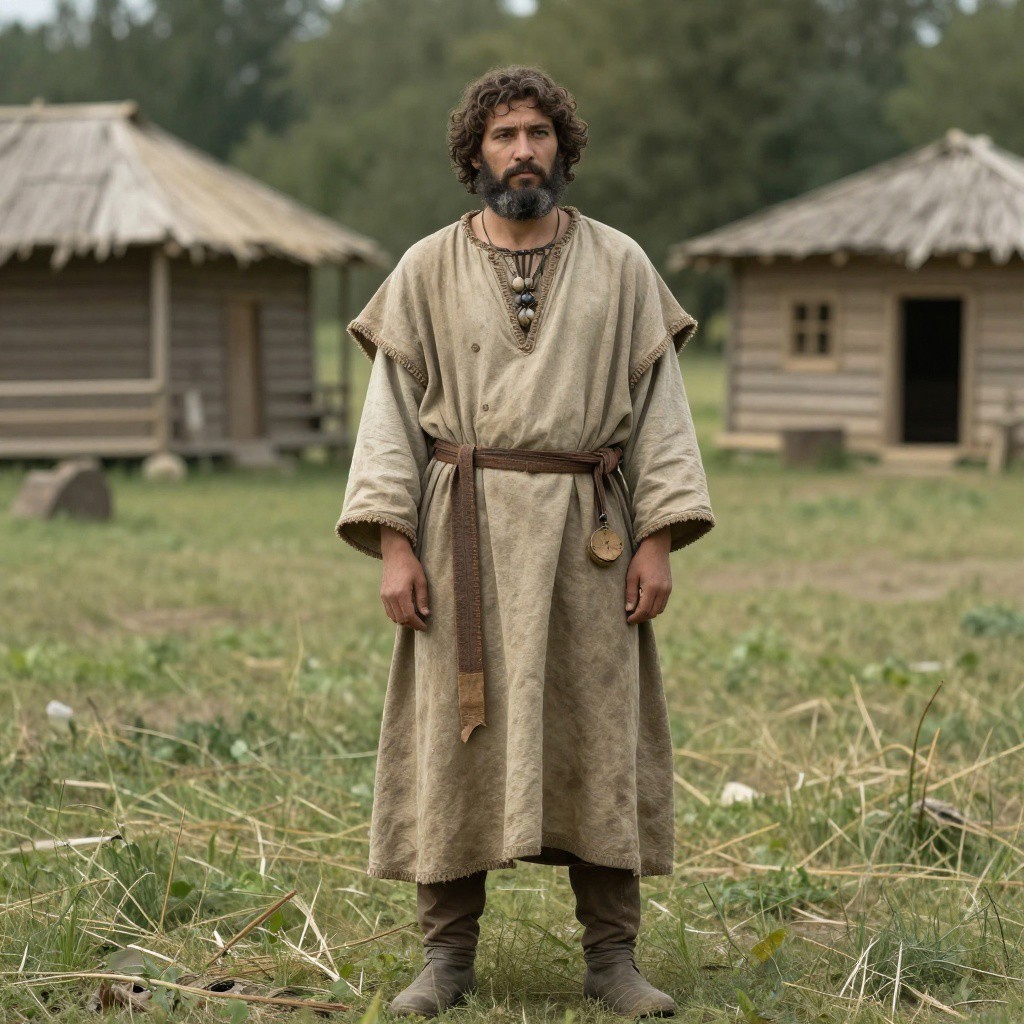
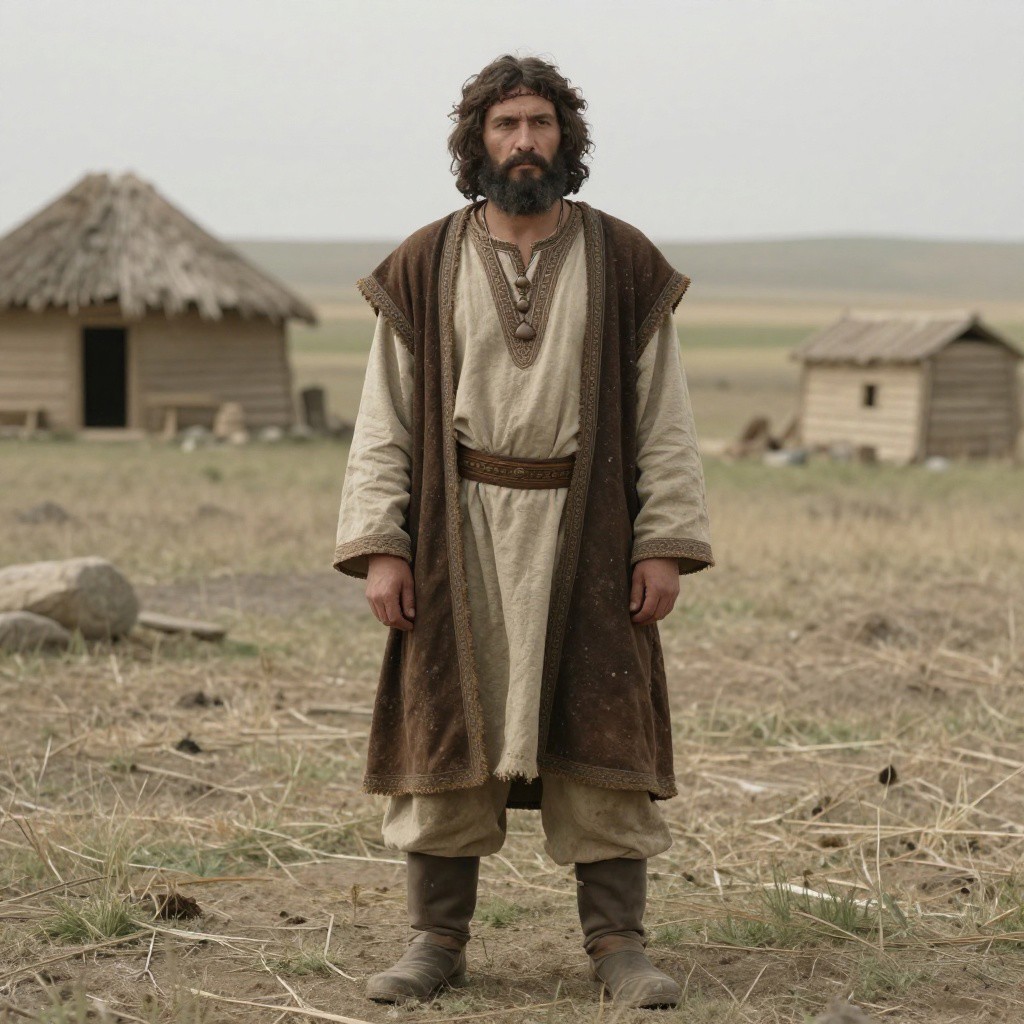
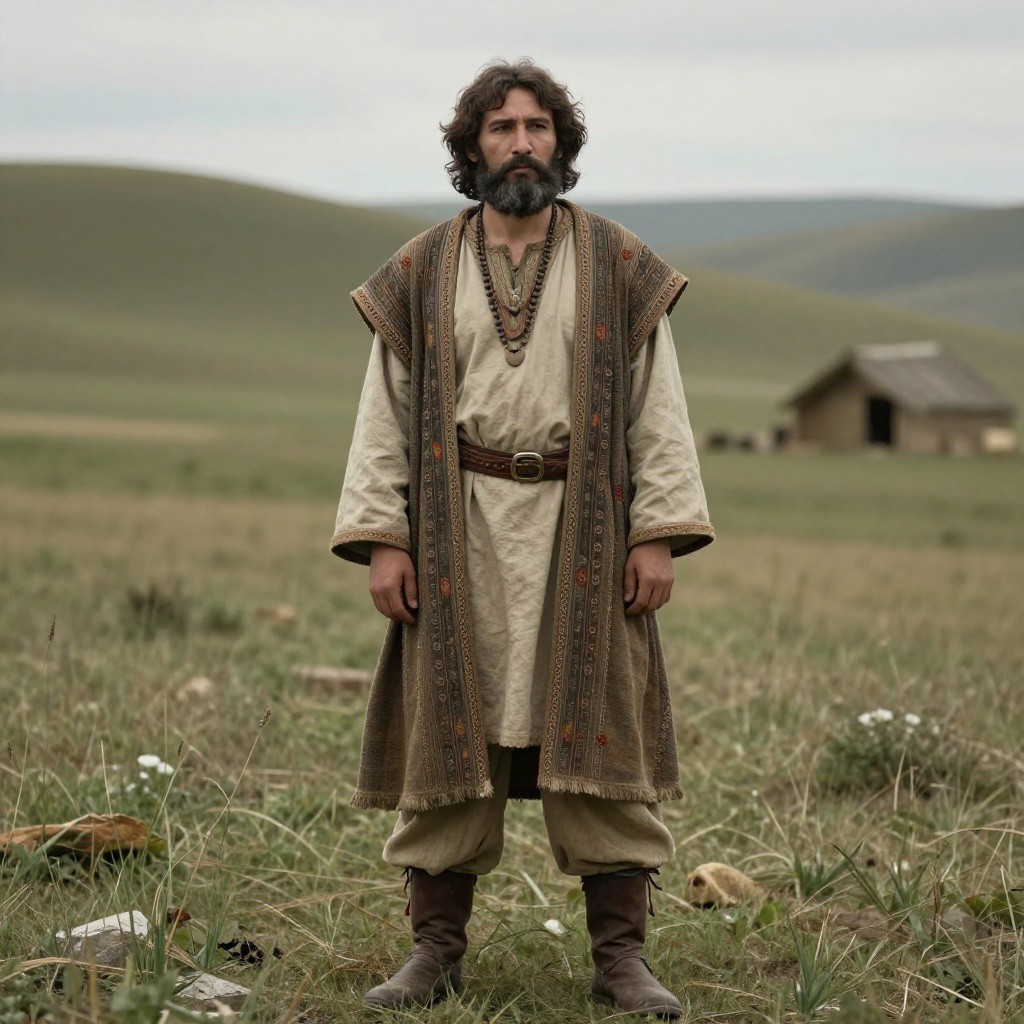
Les portraits sont des illustrations générées par IA. Les libellés d'échantillon et identifiants d'accès désignent les enregistrements de référence.

Portrait Échantillon Pays Époque Date Culture Y-DNA Correspondance
Portrait illustratif généré par IA de Hasanlu IA individual, Hasanlu, Iran (1,011-860 BCE)
Identifiant d'échantillon : I4355
Iran Iran Hasanlu IA 1011-860 calBCE (2795±20 BP, PSUAMS-2772) Hasanlu Culture R1b1a1b1b Direct
Portrait illustratif généré par IA de MLBA Caucasus individual, Essentukskiy-1 (Stavropol Krai, Yessentuki Municipality), Russia (1,133-941 BCE)
Identifiant d'échantillon : ESY009
Russia Russia MLBA Caucasus 1122-932 calBCE (2866±24 BP, MAMS-58128) Russia_MLBA_Caucasus R1b1a1b1b Direct
Portrait illustratif généré par IA de Lernakert Veri Berd MLBA individual, Lernakert-Veri Berd (Shirak Province, Artik Municipality), Armenia (1,417-1,273 BCE)
Identifiant d'échantillon : LER005
Armenia Armenia LernakertVeriBerd MLBA 1411-1287 calBCE (3079±14 BP, MAMS-66463) Armenia_LernakertVeriBerd_MLBA R1b1a1b1b Direct
Portrait illustratif généré par IA de MLBA Caucasus individual, Zimnyaya Stavka-1 (Stavropol Krai, Neftekumskiy Municipality), Russia (2,190-1,994 BCE)
Identifiant d'échantillon : ZIM002
Russia Russia MLBA Caucasus 2199-1983 calBCE (3703±27 BP, MAMS-45973) Russia_MLBA_Caucasus R1b1a1b1b Direct
Portrait illustratif généré par IA de MLBA Caucasus individual, Kravchenko-12 (Krasnodar Krai, Abinsky District), Russia (2,247-2,015 BCE)
Identifiant d'échantillon : KVO008
Russia Russia MLBA Caucasus 2272-2036 calBCE (3736±27 BP, MAMS-45965) Russia_MLBA_Caucasus R1b1a1b1b Direct
Portrait illustratif généré par IA de MLBA Caucasus individual, Zolotaryovka-1 (Stavropol Krai, Ipatovsky Municipality), Russia (2,248-2,028 BCE)
Identifiant d'échantillon : ZO1006
Russia Russia MLBA Caucasus 2271-2038 calBCE (3740±21 BP, MAMS-42370) Russia_MLBA_Caucasus R1b1a1b1b Direct
Portrait illustratif généré par IA de MLBA Caucasus individual, Kravchenko-12 (Krasnodar Krai, Abinsky District), Russia (2,286-2,054 BCE)
Identifiant d'échantillon : KVO009
Russia Russia MLBA Caucasus 2285-2042 calBCE (3759±26 BP, MAMS-45966) Russia_MLBA_Caucasus R1b1a1b1b Direct
Portrait illustratif généré par IA de MBA Caucasus individual, Vinsady-4 (Stavropol Krai, Predgorny District), Russia (2,889-2,545 BCE)
Identifiant d'échantillon : VS2001
Russia Russia MBA Caucasus 2866-2578 calBCE (4120±27 BP, MAMS-45971) Russia_MBA_Caucasus R1b1a1b1b Direct
Portrait illustratif généré par IA de MBA Caucasus individual, Komsomolec 1-Marfa (Stavropol Krai, Kirovsky Municipality), Russia (2,892-2,580 BCE)
Identifiant d'échantillon : KMM010
Russia Russia MBA Caucasus 2873-2584 calBCE (4136±26 BP, MAMS-45956) Russia_MBA_Caucasus R1b1a1b1b Direct
Portrait illustratif généré par IA de MBA Caucasus individual, Krasnogvardeyskoe (Stavropol Krai, Krasnogvardeysky District), Russia (2,893-2,617 BCE)
Identifiant d'échantillon : KNK001
Russia Russia MBA Caucasus 2878-2631 calBCE (4158±26 BP, MAMS-45959) Russia_MBA_Caucasus R1b1a1b1b Direct
LIGNÉE PATERNELLE · ADN ANTIQUE

Carte des preuves de lignées antiques

Suivez les clades parents jusqu'à cette branche et explorez où des porteurs antiques ont été identifiés.

Chargement des observations antiques…

Les marqueurs indiquent des lieux de découvertes archéologiques. Un trait pointillé représente une transition géographique proposée et incertaine entre branches consécutives, appuyée sur plusieurs observations datées ; ce n'est pas un itinéraire exact, un lieu de naissance ni une preuve de descendance directe. Des échantillons de clades parents peuvent appartenir à d'autres branches descendantes. Des lacunes subsistent lorsque les preuves sont insuffisantes. Les dates d'échantillon diffèrent des dates de formation des haplogroupes.

Profil de référence

Carte de répartition des porteurs

Répartition géographique de 17 échantillons d'ADN ancien (porteurs directs et de sous-clade de R1B1A1B1B)

Porteur direct Porteur de sous-clade
Filtre de période
Toutes les périodes
Affichage de tous les échantillons
Profil de référence

Répartition temporelle

Répartition des porteurs selon les périodes archéologiques

Profil de référence

Répartition géographique

Effectifs par pays d'échantillon consigné. Ils reflètent la sélection de référence disponible, pas des fréquences de population.

Profil de référence

Répartition pays × époque

Comparez les effectifs d'échantillons consignés selon les pays et les périodes archéologiques. Sélectionnez une cellule renseignée pour examiner un échantillon.

Données

Données et provenance

Informations sur les sources et qualité des données

Dernière mise à jour 2026-06-17
Score de confiance 50/100
Couverture Low

Source des données

La classification, les dates estimées et le contexte géographique reflètent les données de référence consignées et peuvent évoluer lorsque les éléments sont révisés. La couverture d'échantillons est inégale ; les lieux consignés et les associations archéologiques n'établissent pas une origine personnelle ni une identité culturelle.