Préparation du rapport

Chargement des informations et références disponibles

Connexion au corpus archéologique…

Collecte des archives antiques

Aller au contenu principal
Aktogai Mid–Late Bronze Horizon
Profil culturel

Aktogai Mid–Late Bronze Horizon

A steppe enclave in eastern Kazakhstan where burials and genomes meet

1750 CE - 1500 BCE
Aktogai, East Kazakhstan
Faites défiler pour commencer
Chapitre I

Le récit

Comprendre la culture Aktogai Mid–Late Bronze Horizon

Archaeological and genomic data from five Mid–Late Bronze Age individuals at Aktogai (1750–1500 BCE) suggest a steppe pastoral community dominated by Y haplogroup R and diverse maternal lineages. Small sample size makes conclusions tentative but evocative of wider Eurasian Bronze Age dynamics.

Time Period

1750–1500 BCE

Region

Aktogai, East Kazakhstan

Common Y-DNA

R (predominant, 4/5)

Common mtDNA

U (2), T (1), N (1), J (1)

Chapitre II

Chronologie

Moments clés de l'histoire de cette culture

1750 BCE

Earliest sampled burials at Aktogai

Burials dated to ~1750 BCE mark the sampled Mid–Late Bronze Age horizon at Aktogai; genetic data begin to reveal steppe-affiliated ancestry patterns.

Chapitre III

Origins & Emergence

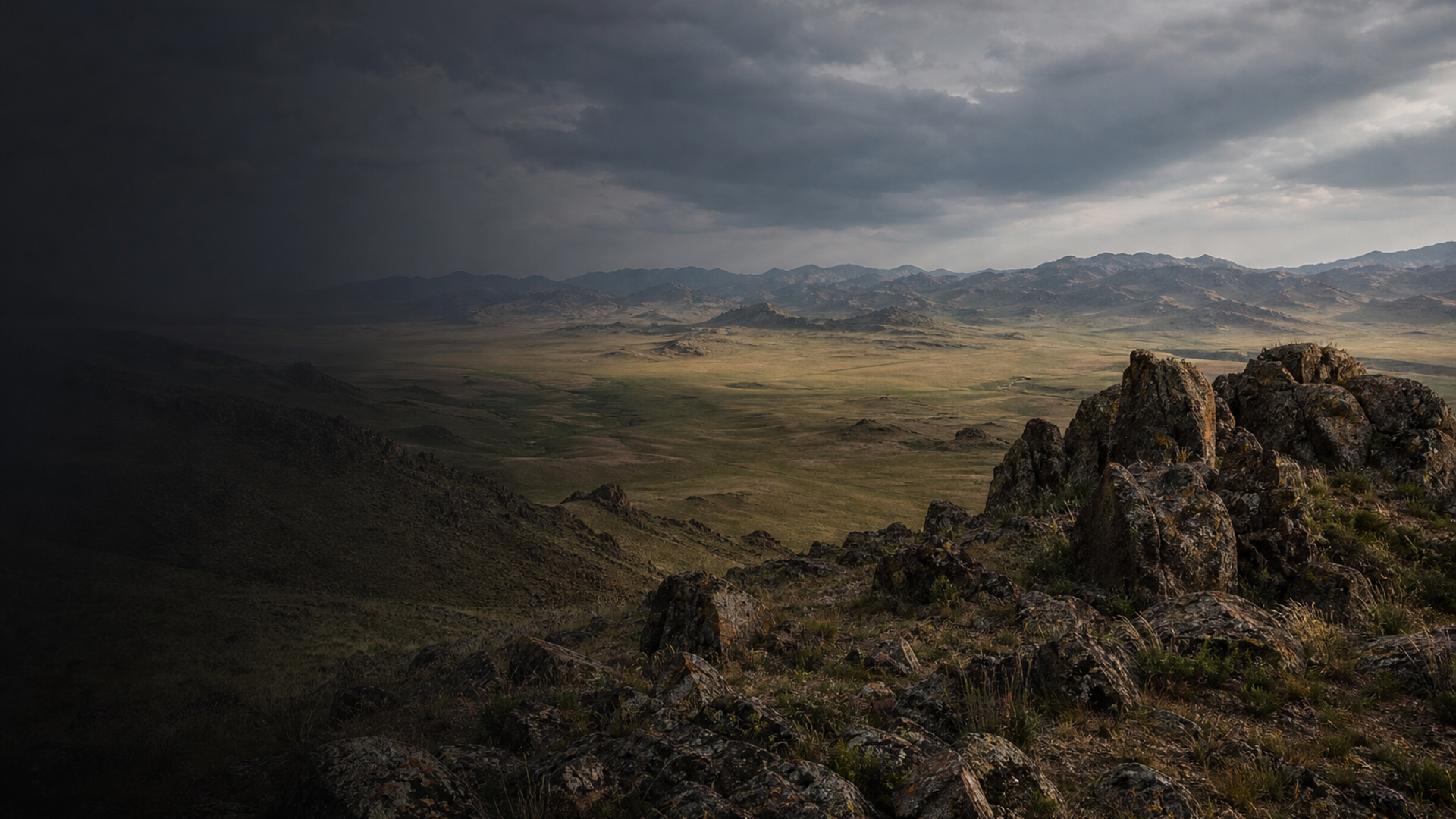
The Aktogai assemblage belongs to a Mid–Late Bronze Age horizon (1750–1500 BCE) in eastern Kazakhstan. Archaeological data indicates ephemeral settlements and funerary traces typical of steppe pastoral groups in the broader Andronovo-Sintashta cultural milieu. Excavations at Aktogai have produced a small cluster of burials and associated artifacts that tie this locality into long-distance networks of metallurgy, animal husbandry, and mobility.

Limited evidence suggests these communities coalesced from earlier Bronze Age traditions on the Kazakh steppe, absorbing influences from eastern forest-steppe and western steppe populations. The landscape that cradled Aktogai—open grasslands punctuated by river valleys—favored mobile pastoralism and episodic aggregation at seasonal camps. Material culture (metalworking debris, ornaments, and portable pastoral tools reported in broader region studies) implies participation in a regional economy shaped by herding, horse use, and exchange of bronze goods.

Because the current sample set is small (five individuals), interpretations of population origins remain provisional. Archaeological context combined with genetic signals, however, points toward a community embedded in Bronze Age steppe dynamics rather than an isolated local phenomenon.

  • Situated in Aktogai, eastern Kazakhstan (1750–1500 BCE)
  • Links to Andronovo–Sintashta steppe interactions
  • Conclusions preliminary due to small sample size (n=5)
Chapitre IV

Daily Life & Society

Daily life at Aktogai can be imagined as a rhythm of herding, seasonal movement, and metallurgy. Archaeological indicators across the region suggest households organized around livestock—sheep, goats, cattle and increasingly horses—whose mobility shaped settlement patterns. Pastoral camps seasonally concentrated near watercourses and pastures, becoming nodes for exchange in times of aggregation.

Burial practices in the Mid–Late Bronze steppe often featured kurgan or flat grave contexts; at Aktogai the funerary record is limited but consistent with regional forms emphasizing individual interment with personal ornaments and occasional metal tools. Such objects speak to social identities linked to craft, mobility, and status. Craft specialists—metalworkers and possibly horse handlers—would have held important roles in a community where bronze objects and horse harness technology mattered far beyond simple utility.

Archaeological evidence indicates a world of long-distance connections: raw materials, finished bronze, and stylistic motifs moved across the steppe. This material mobility would have accompanied gene flow, marriage alliances, and cultural exchange, forming the lived backdrop to the genomes sampled at Aktogai.

  • Pastoral economy centered on herd mobility and seasonal camps
  • Burials reflect individual status and links to regional craft and exchange
Chapitre V

Genetic Profile

Genomic screening of five Aktogai individuals (1750–1500 BCE) reveals a striking paternal consistency alongside maternal diversity. Four of five males carry haplogroup R, a lineage broadly associated with Bronze Age steppe populations across Eurasia. On the maternal side, mtDNA lineages include U (2 individuals), T (1), N (1), and J (1), reflecting a mix of deep Eurasian maternal ancestry often seen in both hunter-gatherer derived and early farming-descended lineages across the steppe corridor.

These genetic signals align with archaeological expectations for a mobile pastoral society that participated in large-scale demographic processes during the Bronze Age. The predominance of Y haplogroup R suggests patrilineal continuity or social structures favoring male lineage transmission, while diverse mtDNA points to exogamous marriage networks bringing women from varied maternal backgrounds. Such a pattern—stable paternal lines with heterogeneous maternal origins—has been documented elsewhere on the steppe.

Caution is essential: with only five genomes, statistical power is limited and subclade resolution is often uncertain. Thus, while the data evoke steppe-affiliated ancestry and social practices consistent with patrilocality and long-distance female mobility, these conclusions must be treated as preliminary until larger samples are analyzed.

  • Y-DNA dominated by R (4/5), suggesting steppe paternal continuity
  • mtDNA diversity (U, T, N, J) indicates varied maternal origins and exogamy
Chapitre VI

Legacy & Modern Connections

Aktogai's genomes offer a cinematic glimpse into processes that shaped modern Eurasian genetic landscapes. The predominance of haplogroup R ties Aktogai to wider Bronze Age steppe expansions that contributed ancestry components now widespread across Eurasia. Maternal diversity hints at long-standing social strategies—marriage networks and mobility—that helped knit vast territories together.

Archaeological and genetic threads from Aktogai feed into larger narratives about the rise of mobile pastoralism, the spread of bronze technologies, and the demographic pulses of the second millennium BCE. Because the sample size is small, these connections remain hypotheses: further excavation and additional ancient genomes from Aktogai and neighboring sites are needed to trace more precisely how this community interacted with contemporaneous cultures and how its ancestry fed into later Kazakh and Central Asian populations.

  • Connects to broader Bronze Age steppe contributions to Eurasian ancestry
  • Further sampling required to clarify impacts on later Central Asian populations
Propulsé par l'IA

Assistant IA

Posez des questions sur la culture Aktogai Mid–Late Bronze Horizon

Assistant IA par DNAGENICS

Débloquer cette fonction
Posez des questions sur la culture Aktogai Mid–Late Bronze Horizon. L'assistant IA peut expliquer les résultats génétiques, le contexte historique, les preuves archéologiques et les liens génétiques avec les populations actuelles, dans les limites de l'interprétation.
Exemple d'analyse IA

La culture Aktogai Mid–Late Bronze Horizon représente un chapitre fascinant de l'histoire humaine…

L'analyse génétique met en évidence des similarités avec des populations antérieures et des signes d'adaptations propres. Les échantillons d'ADN ancien éclairent les schémas migratoires et les liens entre populations, avec des limites qui dépendent de l'étude et du contexte archéologique.

Il s'agit d'un aperçu de l'analyse IA. Accédez à l'assistant complet pour explorer :

  • Composition et similarité génétique
  • Schémas migratoires et origines
  • Vie quotidienne et pratiques culturelles
  • Contexte génétique actuel

Explorez d'autres cultures antiques

Découvrez les récits de civilisations issues du monde antique