Préparation du rapport

Chargement des informations et références disponibles

Connexion au corpus archéologique…

Collecte des archives antiques

Aller au contenu principal
Alt‑Inden Saxons: Voices from the Early Medieval Rhine
Profil culturel

Alt‑Inden Saxons: Voices from the Early Medieval Rhine

Seventeenth genomes from Alt‑Inden illuminate Saxon-era lives along the Rhenish plain

400 CE - 800 CE
Alt‑Inden, North Rhine‑Westphalia, Germany
Faites défiler pour commencer
Chapitre I

Le récit

Comprendre la culture Alt‑Inden Saxons: Voices from the Early Medieval Rhine

Archaeological and genetic evidence from 17 Early Medieval samples (400–800 CE) at Alt‑Inden, North Rhine‑Westphalia, reveals a mixed paternal and maternal heritage—dominated by haplogroup R on the Y‑line and diverse maternal lineages (U, H, T). Results suggest local continuity with threads of mobility and contact.

Time Period

400–800 CE

Region

Alt‑Inden, North Rhine‑Westphalia, Germany

Common Y-DNA

R (10), G (3), I (2), E (1)

Common mtDNA

U (5), H (4), T (2), V3c (1), T2b (1)

Chapitre II

Chronologie

Moments clés de l'histoire de cette culture

400 CE

Beginning of Alt‑Inden sequence

Samples at Alt‑Inden span from about 400 CE, marking local Saxon activity after Roman military withdrawal.

772 CE

Charlemagne begins Saxon campaigns

Frankish expansion under Charlemagne initiates prolonged campaigns into Saxon territories, altering political landscapes across northern Germany.

800 CE

Carolingian consolidation

By circa 800 CE regional integration under Carolingian rule influences settlement, trade, and social networks across the Rhineland.

Chapitre III

Origins & Emergence

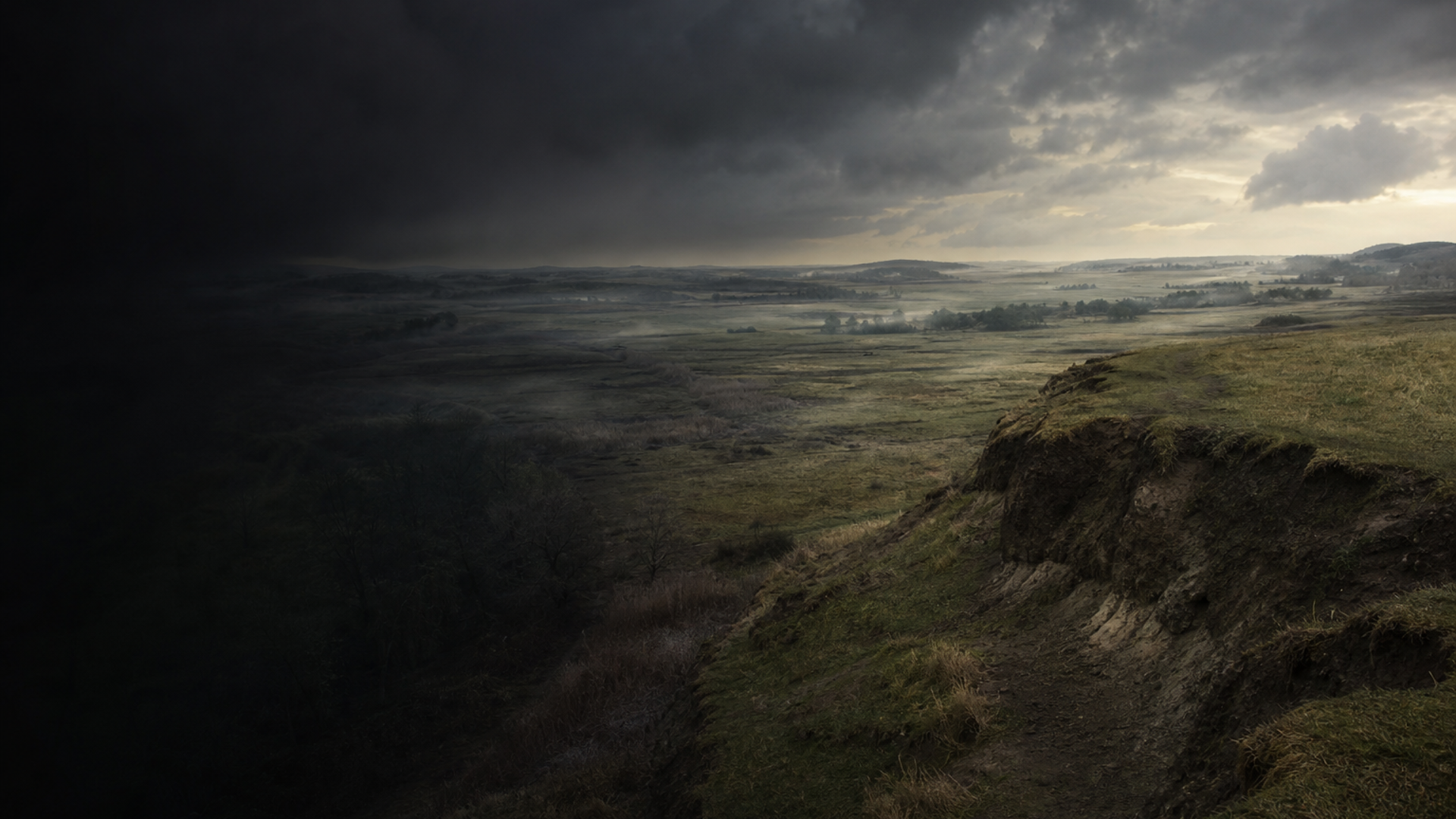
Against the low, fertile plains near the Rhenish coalfield, the cemetery at Alt‑Inden preserves human stories from roughly 400–800 CE—an era when small Saxon polities, Roman legacies, and incoming influences braided together. Archaeological data from Alt‑Inden indicate typical Early Medieval burial practices in this region, with both inhumations and grave goods that suggest localized community identities anchored in northwestern Germanic traditions. Historic sources describe ‘Saxons’ as a fluid coalition of groups rather than a single, uniform people; the Alt‑Inden evidence fits that cinematic picture: a scattering of households bound by kinship, craft, and ritual on the edge of larger political currents.

Genetically, the 17 sequenced individuals provide a snapshot rather than a full portrait. The predominance of Y‑haplogroup R (10/17) points to paternal continuity common across much of western and central Europe during the early medieval period, while the presence of G, I, and E lineages indicates additional strands of ancestry—some possibly reflecting older Neolithic or later, regionally mobile groups. Mitochondrial diversity (U, H, T, among others) suggests varied maternal origins within a compact community. Together, the archaeology and ancient DNA imply a population rooted in the local landscape but receptive to movement and marriage networks across the northern European plain.

Limited evidence and the modest sample size caution against broad generalizations: these genomes illuminate possibilities and processes—migration, kinship, and cultural blending—rather than delivering a final census of Saxon identity at Alt‑Inden.

  • Alt‑Inden dates to 400–800 CE in North Rhine‑Westphalia
  • Burial contexts and small grave inventories indicate local Early Medieval practices
  • Population appears locally rooted but genetically mixed
Chapitre IV

Daily Life & Society

The lived landscape around Alt‑Inden would have been a tapestry of small farms, seasonal woodlands, and emerging market connections along river corridors. Archaeological traces from comparable Saxon contexts in North Rhine‑Westphalia reveal houses built with timber frames, communal labor rhythms keyed to ploughing and herding, and exchange in iron tools, coarse pottery, and personal ornaments. At the individual level, burial treatment—variation in orientation, presence or absence of goods, and body position—speaks to household status, age, and potentially gendered roles.

For the people represented in the Alt‑Inden genomic series, diet and workload can be inferred indirectly: isotope studies at regional sites suggest cereal cultivation, mixed pastoralism, and some reliance on riverine resources. Craft specializations—blacksmithing, textile work, and woodworking—left material signatures in debris and tool marks; these crafts underpinned everyday life and intercommunity trade. Social networks were likely built around kin groups and seasonal gatherings; marriage ties are visible in genetic diversity when maternal and paternal lineages differ across neighboring cemeteries.

Archaeological data indicates continuity with late Roman economic patterns alongside new local customs. The cinematic vision—families lighting hearths under timber roofs while distant cavalry and traders pass along river routes—captures the dynamism of Early Medieval Saxon life at Alt‑Inden. Yet, many behavioral details remain invisible in both bones and genes, so reconstructions must remain cautious and evidence‑driven.

  • Rural households organized around mixed farming and local crafts
  • Burial variation hints at social differentiation and household identities
Chapitre V

Genetic Profile

Seventeen genomes from Alt‑Inden offer a compact but informative window into Early Medieval population structure. On the paternal side, haplogroup R dominates (10/17), with smaller counts of G (3), I (2), and E (1). While the label “R” covers diverse sublineages, its prevalence aligns with broader patterns across Western and Central Europe in this period—consistent with substantial local continuity of male lines. Haplogroup G presence may reflect older Neolithic or later mobility episodes reaching the German plain, and I and E lineages point to further heterogeneity in paternal ancestry.

Mitochondrial data adds another dimension: U (5) and H (4) are the most frequent maternal haplogroups, with T (2), V3c (1), and T2b (1) present as well. This mix indicates robust maternal diversity, compatible with patrilocal residence patterns where women marry into local groups from varied backgrounds, or with long‑standing local heterogeneity at the maternal level. The combination of a dominant paternal haplogroup and more varied maternal haplogroups mirrors patterns seen elsewhere in early medieval Europe, suggesting structured marriage and mobility practices.

Importantly, with only 17 samples these patterns should be treated as preliminary. The sample size supports plausible inferences about heterogeneity and continuity but cannot capture the full demographic complexity of Saxon society across time and space. Future comparative analyses with nearby cemeteries and isotope data would help clarify whether observed lineages reflect local families, recent migrants, or wider regional networks.

  • Paternal skew toward R (10/17) with minority G, I, E lineages
  • Maternal diversity (U, H, T, V3c, T2b) suggests varied female origins
Chapitre VI

Legacy & Modern Connections

The Alt‑Inden genomes anchor a fragment of Saxon heritage to a precise place and time. Elements of the haplogroup composition—especially the persistence of R and the common maternal H and U lineages—are found in modern populations of northern and western Europe, indicating threads of genetic continuity across 1,200 years. Archaeologically, the social practices inferred at Alt‑Inden—household farming, craft production, and participation in regional exchange—feed into long‑term patterns that shaped medieval and later settlement in the Rhineland.

For people tracing ancestry in Germany and beyond, the Alt‑Inden data offers a tangible reminder: genetic signals are palimpsests of migration, marriage, and local persistence. Because the dataset is modest (17 individuals), links to modern populations are suggestive rather than definitive. Still, when combined with larger regional ancient DNA studies and archaeological context, these genomes help chart how Early Medieval communities contributed to the genetic and cultural foundations of modern Europe.

Archaeology and genetics together transform silent bones into narrated lives—small windows through which the distant past speaks to present‑day identities.

  • Genetic continuity visible but not definitive due to limited sample size
  • Combined archaeological and genetic data link Alt‑Inden to broader European histories
Propulsé par l'IA

Assistant IA

Posez des questions sur la culture Alt‑Inden Saxons: Voices from the Early Medieval Rhine

Assistant IA par DNAGENICS

Débloquer cette fonction
Posez des questions sur la culture Alt‑Inden Saxons: Voices from the Early Medieval Rhine. L'assistant IA peut expliquer les résultats génétiques, le contexte historique, les preuves archéologiques et les liens génétiques avec les populations actuelles, dans les limites de l'interprétation.

Exemple d'analyse IA

La culture Alt‑Inden Saxons: Voices from the Early Medieval Rhine représente un chapitre fascinant de l'histoire humaine…

L'analyse génétique met en évidence des similarités avec des populations antérieures et des signes d'adaptations propres. Les échantillons d'ADN ancien éclairent les schémas migratoires et les liens entre populations, avec des limites qui dépendent de l'étude et du contexte archéologique.

Il s'agit d'un aperçu de l'analyse IA. Accédez à l'assistant complet pour explorer :

  • Composition et similarité génétique
  • Schémas migratoires et origines
  • Vie quotidienne et pratiques culturelles
  • Contexte génétique actuel

Explorez d'autres cultures antiques

Découvrez les récits de civilisations issues du monde antique