Préparation du rapport

Chargement des informations et références disponibles

Connexion au corpus archéologique…

Collecte des archives antiques

Aller au contenu principal
Altai Neanderthal: Echoes from Denisova Cave
Profil culturel

Altai Neanderthal: Echoes from Denisova Cave

A solitary genetic voice from the Altai mountains that reshapes our view of Neanderthal diversity.

128050 CE - 88950 BCE
Altai (Denisova Cave), Russia
Faites défiler pour commencer
Chapitre I

Le récit

Comprendre la culture Altai Neanderthal: Echoes from Denisova Cave

Single-sample genetic and archaeological evidence from Denisova Cave (Altai, Russia) illuminates a Pleistocene Neanderthal population dated 128,050–88,950 BCE. Limited data suggest regional differentiation and deep connections across Eurasia; conclusions remain preliminary due to one sample.

Time Period

128050–88950 BCE

Region

Altai (Denisova Cave), Russia

Common Y-DNA

Unknown (no data)

Common mtDNA

ND (1 sample)

Chapitre II

Chronologie

Moments clés de l'histoire de cette culture

128050 BCE

Earliest dated occupation associated with Altai Neanderthal

Stratigraphic and genetic evidence places an Altai Neanderthal individual at Denisova Cave around 128,050 BCE; interpretations remain preliminary.

Chapitre III

Origins & Emergence

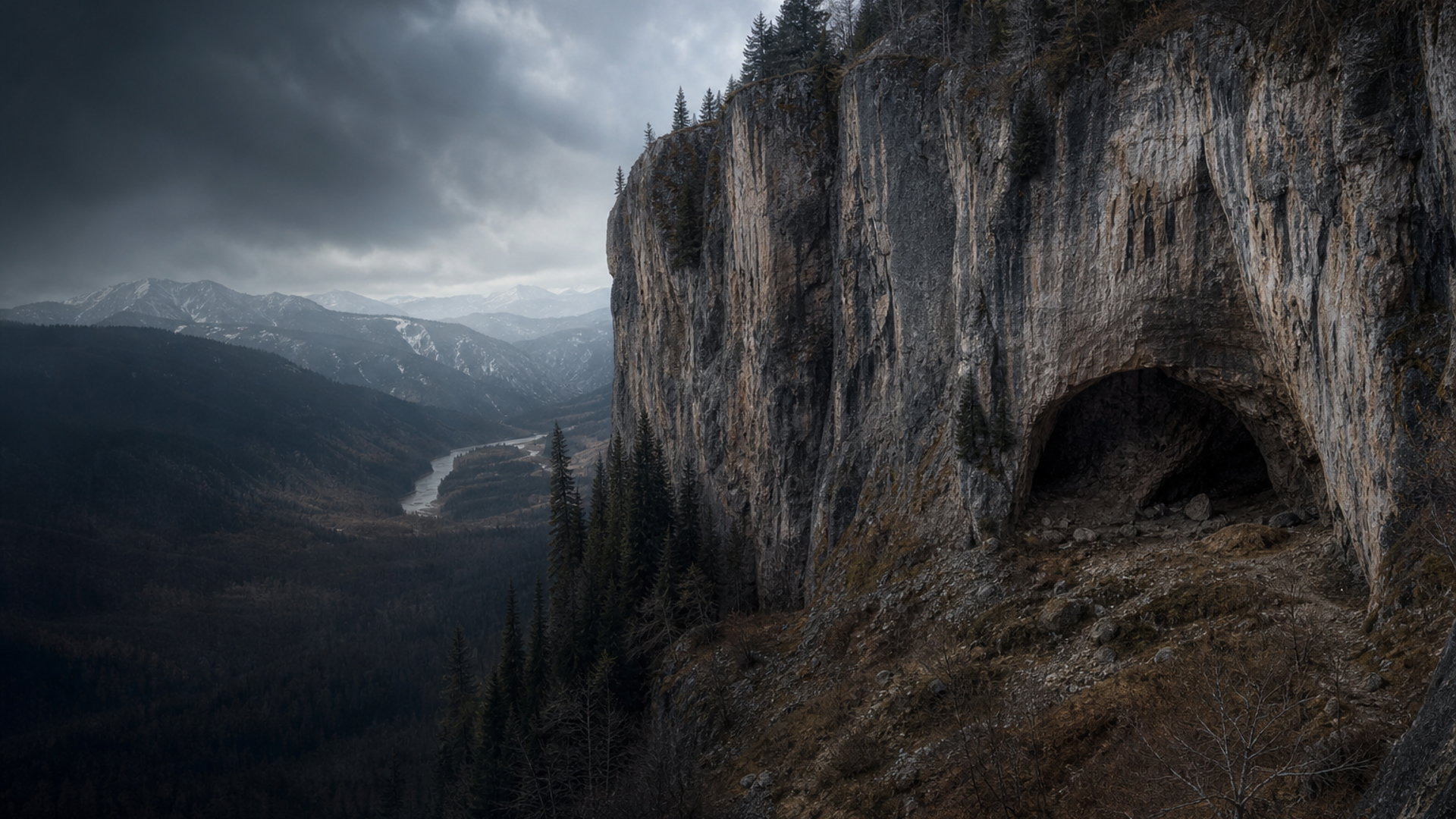
The Denisova Cave in the Altai Mountains of southern Siberia preserves a cinematic palimpsest of Pleistocene life. Stratified deposits, rich in stone tools and faunal remains, mark episodic occupations through glacial and interglacial cycles. The human remains and genetic material assigned to the Altai Neanderthal fall between roughly 128,050 and 88,950 BCE, situating this population deep within the Middle to Late Pleistocene. Archaeological data indicate these Neanderthals were part of a broader Eurasian population network yet likely experienced regional differentiation driven by distance, climate, and local ecology.

Limited evidence suggests the Altai corridor functioned as both refuge and crossroads—mountain valleys providing shelter and riverine routes linking Europe and East Asia. The material record at Denisova Cave points to repeated use of the site over millennia, but attribution of particular stone-tool assemblages to specific hominin groups can be ambiguous. Genetic evidence from the single Altai_Neanderthal sample provides a rare direct line to population history, yet robust models of emergence and migration require many more genomes. Thus, while evocative, reconstructions of how Altai Neanderthals first emerged or split from other Neanderthal groups remain provisional.

  • Dates: ~128,050–88,950 BCE from Denisova Cave deposits
  • Region: Altai Mountains as refuge and corridor in Pleistocene Eurasia
  • Evidence is preliminary—derived from a single genetic sample
Chapitre IV

Daily Life & Society

Archaeological layers at Denisova Cave convey a vivid, though fragmentary, picture of Altai Neanderthal lifeways. Stone tools and butchered fauna testify to hunting and processing of large Pleistocene mammals; hearth features and burnt bone indicate controlled use of fire for warmth and cooking in a cold montane environment. Caves offered shelter from storms and seasonality, while nearby valleys and upland steppe provided hunting grounds. Mobility likely combined localized residence with seasonal forays for migratory game and plant resources.

Social organization can only be inferred indirectly. Ethnographic analogy and Neanderthal sites elsewhere suggest small, kin-based bands with shared tasks—tool production, food sharing, and shelter maintenance. Symbolic behavior among Neanderthals is debated globally; at Denisova Cave, material traces are sparse and their interpretation remains contentious. Importantly, the archaeological record in the Altai does not yet deliver a continuous narrative of craft specialization or long-distance exchange for this specific Neanderthal group. As with origins, reconstructions of daily life hinge on integrating future finds with the isolated genetic signal we currently possess.

  • Cave occupation with hearths, stone tools, and faunal remains
  • Likely small, mobile bands exploiting montane and steppe resources
Chapitre V

Genetic Profile

The Altai_Neanderthal entry in this dataset is founded on a single DNA-bearing specimen recovered from Denisova Cave. The dataset records mtDNA as ND (1), indicating a mitochondrial designation not assigned in the provided metadata. No Y‑DNA haplogroup data are available for this sample. Because only one individual is represented, any genetic inference must be presented as provisional.

Despite the limited sample count, even one well-preserved genome can illuminate population relationships: it can reveal levels of genetic diversity, signs of inbreeding, and relative divergence times compared with other Neanderthals and hominin groups. Archaeogenetic comparisons typically explore how regional Neanderthal genomes relate to European Neanderthals and to neighboring Denisovans and modern humans—patterns that inform models of migration, isolation, and admixture. However, with fewer than ten samples (in this case, one), statements about population-wide traits—such as typical mtDNA lineages, demographic size, or the prevalence of gene flow events—remain tentative. Future sampling from the Altai and adjacent regions will be essential to test hypotheses suggested by this solitary genetic voice.

  • Single sample with mtDNA labeled ND (no assigned haplogroup)
  • No Y‑DNA data; conclusions about population genetics are highly preliminary
Chapitre VI

Legacy & Modern Connections

The Altai Neanderthal from Denisova Cave occupies an outsized place in our reconstruction of deep human history because it anchors a geographic extreme: Neanderthals in the heart of Siberia. Genetically, Neanderthal populations contributed ancestry to present-day non-African humans; the Altai specimen offers a point of comparison to understand regional variation in that legacy. Archaeologically, the site melds tangible artifacts with molecular data, creating a cinematic tableau that helps museums tell a unified story of bones, stones, and genomes.

Caveats are important: with one sample, we cannot map the Altai Neanderthal’s influence across space and time. Nevertheless, the specimen sharpens questions about how cold-climate populations adapted, how they interacted with neighboring hominins, and how their genetic echoes persist—or do not—in modern genomes. As more remains are discovered and sequenced, the Altai example will serve as an early, evocative chapter in a much longer, unfolding story.

  • Provides a crucial comparison point for Neanderthal genetic diversity
  • Helps link archaeological context with molecular evidence for public and scientific narratives
Propulsé par l'IA

Assistant IA

Posez des questions sur la culture Altai Neanderthal: Echoes from Denisova Cave

Assistant IA par DNAGENICS

Débloquer cette fonction
Posez des questions sur la culture Altai Neanderthal: Echoes from Denisova Cave. L'assistant IA peut expliquer les résultats génétiques, le contexte historique, les preuves archéologiques et les liens génétiques avec les populations actuelles, dans les limites de l'interprétation.
Exemple d'analyse IA

La culture Altai Neanderthal: Echoes from Denisova Cave représente un chapitre fascinant de l'histoire humaine…

L'analyse génétique met en évidence des similarités avec des populations antérieures et des signes d'adaptations propres. Les échantillons d'ADN ancien éclairent les schémas migratoires et les liens entre populations, avec des limites qui dépendent de l'étude et du contexte archéologique.

Il s'agit d'un aperçu de l'analyse IA. Accédez à l'assistant complet pour explorer :

  • Composition et similarité génétique
  • Schémas migratoires et origines
  • Vie quotidienne et pratiques culturelles
  • Contexte génétique actuel

Explorez d'autres cultures antiques

Découvrez les récits de civilisations issues du monde antique