Préparation du rapport

Chargement des informations et références disponibles

Connexion au corpus archéologique…

Collecte des archives antiques

Aller au contenu principal
Altai Neanderthal of Denisova Cave
Profil culturel

Altai Neanderthal of Denisova Cave

A solitary Neanderthal genome from the Altai—ancient shadows in Siberian stone

128050 CE - 88950 BCE
Altai Mountains, Siberia (Russia)
Faites défiler pour commencer
Chapitre I

Le récit

Comprendre la culture Altai Neanderthal of Denisova Cave

Denisova Cave (Altai, Russia) yielded a single Neanderthal individual dated between ~128,050–88,950 BCE. Archaeology and genome data offer a cinematic, yet preliminary, glimpse into northern Neanderthal life and their interactions with other archaic humans.

Time Period

128,050–88,950 BCE

Region

Altai Mountains, Siberia (Russia)

Common Y-DNA

Not determined / no data

Common mtDNA

ND (single Neanderthal lineage)

Chapitre II

Chronologie

Moments clés de l'histoire de cette culture

128050 BCE

Approximate occupation of Denisova Cave

Layer containing the Altai Neanderthal is dated to about 128,050–88,950 BCE, indicating Neanderthal presence in the Altai.

Chapitre III

Origins & Emergence

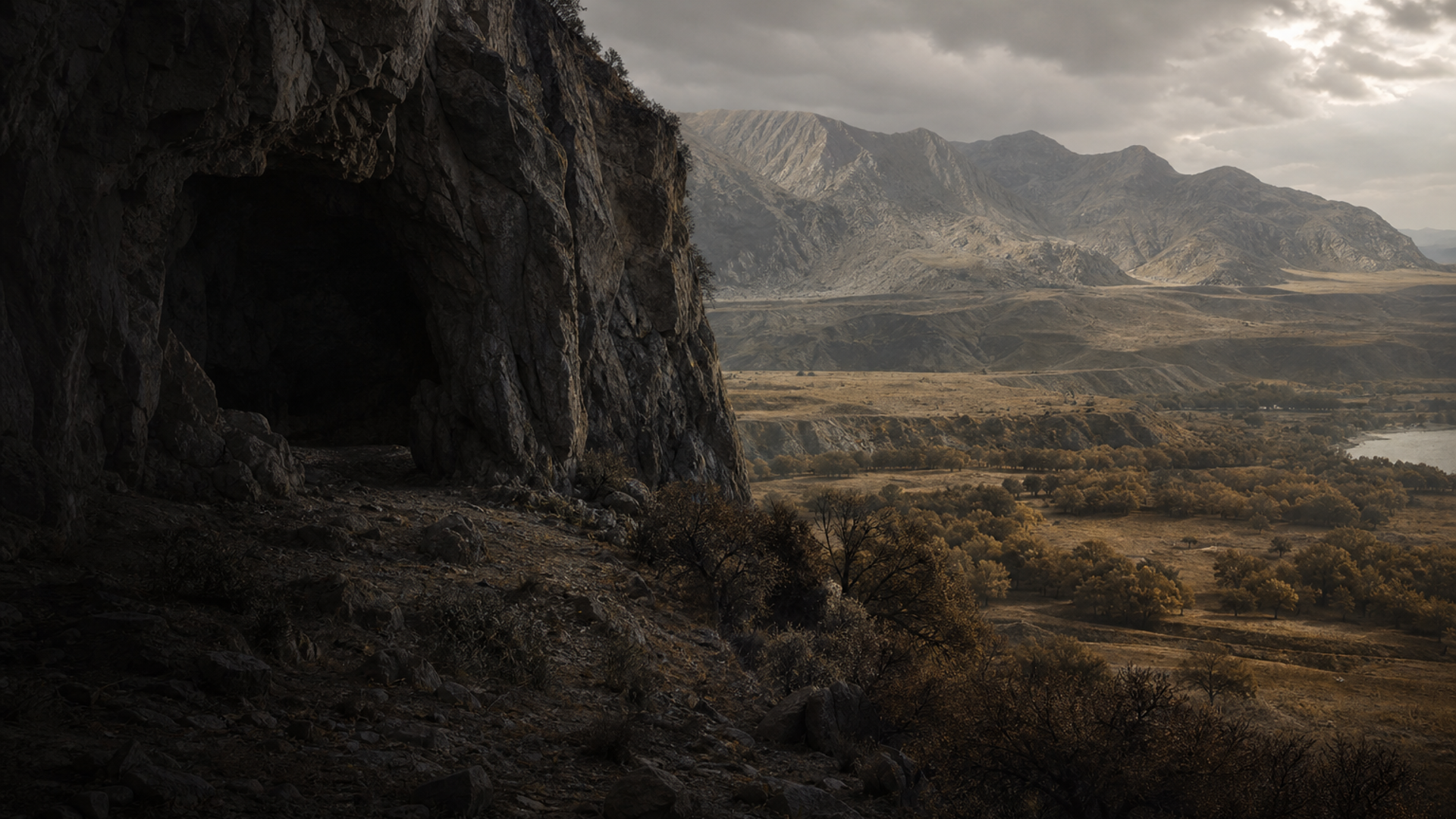
Against the wind-battered limestone and loess of the Altai, Denisova Cave preserves layered stories of human and hominin presence. Archaeological data indicates occupation phases spanning tens of thousands of years; one of these layers produced a Neanderthal individual now identified as the Altai Neanderthal, dated between roughly 128,050 and 88,950 BCE. This individual emerges from a landscape where steppe and forest met, where glacial pulses sculpted migration routes across Central Asia.

Limited evidence suggests that Neanderthals reached deep into Siberia, adapting to colder, seasonally variable environments far from their classic European ranges. Denisova Cave is exceptional because it also contains remains attributed to Denisovans and later modern humans, creating a cinematic palimpsest where different hominin lineages appear in close geological succession. Archaeological assemblages in the cave include Middle Paleolithic stone tools consistent with Neanderthal-associated traditions (e.g., variants of the Mousterian), though attribution of specific toolkits to a single hominin group is often uncertain.

Because the Altai Neanderthal sample is a single individual, broader claims about population origins, migration routes, or cultural innovations remain tentative. Still, the presence of Neanderthal biology in the Altai expands the geographic canvas for understanding how Neanderthals colonized and adapted to diverse Eurasian environments.

  • Denisova Cave (Altai, Russia) yielded the Altai Neanderthal specimen.
  • Dated to ~128,050–88,950 BCE, in a cold, variable Pleistocene environment.
  • Stone tool evidence suggests Middle Paleolithic technologies; specific attributions remain uncertain.
Chapitre IV

Daily Life & Society

The daily existence of the Altai Neanderthal can only be sketched from a blend of cave sediments, stone tools, faunal remains, and analogies with other Neanderthal sites. Archaeological deposits at Denisova include hearth features, butchered bones, and varied lithics, implying episodic cave habitation oriented around hunting, processing animal resources, and shelter from harsh seasons. Faunal assemblages in nearby layers show large mammals—horses, bison, deer, and possibly woolly rhinoceros—forming a backbone of the Pleistocene diet.

Cinematic reconstructions imagine small, mobile groups moving across valleys and ridgelines, using prepared-core and flake technologies to fashion points and scrapers. Yet archaeological data indicates caution: only indirect evidence links particular tool types to the single Altai Neanderthal individual. Social structures—kinship, care for elders, ritual behavior—can be suggested by the broader Neanderthal record (e.g., healed injuries and apparent burials elsewhere), but such inferences are speculative for this locality.

Environmental stresses at high latitudes likely shaped seasonal mobility, clothing, and fire use. Material culture at Denisova also shows moments of innovation, but the extent to which the Altai Neanderthal participated in regional exchanges or shared technologies with Denisovans and early modern humans remains an open question.

  • Evidence from cave deposits suggests hunting and cave occupation focused on large Pleistocene mammals.
  • Direct behavioral inferences for the Altai individual are limited and preliminary.
Chapitre V

Genetic Profile

Genetic data from the Altai Neanderthal provide the most intimate glimpse we have of this individual’s biological story, but the picture is necessarily narrow because it rests on a single genome. Ancient DNA extracted from remains at Denisova Cave revealed a Neanderthal mitochondrial lineage distinct from modern humans; the input data lists mtDNA as ND (single sample). Nuclear genomic analyses of Altai Neanderthal material (from related research) have been transformative for paleo-genomics: they demonstrate that different archaic hominin groups—Neanderthals, Denisovans, and incoming modern humans—experienced episodes of interbreeding, population substructure, and long-term separation.

For the Altai specimen, genetic evidence indicates an affinity to Neanderthal populations but also shows complex relationships with neighboring Denisovan individuals from the same cave. These patterns suggest admixture events and gene flow across groups in Central and northern Asia. However, because the sample count here is one, population-level parameters such as genetic diversity, effective population size, or the frequency of particular Neanderthal alleles in the Altai region remain highly uncertain. Y-chromosome haplogroup data are not available for this dataset, and mitochondrial results should be treated as representing a single maternal lineage rather than an entire population.

In sum, the Altai Neanderthal genome is a beacon illuminating deep hominin connections across Eurasia, but its solitary nature mandates caution: many genetic conclusions are provisional pending more samples from the region.

  • Single high-quality genome provides evidence of Neanderthal lineage and interbreeding with other archaic groups.
  • Sample count = 1; population-level genetic inferences are preliminary and uncertain.

Chapitre VI

Legacy & Modern Connections

The Altai Neanderthal’s legacy is twofold: scientific and human. Scientifically, this individual helped reveal that Neanderthals were not confined to western Eurasia but occupied varied landscapes deep into Siberia. Genetically, Neanderthals as a whole contributed DNA to modern non-African populations; while the Altai individual is one piece of that mosaic, it underscores how gene flow and demographic complexity shaped ancient Eurasian populations.

From a human perspective, Denisova Cave’s layered archive—hosting Denisovans, Neanderthals, and modern humans—creates a striking tableau of encounters and exchanges. The Altai Neanderthal reminds us that ancient populations were dynamic, connected, and sometimes interbreeding neighbors. Yet, because the dataset here is a single specimen, claims about direct contributions from this specific individual to present-day human genomes must remain cautious. Future recoveries of additional Neanderthal material from the Altai will be essential to transform this evocative glimpse into a fuller population narrative.

  • Altai data broaden the geographic and genetic understanding of Neanderthals in Eurasia.
  • Modern human-Neanderthal genetic legacy is clear globally, but links to this single Altai individual are tentative.
Propulsé par l'IA

Assistant IA

Posez des questions sur la culture Altai Neanderthal of Denisova Cave

Assistant IA par DNAGENICS

Débloquer cette fonction
Posez des questions sur la culture Altai Neanderthal of Denisova Cave. L'assistant IA peut expliquer les résultats génétiques, le contexte historique, les preuves archéologiques et les liens génétiques avec les populations actuelles, dans les limites de l'interprétation.
Exemple d'analyse IA

La culture Altai Neanderthal of Denisova Cave représente un chapitre fascinant de l'histoire humaine…

L'analyse génétique met en évidence des similarités avec des populations antérieures et des signes d'adaptations propres. Les échantillons d'ADN ancien éclairent les schémas migratoires et les liens entre populations, avec des limites qui dépendent de l'étude et du contexte archéologique.

Il s'agit d'un aperçu de l'analyse IA. Accédez à l'assistant complet pour explorer :

  • Composition et similarité génétique
  • Schémas migratoires et origines
  • Vie quotidienne et pratiques culturelles
  • Contexte génétique actuel

Explorez d'autres cultures antiques

Découvrez les récits de civilisations issues du monde antique