Préparation du rapport

Chargement des informations et références disponibles

Connexion au corpus archéologique…

Collecte des archives antiques

Aller au contenu principal
Altai-Sayan Shadows
Profil culturel

Altai-Sayan Shadows

Early Neolithic to Chalcolithic peoples of the Altai-Sayan foothills, seen through bones and genomes

5521 CE - 3347 BCE
Altai-Sayan (Altai Krai, Russia)
Faites défiler pour commencer
Chapitre I

Le récit

Comprendre la culture Altai-Sayan Shadows

Archaeogenetic glimpses from five individuals (5521–3347 BCE) recovered in Altai Krai, Russia. Archaeological and DNA evidence hint at mixed Siberian and western Eurasian lineages among early Altai-Sayan groups; conclusions remain tentative due to small sample size.

Time Period

5521–3347 BCE

Region

Altai-Sayan (Altai Krai, Russia)

Common Y-DNA

C, R, Q

Common mtDNA

C, U, D4j (and an entry labeled R1b*)

Chapitre II

Chronologie

Moments clés de l'histoire de cette culture

4500 BCE

Mid-Holocene admixture interval

Genomes dated around this time show mixed eastern and western uniparental markers, suggesting interaction across mountain corridors. Conclusions remain tentative given the small sample set.

Chapitre III

Origins & Emergence

The Altai-Sayan horizon in these samples unfolds like a highland dawn: a patchwork of hunter–forager traditions and incoming influences converging in the mountain shadow. Archaeological data from sites in Altai Krai — notably Firsovo, Tuzovskie-Bugry-1 (Vasino-5) and a locality near Novoaltaysk — span 5521–3347 BCE and fall broadly within late Neolithic to early Chalcolithic activity in the region. Material traces are fragmentary but show continuity of local lithic and organic traditions alongside occasional exotic objects and burial practices that suggest long-distance contacts.

Genetically, the small set of genomes suggests a composite origin. Uniparental markers include eastern Eurasian-associated lineages (mtDNA C, D4j; Y-DNA C) alongside western/steppe-associated signatures (Y-DNA R and Q; mtDNA U). This mixture is consistent with archaeological scenarios in which long-standing Siberian groups interacted with westward or steppe-derived groups during the mid-to-late Holocene.

Limited evidence suggests these populations were not a single homogeneous people but a mosaic of communities connected by mobility, exchange, and seasonal movement across river valleys and mountain corridors. With only five sampled individuals, any model of origin must remain provisional: the genetic picture we see is an evocative beginning, not a definitive history.

  • Samples dated 5521–3347 BCE from Altai Krai sites
  • Archaeological indications of local traditions with external contacts
  • Evidence points to mixed Siberian and western Eurasian inputs
Chapitre IV

Daily Life & Society

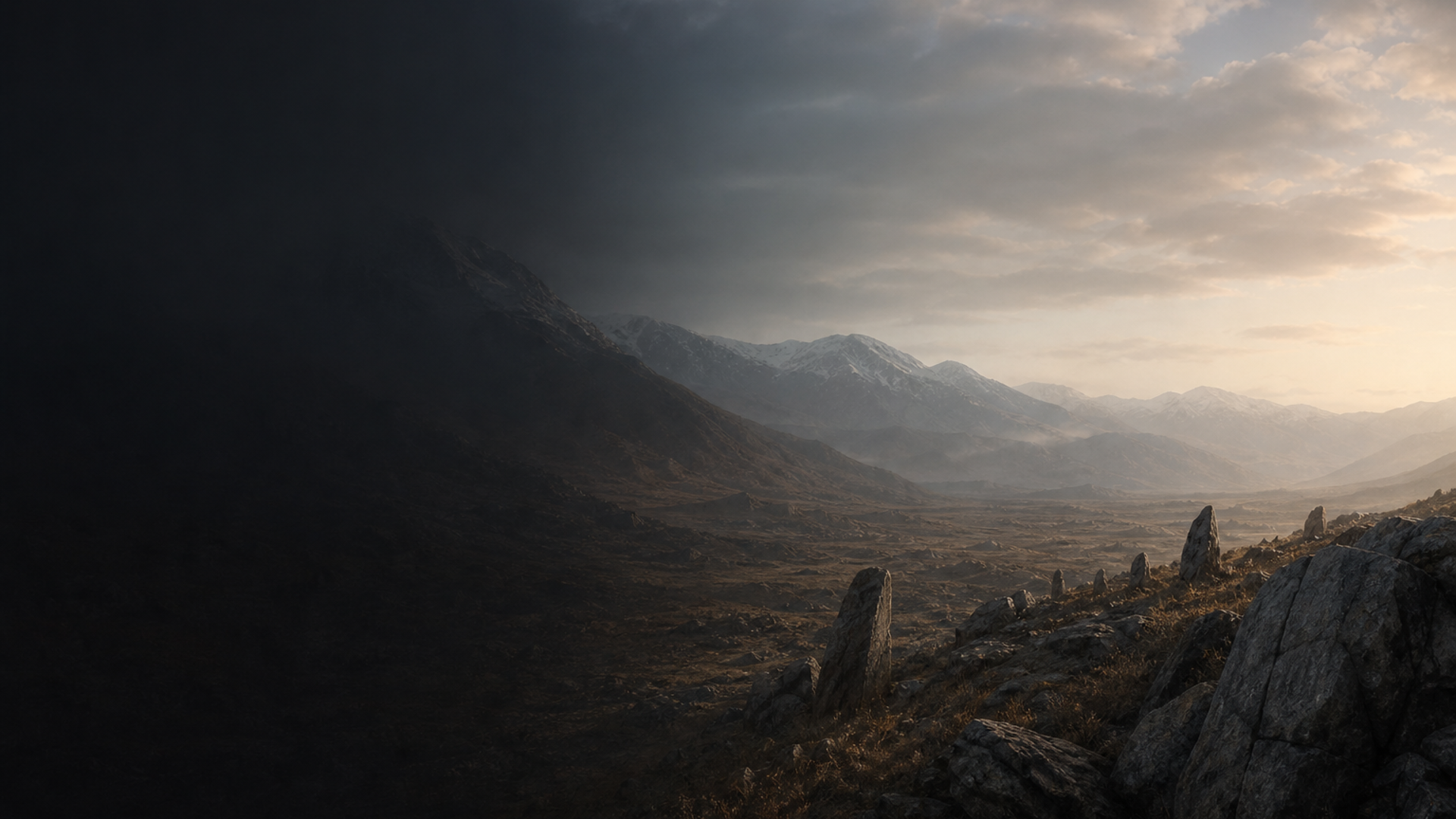
In the cinematic landscape of the Altai foothills — river meadows, birch stands, and rocky spurs catching the last light — life was shaped by mobility and seasonal rhythm. Archaeological contexts associated with the sampled sites indicate economies rooted in hunting, fishing, and gathering, with increasing use of domesticated resources and crafted implements by the later part of the sequence. Hearths, chipped stone tools, and fragmented organic remains point to households organized around communal processing of plants and game.

Social life likely revolved around small camps or hamlets that shifted across the landscape with seasonal demands. Burial practices inferred from regional comparisons (where formal graves are found) suggest varied mortuary treatments, which can reflect social differentiation, kinship ties, or cosmological ideas; however, specific burial details for all five individuals are limited or unevenly reported. The interplay of local knowledge and incoming cultural elements may have produced flexible social networks that emphasized mobility, exchange, and marriage ties across valleys.

Archaeological data indicates that these communities exploited diverse ecological niches and sustained long-distance contacts by river and mountain routes. Such patterns create plausible pathways for the genetic mixture detected in the DNA record — movements of people and exchanges of mates as much as of goods.

  • Economy: hunting, fishing, gathering with emerging domesticates
  • Mobile camps and seasonal settlement patterns
Chapitre V

Genetic Profile

The genetic signal from these five Altai-Sayan individuals is striking for its mixture of eastern and western Eurasian uniparental markers. Reported Y-DNA haplogroups include C (2 individuals), R (1), and Q (1). Maternal lineages include mtDNA C (2), U (1), D4j (1), and an entry labeled R1b in the provided mtDNA list; because R1b is typically a Y-chromosome lineage, that entry may reflect a reporting inconsistency or a rare labeling artifact and should be treated cautiously.

Interpreting this combination: Y-haplogroup C and mtDNA D4/ C variants are commonly associated with East Eurasian and Siberian ancestries, whereas Y haplogroups R and Q and mtDNA U have broader distributions that include west Eurasian and steppe-affiliated populations. Together, the uniparental data suggest admixture between local Siberian groups and groups with western/steppe connections during the mid-Holocene.

Crucially, the autosomal picture (genome-wide ancestry) is not demonstrated here in detail; uniparental markers provide directional hints but cannot alone resolve the timing, proportions, or sources of admixture. With only five genomes, and fewer definitive haplogroup counts, conclusions are preliminary: low sample size (<10) means population-level inferences are tentative and should be tested with larger, well-dated datasets.

  • Mixture of East Eurasian (C, D4) and West/steppe-associated markers (R, Q, U)
  • Sample size (5) is small — genetic conclusions remain provisional
Chapitre VI

Legacy & Modern Connections

The genetic and archaeological echoes of these early Altai-Sayan people resonate in the long history of Siberia. Modern Altai and neighboring indigenous groups carry a tapestry of ancestries that reflect millennia of local persistence layered with multiple incoming influences; the admixture hints in these ancient genomes are consistent with that deep complexity. Archaeology ties these populations to regional traditions that later feed into broader Altai-Sayan cultural formations, while genetics suggests that both continuity and replacement have shaped the modern gene pool.

It is important to avoid simplistic lineage narratives: continuity in certain haplogroups does not equate to uninterrupted cultural identity, nor does admixture imply wholesale population replacement. Rather, the data depict processes of interaction — marriages, seasonal alliance networks, and small-scale migrations — that produced the genetic landscape of southern Siberia. Future sampling and genome-wide analyses will refine these connections and help map how the hues of past human movement painted the present.

  • Modern Altai-Sayan populations likely reflect layered ancestries
  • Continuity and admixture both contributed to long-term genetic landscapes
Propulsé par l'IA

Assistant IA

Posez des questions sur la culture Altai-Sayan Shadows

Assistant IA par DNAGENICS

Débloquer cette fonction
Posez des questions sur la culture Altai-Sayan Shadows. L'assistant IA peut expliquer les résultats génétiques, le contexte historique, les preuves archéologiques et les liens génétiques avec les populations actuelles, dans les limites de l'interprétation.

Exemple d'analyse IA

La culture Altai-Sayan Shadows représente un chapitre fascinant de l'histoire humaine…

L'analyse génétique met en évidence des similarités avec des populations antérieures et des signes d'adaptations propres. Les échantillons d'ADN ancien éclairent les schémas migratoires et les liens entre populations, avec des limites qui dépendent de l'étude et du contexte archéologique.

Il s'agit d'un aperçu de l'analyse IA. Accédez à l'assistant complet pour explorer :

  • Composition et similarité génétique
  • Schémas migratoires et origines
  • Vie quotidienne et pratiques culturelles
  • Contexte génétique actuel

Explorez d'autres cultures antiques

Découvrez les récits de civilisations issues du monde antique