Préparation du rapport

Chargement des informations et références disponibles

Connexion au corpus archéologique…

Collecte des archives antiques

Aller au contenu principal
Armenia_C: Areni Chalcolithic Echoes
Profil culturel

Armenia_C: Areni Chalcolithic Echoes

Five fragmentary genomes from Areni‑1 illuminate Chalcolithic Armenia with caution.

4350 CE - 3500 BCE
Armenia (Areni‑1 cave)
Faites défiler pour commencer
Chapitre I

Le récit

Comprendre la culture Armenia_C: Areni Chalcolithic Echoes

Five Chalcolithic genomes (4350–3500 BCE) from Areni‑1, Armenia, reveal maternal lineages H, K, U4a and an unexpected Y‑chromosome signal (L/L1a). Limited samples make conclusions tentative; archaeological context ties these individuals to Areni‑1's rich Chalcolithic record.

Time Period

4350–3500 BCE

Region

Armenia (Areni‑1 cave)

Common Y-DNA

L (2), L1a (1) — preliminary (n=5)

Common mtDNA

H (2), K (2), U4a (1)

Chapitre II

Chronologie

Moments clés de l'histoire de cette culture

4000 BCE

Areni‑1 Chalcolithic Occupation

Areni‑1 sees intermittent habitation and burial use during the Chalcolithic; associated cultural materials include pottery, copper artifacts, and stored botanical remains.

Chapitre III

Origins & Emergence

Areni‑1, a cave complex in southern Armenia, preserves a stratified record of human activity across the Late Neolithic and Chalcolithic. Archaeological data indicates intermittent occupation and burial use in the 5th–4th millennia BCE. The genomes labeled Armenia_C derive from contexts dated between 4350 and 3500 BCE, placing them firmly within the Chalcolithic horizon of the southern Caucasus.

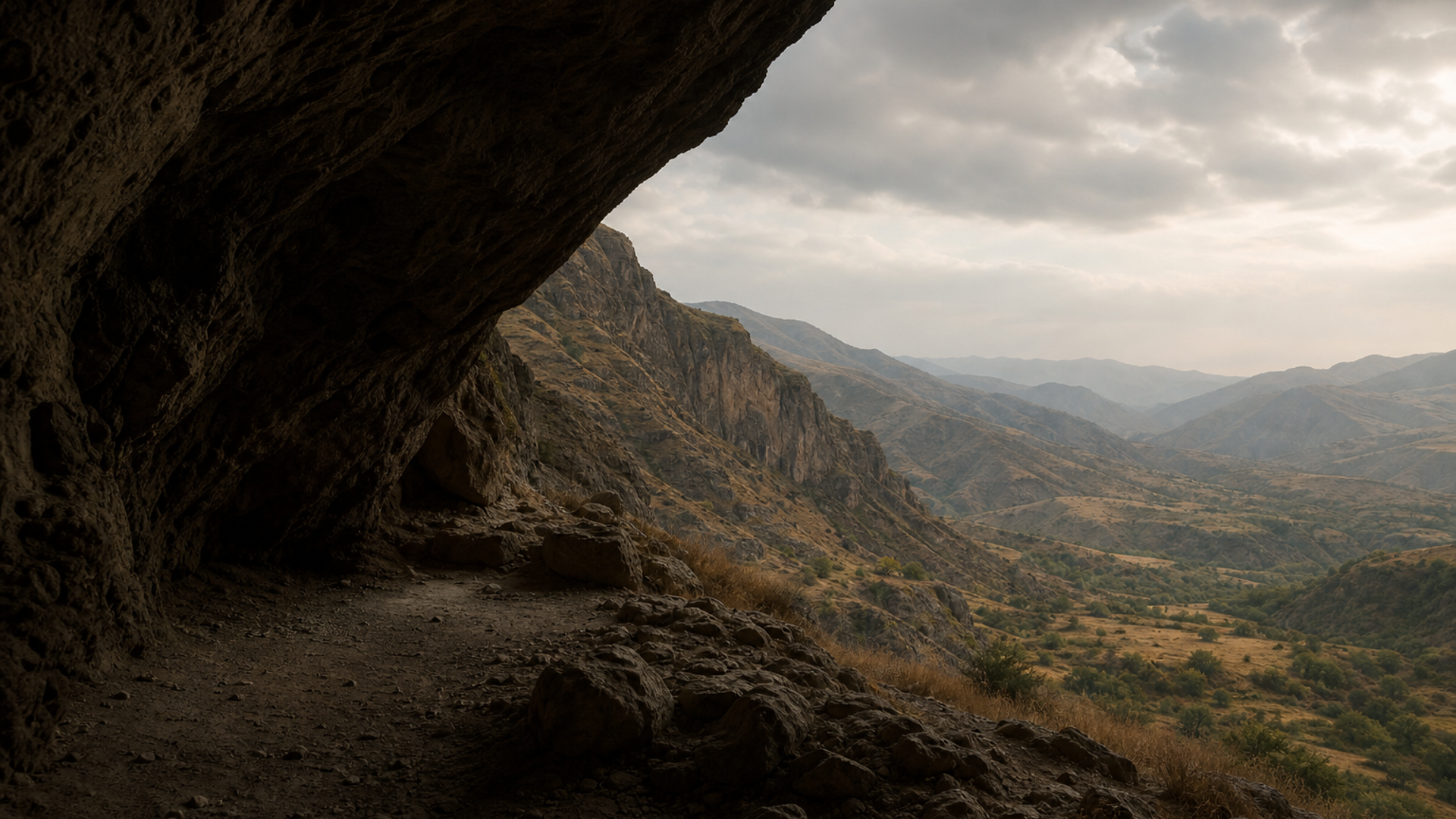
Cinematic landscapes of limestone cliffs and wintry valleys framed human communities who shaped copper tools, painted pottery, and subterranean storage spaces. Material culture at Areni‑1 and nearby sites shows connections across the Armenian Highlands and into Anatolia and the Levant, suggesting networks of exchange. Limited genetic sampling (n=5) means we must read these genomes like scattered footprints in a fog: suggestive, tangible, but incomplete.

Archaeological evidence indicates local continuity in many cultural practices across this period, yet also hints at mobile connections and episodic inflows of peoples or ideas. Ancient DNA provides a new lens, revealing biological links that complement artifacts: mitochondrial lineages common in West Eurasia alongside Y‑chromosome markers that will require broader sampling to interpret.

Bulleted archaeological takeaways:

  • Areni‑1: a key Chalcolithic site in southern Armenia with rich stratigraphy.
  • Material links to Anatolia and the Near East imply exchange networks.
  • Genomic data are preliminary; broader sampling is needed to chart population history robustly.
  • Areni‑1 cave contexts date to 4350–3500 BCE
  • Material culture shows regional exchange
  • Genetic sample size (n=5) is small — cautious interpretation
Chapitre IV

Daily Life & Society

Archaeology at Areni‑1 paints vivid scenes: hunters and herders moving seasonally, potters turning clay, metallurgists experimenting with copper alloys, and communities storing food in cave niches. The Chalcolithic period in the Armenian Highlands is characterized by small villages, mobile pastoralism, and increasingly complex craft production.

Burial practices in cave contexts at Areni‑1 include articulated human remains, often associated with domestic debris and occasional prestige objects. These assemblages suggest tightly knit households or kin groups who combined subsistence strategies—agriculture, stock rearing, and foraging—with craft specialization. Botanical and faunal remains from the region point to cereal cultivation and managed herds, though preservation biases can skew this picture.

Because only five genomes are available for Armenia_C, we cannot robustly reconstruct social kinship patterns from DNA alone. However, when genetic data are integrated with grave goods, wear on tools, and spatial arrangement of burials, a more textured social portrait emerges: small-scale communities with regional connections and dynamic lifeways adapted to upland environments.

Daily life highlights:

  • Mixed subsistence: cereals, herding, and foraging.
  • Craft and early metallurgy visible in artifacts and production debris.
  • Mixed farming and herding economy
  • Cave burials suggest household or kin group use
Chapitre V

Genetic Profile

The Armenia_C set comprises five genomes from Areni‑1 dated to 4350–3500 BCE. Mitochondrial haplogroups observed are H (2), K (2), and U4a (1) — maternal lineages commonly found across Neolithic and later West Eurasia. These mtDNA signals are consistent with continuity of West Eurasian maternal lines in the Chalcolithic Caucasus and mirror broader regional patterns seen in contemporaneous sites.

The Y‑chromosome signal is notable for the presence of haplogroup L (two individuals) and a related L1a (one individual). Haplogroup L today has higher frequencies in South Asia and parts of the Near East; its presence in multiple Areni males is intriguing but must be treated as provisional given the very small male sample (three males total). Limited evidence suggests possible long‑distance connections or local sublineages with deep, under‑sampled histories in West Asia.

Integrating archaeology and genetics:

  • Maternal lineages (H, K, U4a) point to West Eurasian continuity.
  • Y‑DNA L/L1a in multiple males is unexpected for the region and requires larger datasets to determine whether this reflects migration, drift, or local lineage survival.

Because sample count is low (<10), population‑level inferences remain tentative. Future sampling across the Armenian Highlands and neighboring regions will be essential to test hypotheses about mobility, sex‑biased gene flow, and demographic change during the Chalcolithic.

  • mtDNA: H (2), K (2), U4a (1) — fits West Eurasian maternal profiles
  • Y‑DNA: L (2), L1a (1) — unexpected; preliminary due to small male sample
Chapitre VI

Legacy & Modern Connections

The Armenia_C genomes offer a faint but evocative link between Chalcolithic communities at Areni‑1 and the living peoples of the highlands. Maternal lineages (H, K, U4a) echo genetic threads common across modern West Eurasia, suggesting some degree of continuity in female‑line ancestry. The Y‑chromosome signal (L/L1a) recorded here may point toward complex, regionally specific histories that are not yet visible in modern comparative datasets.

Archaeological continuity in settlement patterns and craft traditions suggests cultural resilience, but genetics underscores complexity: episodes of migration, local persistence, and demographic fluctuation likely all played roles. Given the very small sample size, any direct connections to contemporary populations remain speculative. These genomes are best read as early chapters in a larger story: when combined with more ancient and modern DNA, they will help map the genetic landscape of the Armenian Highlands across millennia.

Key legacy notes:

  • Maternal continuity aligns with broader West Eurasian ancestry.
  • Unusual Y signals highlight the need for expanded sampling to trace male‑line histories.
  • mtDNA continuity suggests long‑term West Eurasian maternal presence
  • Y‑DNA findings require more data to link to modern populations
Propulsé par l'IA

Assistant IA

Posez des questions sur la culture Armenia_C: Areni Chalcolithic Echoes

Assistant IA par DNAGENICS

Débloquer cette fonction
Posez des questions sur la culture Armenia_C: Areni Chalcolithic Echoes. L'assistant IA peut expliquer les résultats génétiques, le contexte historique, les preuves archéologiques et les liens génétiques avec les populations actuelles, dans les limites de l'interprétation.
Exemple d'analyse IA

La culture Armenia_C: Areni Chalcolithic Echoes représente un chapitre fascinant de l'histoire humaine…

L'analyse génétique met en évidence des similarités avec des populations antérieures et des signes d'adaptations propres. Les échantillons d'ADN ancien éclairent les schémas migratoires et les liens entre populations, avec des limites qui dépendent de l'étude et du contexte archéologique.

Il s'agit d'un aperçu de l'analyse IA. Accédez à l'assistant complet pour explorer :

  • Composition et similarité génétique
  • Schémas migratoires et origines
  • Vie quotidienne et pratiques culturelles
  • Contexte génétique actuel

Explorez d'autres cultures antiques

Découvrez les récits de civilisations issues du monde antique