Préparation du rapport

Chargement des informations et références disponibles

Connexion au corpus archéologique…

Collecte des archives antiques

Aller au contenu principal
Arroyo Seco II — 7400 Years Ago
Profil culturel

Arroyo Seco II — 7400 Years Ago

A single ancient voice from the Pampas linking archaeology and maternal ancestry

5620 CE - 53367400 BCE
Pampean lowlands, Argentina (Arroyo Seco II)
1 échantillons d'ADN antique
Faites défiler pour commencer
Chapitre I

Le récit

Comprendre la culture Arroyo Seco II — 7400 Years Ago

Arroyo Seco II (5620–5336 BCE) offers a rare glimpse into Early Holocene hunter-gatherers of Argentina. Archaeology reveals lifeways on the Pampas; a single sampled individual carries mtDNA A2, suggesting continuity with Indigenous maternal lineages. Conclusions are preliminary due to one sample.

Time Period

5620–5336 BCE (≈7400 BP)

Region

Pampean lowlands, Argentina (Arroyo Seco II)

Common Y-DNA

Not reported / no Y-DNA data

Common mtDNA

A2 (1 sample)

Chapitre II

Chronologie

Moments clés de l'histoire de cette culture

5478 BCE

Arroyo Seco II occupation (~7400 BP)

A human burial and associated material traces dated to 5620–5336 BCE provide the genetic and archaeological snapshot from Arroyo Seco II.

Chapitre III

Origins & Emergence

Origins & Emergence

Arroyo Seco II sits as an evocative waypoint in the human unfolding across the South American lowlands. Dated to roughly 5620–5336 BCE (commonly cited as ≈7400 radiocarbon years before present), the site preserves traces of Early Holocene occupation on the Pampean plains. Archaeological data indicates episodic habitation: lithic assemblages, hearth features, and ephemeral activity areas that speak to mobile groups adapting to a changing post-glacial landscape.

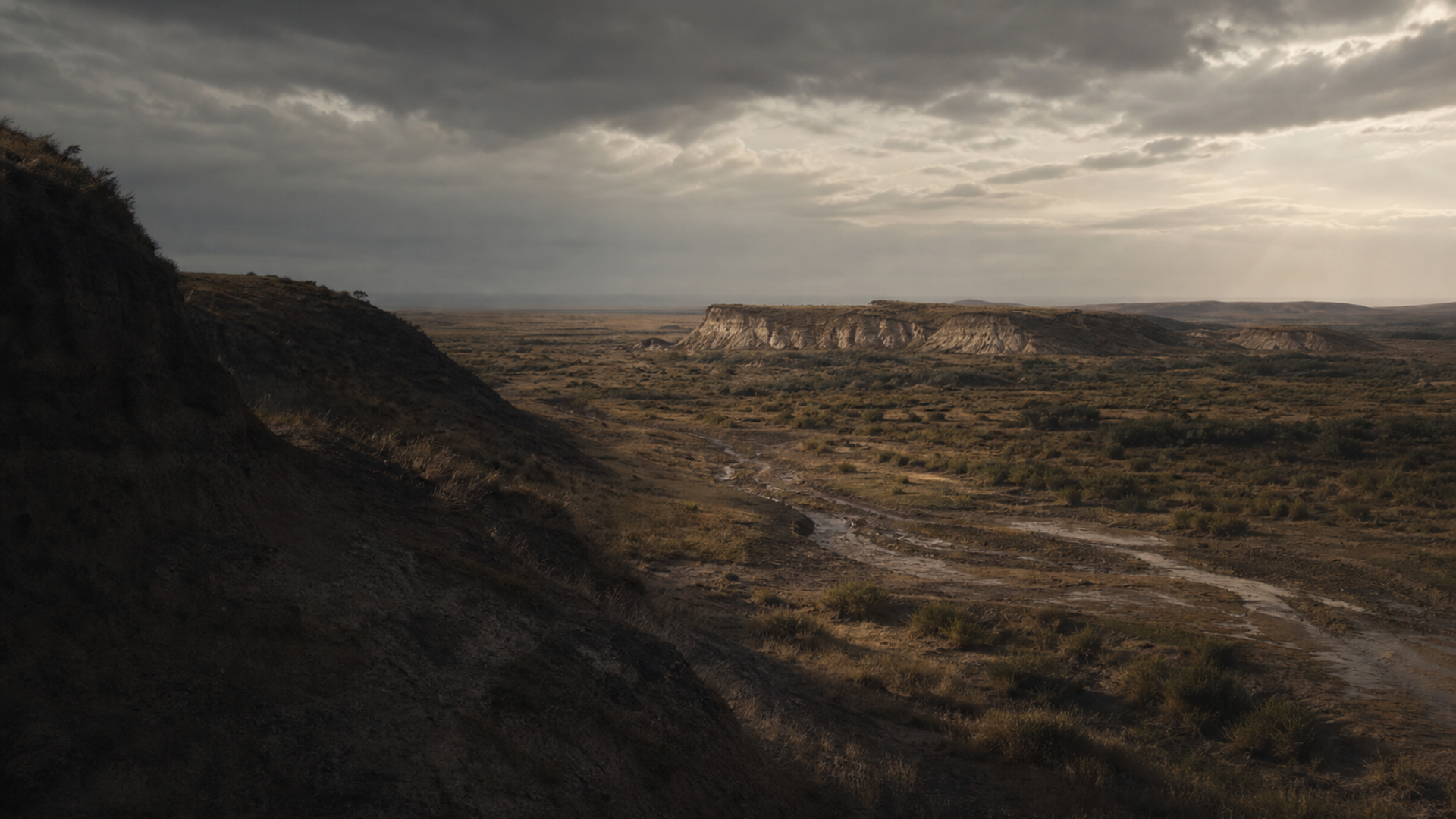
Limited evidence suggests these people were part of broad hunter‑gatherer networks that colonized and reoccupied the Pampas after the Last Glacial Maximum. The material culture at Arroyo Seco II shows technological continuity with regional Holocene traditions, while also reflecting local adaptations to wetlands and grassland resources. Environmental reconstructions imply a mosaic of rivers, marshes, and open plain—an ecological stage that shaped seasonal mobility, resource choices, and social encounters.

Because the genetic dataset from this context comprises a single individual, interpretations about population origins and regional connections must remain cautious. Nevertheless, archaeological context combined with the genetic signal (see Genetics) provides a slender but resonant thread linking people on these plains to the larger story of early South American settlement.

  • Occupation dated to 5620–5336 BCE (≈7400 BP)
  • Located in Pampean lowlands at Arroyo Seco II, Argentina
  • Evidence of mobile hunter-gatherer lifeways adapting to wetlands and plains
Chapitre IV

Daily Life & Society

Daily Life & Society

Archaeological traces from Arroyo Seco II evoke a world of seasonal movement, focused hunting, and intimate knowledge of plains ecologies. Lithic tools—fragments, flakes, and retouched pieces—suggest a toolkit optimized for cutting, scraping, and processing both plant and animal resources. Hearth remnants and faunal fragments indicate small-scale food processing and communal activities centered on warmth and cooking.

Social organization is difficult to reconstruct from a single occupation layer, but patterns typical of Early Holocene South American groups provide a plausible frame: small residential bands that joined and dispersed according to resource pulses, exchange of raw materials or finished tools across the landscape, and burial practices that sometimes inscribed social memory into the ground. Human remains at Arroyo Seco II (represented in the genetic sample) hint at mortuary behaviors, although the broader funerary repertoire and its meanings remain largely unobserved at the site.

Archaeological data indicates an adaptive economy balancing hunting of medium-sized mammals, exploitation of aquatic resources near marshes, and gathering of seasonally available plants. This lifeway produced resilient social strategies in a dynamic Holocene environment.

  • Tools and hearths indicate small, mobile camps
  • Economy likely combined hunting, fishing, and plant gathering
Chapitre V

Genetic Profile

Genetic Profile

Genetic data from Arroyo Seco II are minimal but meaningful: one individual yielded mitochondrial DNA belonging to haplogroup A2. Haplogroup A2 is a well-established maternal lineage across the Americas and is commonly interpreted as part of the early genetic substrate of Indigenous populations. Its presence at Arroyo Seco II is consistent with maternal continuity in the southern cone through the Holocene.

However, the sample count is a single individual—far below the threshold for robust population-level inference. Because of this, any statements about genetic diversity, population structure, or demographic change in the region must be framed as preliminary. No Y‑chromosome (paternal) data are reported for this context, so paternal lineages and sex‑biased processes remain unknown.

When integrated with broader ancient DNA studies from South America, this A2 finding aligns with patterns of deep maternal continuity and regional differentiation that unfolded after initial colonization. Archaeology grounds the genetic signal by showing where people lived and how they used the landscape; genetics provides a molecular echo of those lifeways, pointing to connections across time and space. Future samples from Arroyo Seco II and neighboring sites are essential to test hypotheses about continuity, migration, and local adaptation.

  • mtDNA A2 found in the single sampled individual
  • Interpretations are highly preliminary due to n=1 and no Y-DNA
Chapitre VI

Legacy & Modern Connections

Legacy & Modern Connections

The maternal lineage identified at Arroyo Seco II resonates with living Indigenous genetic diversity in the Americas: haplogroup A2 appears widely among modern and ancient populations across South and Central America. This continuity suggests that some maternal lines present in the Early Holocene contributed ancestry to later groups in the region.

Cultural continuity is more complex to demonstrate archaeologically; material change, population movements, and centuries of ecological fluctuation all shape the archaeological record. Still, the combined archaeological and genetic glimpse from Arroyo Seco II underscores a deep-time connection between early Pampean inhabitants and the broader tapestry of Indigenous histories in Argentina. Because conclusions rest on a single sample, these links should be treated as promising hypotheses rather than settled facts, and they highlight the need for further sampling and collaborative research with descendant communities.

  • mtDNA A2 links the individual to broad Indigenous maternal lineages
  • Findings highlight continuity but remain tentative until more samples are analyzed
Chapitre VII

Catalogue d'échantillons

1 échantillons d'ADN antique associés à la culture Arroyo Seco II — 7400 Years Ago offrent des repères génétiques sur les populations de cette période.

1 / 1 échantillons
Portrait Échantillon Pays Époque Date Culture Sexe Y-ADN ADNmt
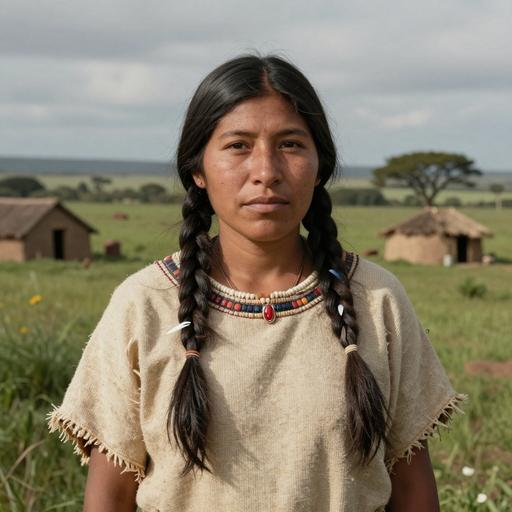
Reconstruction artistique de Early Andean Civilization individual, Argentina
Early Andean Civilization individual, Argentina
Argentina Argentina_ArroyoSeco2_7400BP 5620 BCE Early Andean Civilization F - A2
Propulsé par l'IA

Assistant IA

Posez des questions sur la culture Arroyo Seco II — 7400 Years Ago

Assistant IA par DNAGENICS

Débloquer cette fonction
Posez des questions sur la culture Arroyo Seco II — 7400 Years Ago. L'assistant IA peut expliquer les résultats génétiques, le contexte historique, les preuves archéologiques et les liens génétiques avec les populations actuelles, dans les limites de l'interprétation.
Exemple d'analyse IA

La culture Arroyo Seco II — 7400 Years Ago représente un chapitre fascinant de l'histoire humaine…

L'analyse génétique met en évidence des similarités avec des populations antérieures et des signes d'adaptations propres. Les échantillons d'ADN ancien éclairent les schémas migratoires et les liens entre populations, avec des limites qui dépendent de l'étude et du contexte archéologique.

Il s'agit d'un aperçu de l'analyse IA. Accédez à l'assistant complet pour explorer :

  • Composition et similarité génétique
  • Schémas migratoires et origines
  • Vie quotidienne et pratiques culturelles
  • Contexte génétique actuel

Explorez d'autres cultures antiques

Découvrez les récits de civilisations issues du monde antique