Préparation du rapport

Chargement des informations et références disponibles

Connexion au corpus archéologique…

Collecte des archives antiques

Aller au contenu principal
Baojianshan Neolithic Echoes
Profil culturel

Baojianshan Neolithic Echoes

Two maternal lineages from a karst cave speak to deep southern China roots

6400 CE - 4400 BCE
Guangxi, Southern China
Faites défiler pour commencer
Chapitre I

Le récit

Comprendre la culture Baojianshan Neolithic Echoes

Archaeological remains from Baojianshan Cave A (Guangxi, China) dated 6400–4400 BCE yield two mtDNA M75 individuals. Limited samples suggest maternal continuity in southern China and connections across Southeast Asia, but conclusions remain preliminary.

Time Period

6400–4400 BCE

Region

Guangxi, Southern China

Common Y-DNA

Not reported (no data)

Common mtDNA

M75 (2 samples)

Chapitre II

Chronologie

Moments clés de l'histoire de cette culture

6400 BCE

Earliest Neolithic use of Baojianshan Cave

Archaeological layers at Baojianshan Cave A begin to record human activity around 6400 BCE, marking early Neolithic occupation in Guangxi's karst landscape.

Chapitre III

Origins & Emergence

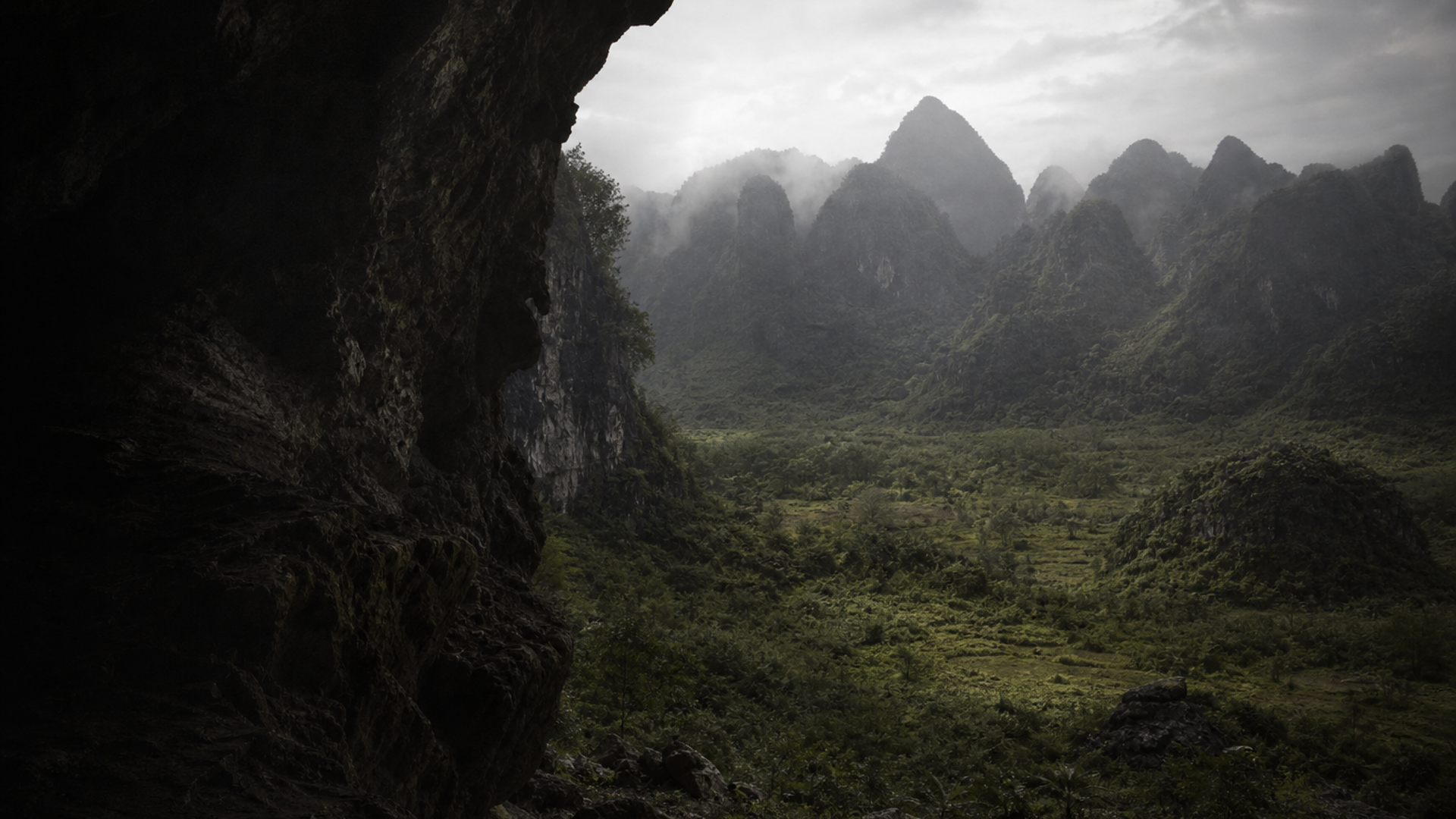
Baojianshan Cave A sits within the limestone hills of Longzhou County, Chongzuo City in Guangxi — a karst landscape that funnels rainfall and preserves deep archaeological deposits. Radiocarbon-anchored material from layers attributed to the Baojianshan Neolithic spans roughly 6400–4400 BCE. Archaeological data indicates repeated human use of the cave during the early to middle Neolithic, a period when communities across southern China were experimenting with new subsistence strategies and occupying coastal and riverine environments.

Limited evidence suggests these cave occupants were part of a broader mosaic of southern Chinese foragers and early cultivators. Seasonal mobility, use of sheltered rock cavities, and localized toolkits would have characterized life here, while the ecological setting — river valleys, wetlands and tropical forests — shaped diets and movement. The Baojianshan sequence therefore offers a deep-time glimpse of communities on the maritime and inland routes that link southern China with mainland Southeast Asia. While the material record at the site is important regionally, the small number of recovered human genomes means claims about population origins must remain cautious and provisional.

  • Located in Baojianshan Cave A, Longzhou County, Guangxi
  • Occupation dated c. 6400–4400 BCE
  • Contributes to understanding early southern China lifeways
Chapitre IV

Daily Life & Society

In the flickering light of a karst cave, people of the Baojianshan horizon likely organized small, kin-based groups. Archaeological patterns from comparable southern Chinese sites indicate mixed subsistence: hunting, fishing, gathering of wild tubers and fruits, and early forms of plant management in wetlands. Shells, animal bones and stone tools commonly found in the region suggest a diet tightly bound to riverine and forest resources; at Baojianshan the cave setting implies both long-term use and episodic sheltering.

Social life probably centered on household clusters with flexible seasonal movement, and material culture would have reflected local raw materials — worked stone, perishable plant and fiber technologies that rarely survive, and hearth-associated debris. Mortuary practices preserved in cave contexts can provide snapshots of social identity, but at Baojianshan the small number of human remains recovered limits interpretations about social hierarchy, ritual complexity, or population size. Archaeological data therefore gestures toward a dynamic, adaptable Neolithic lifeway rooted in southern China’s wetlands and karst margins.

  • Mixed subsistence tied to rivers, wetlands and forests
  • Likely small, mobile kin-based groups using caves seasonally
Chapitre V

Genetic Profile

Two human individuals from Baojianshan Cave A yielded ancient mitochondrial genomes assigned to haplogroup M75. This maternal marker is nested within the broader macro-haplogroup M, which is widespread across Asia. The presence of M75 in both recovered individuals suggests maternal continuity at this locale during the mid-Holocene, and aligns with a pattern in which southern China and adjacent Southeast Asia harbor deep maternal lineages potentially involved in early coastal and inland dispersals.

Crucially, only two samples are available — a very small dataset — so population-level inferences are preliminary. No Y-chromosome (paternal) haplogroup information was reported from these individuals, preventing direct insights into male-mediated migrations or paternal continuity. Genetically, the data are best interpreted as a tantalizing hint: they document ancient maternal ancestry in Guangxi that can be compared with later and geographically broader datasets to test models of continuity, gene flow, and interactions between Neolithic communities of southern China and Southeast Asia. Until larger sample sizes and genome-wide data are available, any narrative of demographic change remains tentative.

  • Both samples (n=2) carry mtDNA haplogroup M75
  • No Y-DNA reported; conclusions are preliminary due to low sample count
Chapitre VI

Legacy & Modern Connections

The genetic signal from Baojianshan is a whisper from deep time. If M75 persisted locally or spread regionally, it may contribute to the maternal ancestry observed today in parts of southern China and mainland Southeast Asia. Archaeologically, Baojianshan anchors a Neolithic thread in Guangxi that complements coastal and riverine cultural trajectories tied to wet-rice emergence and maritime exchanges.

However, modern population structure in this part of East Asia has been shaped by millennia of movements, language shifts, and admixture. The small ancient sample here cautions against direct one-to-one mapping of ancient lineages to present-day groups. Instead, the Baojianshan genomes are most powerful when integrated into larger comparative studies: they help calibrate timelines, reveal local continuity versus replacement, and illuminate the maternal roots of southern Chinese prehistory.

  • M75 may reflect deep maternal continuity in southern China
  • Small sample size means connections to modern groups are provisional
Propulsé par l'IA

Assistant IA

Posez des questions sur la culture Baojianshan Neolithic Echoes

Assistant IA par DNAGENICS

Débloquer cette fonction
Posez des questions sur la culture Baojianshan Neolithic Echoes. L'assistant IA peut expliquer les résultats génétiques, le contexte historique, les preuves archéologiques et les liens génétiques avec les populations actuelles, dans les limites de l'interprétation.
Exemple d'analyse IA

La culture Baojianshan Neolithic Echoes représente un chapitre fascinant de l'histoire humaine…

L'analyse génétique met en évidence des similarités avec des populations antérieures et des signes d'adaptations propres. Les échantillons d'ADN ancien éclairent les schémas migratoires et les liens entre populations, avec des limites qui dépendent de l'étude et du contexte archéologique.

Il s'agit d'un aperçu de l'analyse IA. Accédez à l'assistant complet pour explorer :

  • Composition et similarité génétique
  • Schémas migratoires et origines
  • Vie quotidienne et pratiques culturelles
  • Contexte génétique actuel

Explorez d'autres cultures antiques

Découvrez les récits de civilisations issues du monde antique