Préparation du rapport

Chargement des informations et références disponibles

Connexion au corpus archéologique…

Collecte des archives antiques

Aller au contenu principal
Beagle Channel Voyager
Profil culturel

Beagle Channel Voyager

A single ancient genome from Río Pipo illuminates seafaring life in Tierra del Fuego

260 CE - 6001500 CE
Beagle Channel, Tierra del Fuego, Argentina (Río Pipo)
Faites défiler pour commencer
Chapitre I

Le récit

Comprendre la culture Beagle Channel Voyager

Archaeogenetic and archaeological evidence from a single 1500 BP Yamana-associated individual at Río Pipo (Beagle Channel, Argentina) suggests a maritime forager lifestyle tied to Pan-American founder lineages (Y haplogroup Q, mtDNA C1b). Conclusions remain preliminary given one sample.

Time Period

260–600 CE (≈1500 BP)

Region

Beagle Channel, Tierra del Fuego, Argentina (Río Pipo)

Common Y-DNA

Q (1 sample)

Common mtDNA

C1b (1 sample)

Chapitre II

Chronologie

Moments clés de l'histoire de cette culture

2500 BCE

Early coastal occupation

Evidence of sustained maritime foraging and shell midden formation begins along southern South America, setting the stage for later Yamana adaptations.

Chapitre III

Origins & Emergence

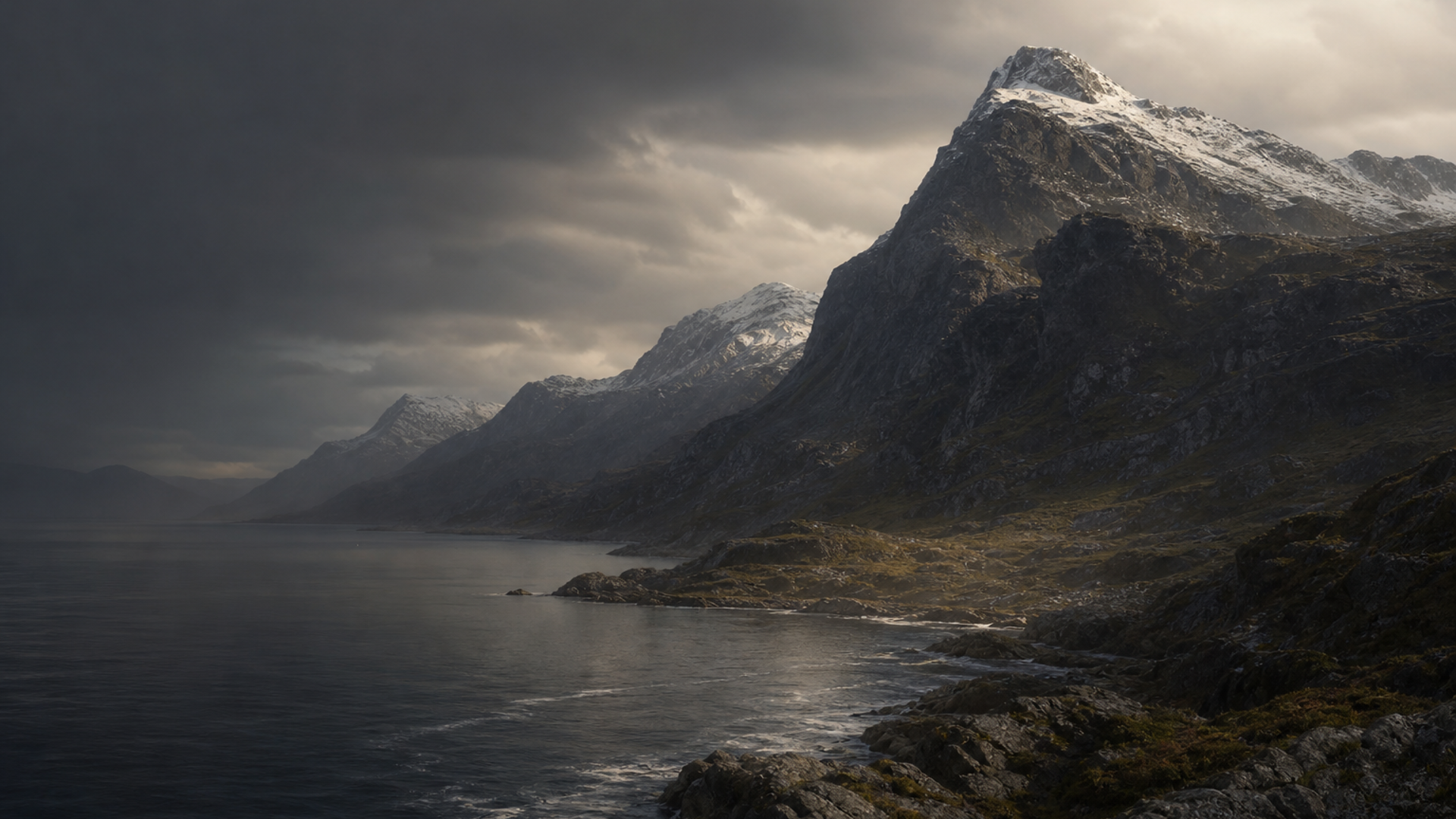
From the wind-scoured channels of Tierra del Fuego emerges a fragile filament of the past: an individual recovered at Río Pipo on the Beagle Channel dated between 260–600 CE (≈1500 BP) and associated with the maritime Yamana cultural horizon. Archaeological data indicates a long history of coastal adaptation in the southern tip of Patagonia, where people specialized in shellfish, fish, seabirds and marine mammals and developed small, highly maneuverable watercraft. The Yamana are known from ethnohistoric and archaeological records as skilled seafarers who occupied islands, channels and fjords.

Limited evidence suggests that these lifeways were part of a broader Late Holocene pattern of maritime foraging that persisted despite extreme weather and seasonal scarcity. The Río Pipo specimen provides a direct biological link to that material culture: it anchors a genetic profile to a known place and time in the Beagle Channel. However, because this dataset is a single genome, any claims about population continuity, demographic size, or detailed migration routes remain provisional. Broader patterns require additional ancient DNA and stratified excavations across Tierra del Fuego and adjacent coasts.

  • Single individual from Río Pipo dated 260–600 CE (≈1500 BP)
  • Associated with maritime Yamana cultural traditions
  • Evidence of longstanding coastal adaptation in southern South America
Chapitre IV

Daily Life & Society

Imagine slender, skin-covered boats slipping through fog, a small crew poised to harvest mussels, seabirds, or fish—this cinematic scene approximates the lifeways archaeologists reconstruct for Beagle Channel foragers. Archaeological sites in Tierra del Fuego and nearby islands reveal shell middens, worked bone and stone tools, and hearth features consistent with repeated seasonal occupation of sheltered coves. Social groups were likely small, mobile, and intimately tied to the maritime calendar: breeding seabirds, seasonal fish runs and mammal haul-outs structured movements and social rhythms.

Material culture emphasis on waterproof containers, bone points, and light projectile technology fits a coastal hunting and gathering economy. Ethnohistoric accounts of the Yamana describe complex knowledge of tides, currents and weather—skills passed down through generations. Yet archaeological visibility is uneven: preservation in acidic soils is poor and many coastal sites are submerged or eroded. Consequently, reconstructions must balance evocative ethnographic analogies with the archaeological record’s gaps.

  • Maritime foraging focused on shellfish, fish, seabirds and marine mammals
  • Small, mobile social groups with deep seafaring knowledge
Chapitre V

Genetic Profile

The Río Pipo individual carries Y-chromosome haplogroup Q and mitochondrial haplogroup C1b. Both lineages are recognized components of the Native American genetic landscape: haplogroup Q is the predominant paternal lineage across much of the Americas, and C1b is one of several founding maternal clades found from North to South America. The presence of Q and C1b in Tierra del Fuego around 1500 BP aligns with broader Pan-American founder patterns and indicates genetic continuity of indigenous lineages in the far south.

Crucially, this conclusion rests on one sample. With a sample count of one, population-level inferences—such as rates of gene flow, local continuity from earlier Holocene groups, or fine-scale affinities to neighbouring groups like the Kawésqar or Selknam—are preliminary. Archaeological context strengthens interpretation: linking genotype to a maritime foraging assemblage provides a cultural anchor for this genome. Future aDNA from additional Beagle Channel sites, temporal transects, and comparative sequencing across southern Patagonia will be required to chart migration dynamics, sex-biased mobility, and microevolutionary processes in these extreme latitudes.

  • Y haplogroup Q and mtDNA C1b match Pan‑American founder lineages
  • Single sample; population-level conclusions are preliminary
Chapitre VI

Legacy & Modern Connections

The human story at the southern edge of the Americas reaches into present-day indigenous communities whose languages, lifeways and oral histories recall deep maritime expertise. Genetic continuity suggested by core Native American lineages like Q and C1b provides a biological link across centuries, complementing archaeological and ethnographic lines of evidence.

At the same time, the sparse ancient genomic record from Tierra del Fuego highlights the urgent need for respectful collaboration with descendant communities and careful sampling strategies. Expanding the dataset will illuminate how these seafaring populations adapted to climatic shifts, resource changes and later historic disruptions. For now, the Río Pipo genome stands as a single luminous thread connecting the Yamana’s maritime world to broader stories of human resilience on cold southern seas.

  • Genetic link to broader Native American founder lineages
  • Need for more samples and collaboration with descendant communities
Propulsé par l'IA

Assistant IA

Posez des questions sur la culture Beagle Channel Voyager

Assistant IA par DNAGENICS

Débloquer cette fonction
Posez des questions sur la culture Beagle Channel Voyager. L'assistant IA peut expliquer les résultats génétiques, le contexte historique, les preuves archéologiques et les liens génétiques avec les populations actuelles, dans les limites de l'interprétation.
Exemple d'analyse IA

La culture Beagle Channel Voyager représente un chapitre fascinant de l'histoire humaine…

L'analyse génétique met en évidence des similarités avec des populations antérieures et des signes d'adaptations propres. Les échantillons d'ADN ancien éclairent les schémas migratoires et les liens entre populations, avec des limites qui dépendent de l'étude et du contexte archéologique.

Il s'agit d'un aperçu de l'analyse IA. Accédez à l'assistant complet pour explorer :

  • Composition et similarité génétique
  • Schémas migratoires et origines
  • Vie quotidienne et pratiques culturelles
  • Contexte génétique actuel

Explorez d'autres cultures antiques

Découvrez les récits de civilisations issues du monde antique