Préparation du rapport

Chargement des informations et références disponibles

Connexion au corpus archéologique…

Collecte des archives antiques

Aller au contenu principal
Belize 4,000 Years Ago
Profil culturel

Belize 4,000 Years Ago

Two ancient voices from Mayahak Cab Pek hint at deep maternal ties across early Mesoamerica

2204 CE - 1778 BCE
Belize (Mayahak Cab Pek)
Faites défiler pour commencer
Chapitre I

Le récit

Comprendre la culture Belize 4,000 Years Ago

Archaeological and aDNA data from two individuals (c. 2204–1778 BCE) at Mayahak Cab Pek, Belize reveal mtDNA lineages C and A. Limited samples point to broader Native American maternal diversity in the Middle Holocene; interpretations remain preliminary.

Time Period

c. 2204–1778 BCE

Region

Belize (Mayahak Cab Pek)

Common Y-DNA

Not reported / no data

Common mtDNA

C (1), A (1)

Chapitre II

Chronologie

Moments clés de l'histoire de cette culture

2204 BCE

Dated human presence at Mayahak Cab Pek

Radiocarbon-calibrated dates place at least two individuals at Mayahak Cab Pek between 2204 and 1778 BCE, anchoring human activity in the region to the Middle Holocene.

Chapitre III

Origins & Emergence

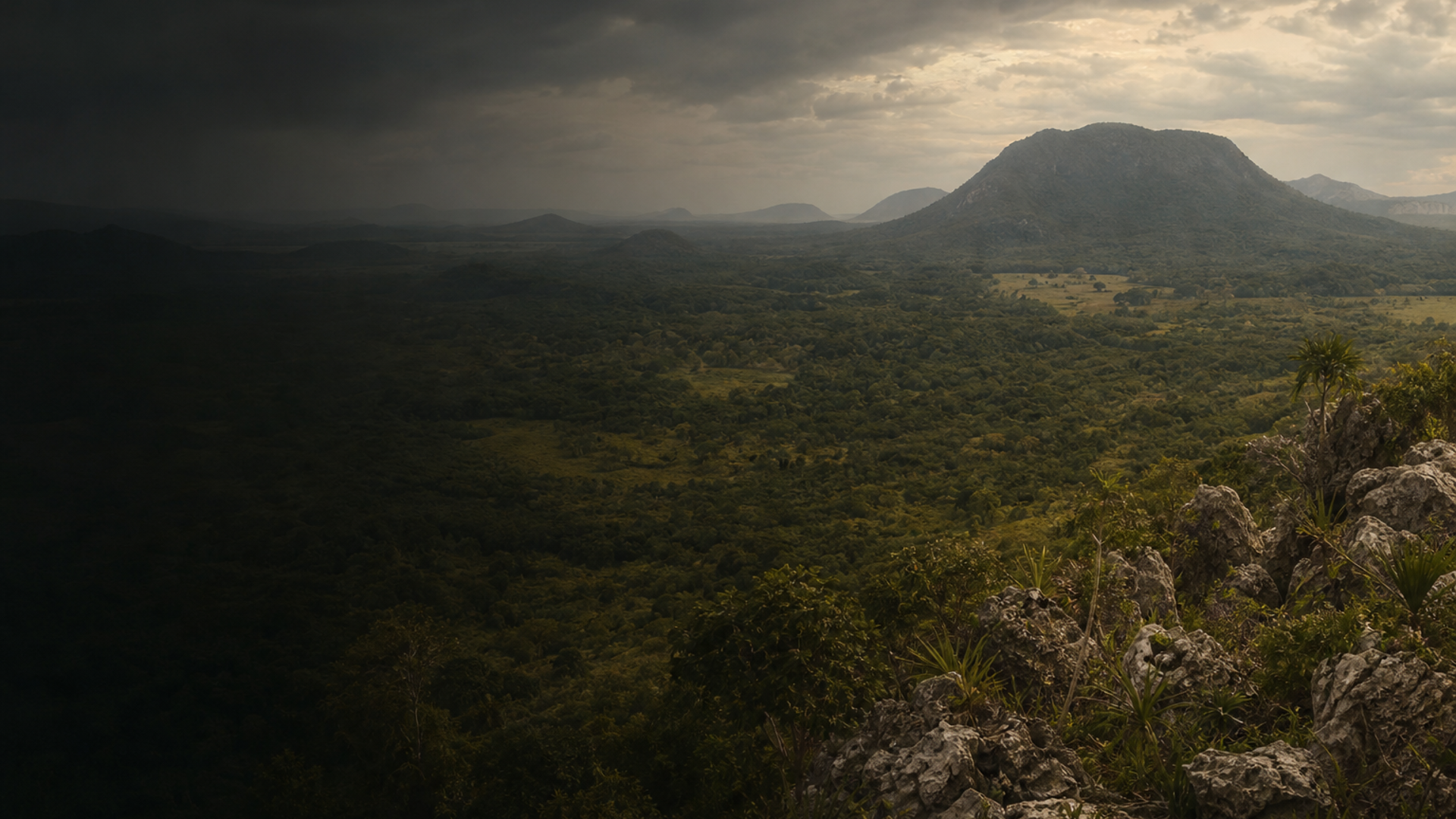
Beneath the canopy of Belize's lowland forests and along ancient shorelines, communities active around 4,000 years before present left traces that speak to a world in motion. Archaeological data from the site of Mayahak Cab Pek (the source of the two sampled individuals) places human activity here between 2204 and 1778 BCE, a period often described as part of the Middle Holocene transition in southern Mesoamerica.

Limited evidence suggests a landscape of mixed economies — coastal and riverine resources combined with early horticultural experiments in some regions — producing mobile but locally rooted lifeways. Stone tools, shell remains, and isolated early ceramics found regionally indicate a mosaic of technologies and adaptations rather than a single, uniform culture.

Genetically, the two individuals offer rare direct windows into these populations: their maternal lineages (mtDNA haplogroups C and A) belong to haplogroups commonly observed among Indigenous peoples across the Americas. This pattern is consistent with broader post‑glacial peopling scenarios, but with only two samples from a single site, the story is fragmentary. Archaeological interpretation therefore remains cautious: these individuals are compelling glimpses rather than comprehensive portraits.

  • Samples dated to c. 2204–1778 BCE at Mayahak Cab Pek, Belize
  • Regional archaeology indicates mixed foraging and early horticulture
  • Genetic signals are consistent with broader Native American maternal lineages
Chapitre IV

Daily Life & Society

Imagine a shoreline lit by torches, children playing near lagoons, and adults tending gardens or harvesting shellfish — a cinematic but scientifically grounded image of daily life in coastal Belize during the Middle Holocene. Archaeological remains recovered in the region (lithic scatters, shell concentrations, and occasional pottery in later contexts) point to subsistence strategies that blended riverine, marine, and terrestrial resources. Settlement patterns likely ranged from seasonal camps to semi‑sedentary hamlets depending on resource abundance.

Social organization at this time is difficult to reconstruct in detail. Small group sizes, flexible mobility, and kin-based social networks are plausible, supported indirectly by settlement and resource-use patterns across nearby sites. Craft production was probably on a household scale; exchange of exotic materials (shell, obsidian) appears intermittently in the archaeological record of Belize, implying routes of interaction that could have connected communities over substantial distances.

Preservation biases in tropical environments mean that organic materials and ephemeral structures rarely survive; our picture of daily life is therefore partial. Contextualizing these two genetic samples within broader archaeological landscapes helps bridge bodily biography and community practice, but many questions about social roles, ritual, and long-term settlement remain open.

  • Subsistence combined coastal, riverine, and terrestrial resources
  • Likely small, kin-based communities with regional exchange networks
Chapitre V

Genetic Profile

The genetic data from Mayahak Cab Pek are concise but meaningful. Two individuals produced recoverable mitochondrial genomes: one belongs to haplogroup C and the other to haplogroup A. Both haplogroups are among the founding maternal lineages widely distributed across the Americas and commonly identified in ancient and modern Indigenous populations.

These maternal lineages are consistent with a deep-time connection to the first waves of Native American settlement, reflecting population histories that began many millennia earlier than these samples. However, with only two individuals (sample count = 2), any inferences about population structure, continuity, or migration within Belize must be treated as preliminary. The absence of reported Y‑DNA data for these individuals further limits insights into paternal ancestry, sex-biased migration, or kinship patterns.

Ancient DNA from tropical settings faces challenges: preservation is variable, contamination risks persist, and small sample sizes can bias interpretations. Nevertheless, these mtDNA results complement archaeological evidence by anchoring local human presence to pan‑American maternal diversity. Future work with larger sample sets, genomic nuclear data, and comparative regional sampling will be required to move from suggestive patterns to robust models of population history in lowland Mesoamerica.

  • mtDNA haplogroups C and A observed — lineages common across the Americas
  • Small sample size (n=2) and no Y‑DNA mean conclusions are provisional
Chapitre VI

Legacy & Modern Connections

These two ancient genomes are threads in a much larger tapestry that connects past peoples of Belize to Indigenous communities across the Americas. The presence of maternal haplogroups A and C at Mayahak Cab Pek aligns with genetic patterns seen in later populations of Mesoamerica and beyond, suggesting long-standing maternal line continuity in the region.

Caution is essential: two samples cannot map the full complexity of population change, cultural transformation, or the genesis of later groups such as the Maya. Still, such findings are powerful because they provide direct temporal anchors — biological voices speaking from a landscape often silent in the archaeological record. They emphasize the value of integrating aDNA with careful excavation, radiocarbon dating, and regional comparative studies. Expanding the sample size and obtaining genome-wide data will be critical to trace ancestry, admixture, and demographic events more precisely and to responsibly explore connections to present-day Indigenous peoples.

  • Maternal lineages echo broader Native American diversity across time
  • Further sampling and genome-wide data needed to clarify long-term continuity
Propulsé par l'IA

Assistant IA

Posez des questions sur la culture Belize 4,000 Years Ago

Assistant IA par DNAGENICS

Débloquer cette fonction
Posez des questions sur la culture Belize 4,000 Years Ago. L'assistant IA peut expliquer les résultats génétiques, le contexte historique, les preuves archéologiques et les liens génétiques avec les populations actuelles, dans les limites de l'interprétation.
Exemple d'analyse IA

La culture Belize 4,000 Years Ago représente un chapitre fascinant de l'histoire humaine…

L'analyse génétique met en évidence des similarités avec des populations antérieures et des signes d'adaptations propres. Les échantillons d'ADN ancien éclairent les schémas migratoires et les liens entre populations, avec des limites qui dépendent de l'étude et du contexte archéologique.

Il s'agit d'un aperçu de l'analyse IA. Accédez à l'assistant complet pour explorer :

  • Composition et similarité génétique
  • Schémas migratoires et origines
  • Vie quotidienne et pratiques culturelles
  • Contexte génétique actuel

Explorez d'autres cultures antiques

Découvrez les récits de civilisations issues du monde antique