Préparation du rapport

Chargement des informations et références disponibles

Connexion au corpus archéologique…

Collecte des archives antiques

Aller au contenu principal
Belize 8,800 Years Ago
Profil culturel

Belize 8,800 Years Ago

Early Holocene people of Mayahak Cab Pek, traced by bones and mitochondrial DNA

7050 BCE - 6600 BCE
Belize (Mesoamerica)
Faites défiler pour commencer
Chapitre I

Le récit

Comprendre la culture Belize 8,800 Years Ago

Archaeological remains from Mayahak Cab Pek (c. 7050–6600 BCE) reveal Early Holocene occupation in coastal Belize. Two ancient genomes carry mtDNA haplogroup D, hinting at maternal links to broader Native American lineages; conclusions remain preliminary given the small sample size.

Time Period

7050 BCE - 6600 BCE

Region

Belize (Mesoamerica)

Common Y-DNA

Undetermined (no clear Y-DNA from these samples)

Common mtDNA

D (2)

Chapitre II

Chronologie

Moments clés de l'histoire de cette culture

7000 BCE

Occupation at Mayahak Cab Pek

Human remains dated c. 7050–6600 BCE reflect Early Holocene use of coastal Belize; genetic samples later recovered show mtDNA haplogroup D (preliminary).

Chapitre III

Origins & Emergence

The bones recovered from Mayahak Cab Pek in Belize belong to a moment soon after the last ice age when coastlines, ecosystems, and human economies were in dramatic flux. Radiocarbon-calibrated dates place the burials between roughly 7050 and 6600 BCE, situating them in the Early Holocene — a time of environmental transition as sea levels stabilized and tropical forests expanded. Archaeological data indicates transient but repeated use of coastal and near-coastal landscapes by foraging groups; however, the sparse record in this region means reconstructions remain tentative.

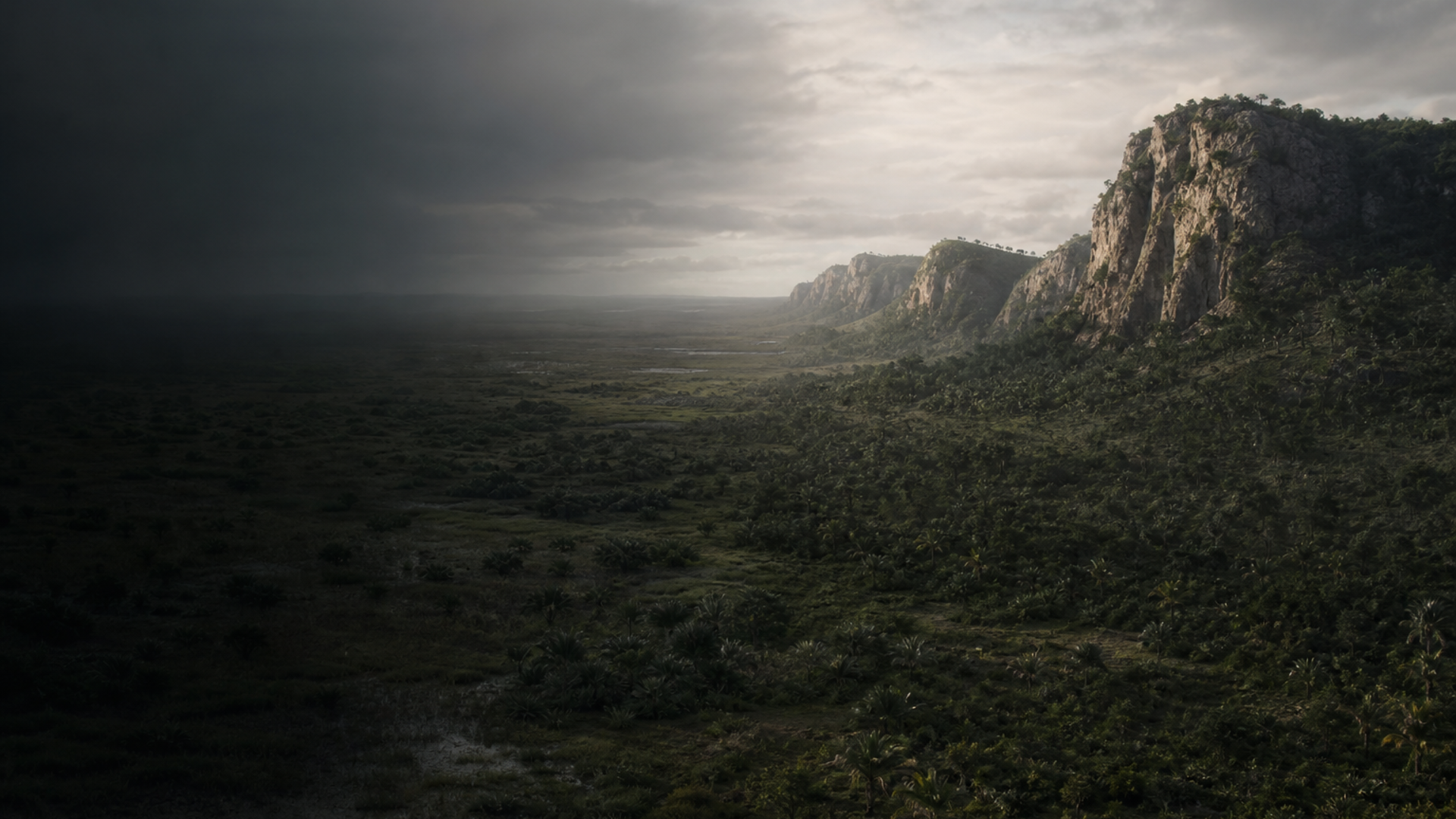
Cinematic in its silence, the site captures a human presence at the edge of changing seas: individuals whose material traces are thin but whose genomes provide direct windows into ancestry. Limited evidence suggests these people were part of broad dispersals that peopled the Americas during the late Pleistocene and Early Holocene. At the same time, without a richer assemblage of sites and artifacts in Belize for this interval, we must treat narratives of migration and cultural emergence as provisional. The Mayahak Cab Pek material invites cautious inference — a tantalizing glimpse rather than a full portrait — and underscores the need for more integrated archaeological and genetic sampling across Mesoamerica.

  • Dates: c. 7050–6600 BCE (Early Holocene)
  • Site: Mayahak Cab Pek, Belize — coastal/karst context
  • Interpretation: Preliminary evidence for Early Holocene coastal use
Chapitre IV

Daily Life & Society

Direct evidence for subsistence and social organization at Mayahak Cab Pek is limited, but regional archaeological patterns allow cautious reconstruction. Early Holocene groups in lowland Mesoamerica typically exploited a mosaic of coastal, riverine, and forest resources. Shellfish, fish, small vertebrates, and wild plant foods likely formed a seasonal diet, while stone tools and working surfaces processed flesh and plant matter. The sparse burial contexts recovered suggest small, mobile bands with flexible settlement rules rather than large, sedentary villages.

Material remains are often fragmentary from this period: lithic scatters, isolated hearths, and occasional human interments. Such traces point toward intimate knowledge of local ecologies and mobility strategies adapted to shifting shorelines and river courses. Social life probably emphasized kin networks and reciprocal sharing necessary for survival in dynamic environments. Because the archaeological assemblage at Mayahak Cab Pek is small, many aspects — social hierarchy, ritual practices, long-distance exchange — remain speculative and should be framed as hypotheses for future excavation and analysis.

  • Likely subsistence: mixed coastal and forest foraging
  • Social organization: small, mobile kin-based groups inferred
Chapitre V

Genetic Profile

Two individuals sampled from Mayahak Cab Pek yield ancient DNA that provides one of the few direct genetic snapshots from Belize in the Early Holocene. Both samples carry mitochondrial haplogroup D, a lineage that is one of several founding maternal clades widespread across the Americas. This pattern is consistent with broader continental histories in which haplogroups A, B, C, D, and X mark deep maternal ancestries tied to initial peopling events.

However, the genetic picture is highly provisional. With only two genomes, both maternal markers, we cannot characterize population structure, paternal lineages, or fine-scale relationships to later Indigenous groups in Mesoamerica. No consistent Y-DNA signal is available from these remains, leaving male-line ancestry unresolved. Archaeogenomic comparisons might eventually reveal continuity or replacement over millennia, but current data only permit cautious statements: the presence of mtDNA D aligns the Mayahak Cab Pek individuals with pan-American maternal diversity, yet sample size and potential contamination or preservation biases constrain firm conclusions. Additional sampling from Belize and neighboring regions is essential to move beyond these preliminary insights.

  • Both samples carry mtDNA haplogroup D — a pan-American maternal lineage
  • Paternal ancestry unknown; sample count (2) makes conclusions preliminary
Chapitre VI

Legacy & Modern Connections

The genetic traces from Mayahak Cab Pek form a slender thread linking deep-time inhabitants of Belize to the broader tapestry of Indigenous American ancestry. Maternal continuity indicated by haplogroup D suggests that some components of Early Holocene mitochondrial diversity persisted across millennia. Yet cultural trajectories in Mesoamerica were complex: later agricultural revolutions, population movements, and social transformations reshaped communities in ways that do not map neatly onto a single ancient site.

For contemporary descendant communities, such findings can offer one piece of a much larger ancestral mosaic — a biological echo rather than a full cultural biography. Ethical collaboration, expanded sampling, and integration with linguistic, ethnographic, and archaeological lines of evidence are needed to responsibly connect ancient genomes to living traditions. In short, Mayahak Cab Pek opens a door onto ancient maternal heritage in Belize, but that door leads into a wide landscape requiring careful, multidisciplinary exploration.

  • mtDNA signal suggests maternal links to pan-American lineages
  • Connecting ancient DNA to modern communities requires more data and ethical engagement
Propulsé par l'IA

Assistant IA

Posez des questions sur la culture Belize 8,800 Years Ago

Assistant IA par DNAGENICS

Débloquer cette fonction
Posez des questions sur la culture Belize 8,800 Years Ago. L'assistant IA peut expliquer les résultats génétiques, le contexte historique, les preuves archéologiques et les liens génétiques avec les populations actuelles, dans les limites de l'interprétation.
Exemple d'analyse IA

La culture Belize 8,800 Years Ago représente un chapitre fascinant de l'histoire humaine…

L'analyse génétique met en évidence des similarités avec des populations antérieures et des signes d'adaptations propres. Les échantillons d'ADN ancien éclairent les schémas migratoires et les liens entre populations, avec des limites qui dépendent de l'étude et du contexte archéologique.

Il s'agit d'un aperçu de l'analyse IA. Accédez à l'assistant complet pour explorer :

  • Composition et similarité génétique
  • Schémas migratoires et origines
  • Vie quotidienne et pratiques culturelles
  • Contexte génétique actuel

Explorez d'autres cultures antiques

Découvrez les récits de civilisations issues du monde antique