Préparation du rapport

Chargement des informations et références disponibles

Connexion au corpus archéologique…

Collecte des archives antiques

Aller au contenu principal
Beniamin, Sasanian Armenia (419–545 CE)
Profil culturel

Beniamin, Sasanian Armenia (419–545 CE)

A late-antique Shirak community glimpsed through pottery, graves and four ancient genomes

419 CE - 545 CE
Shirak Province — Beniamin, Armenia
4 échantillons d'ADN antique
Faites défiler pour commencer
Chapitre I

Le récit

Comprendre la culture Beniamin, Sasanian Armenia (419–545 CE)

Archaeological data from Beniamin (Shirak Province, Armenia) dated 419–545 CE offers a tentative window into Sasanian Armenia. Four ancient DNA samples hint at local continuity with possible West Asian interactions. Limited sample size makes genetic conclusions preliminary.

Time Period

419–545 CE (Late Antiquity)

Region

Shirak Province — Beniamin, Armenia

Common Y-DNA

Not reported / insufficient data

Common mtDNA

Not reported / insufficient data

Chapitre II

Chronologie

Moments clés de l'histoire de cette culture

387 CE

Partition of Armenia

Late 4th-century division formalizes Sasanian and Byzantine spheres, shaping the political landscape of Shirak and Sasanian Armenia.

419 CE

Earliest Beniamin sample

Oldest directly dated ancient DNA sample from Beniamin, marking the start of the site's genetic window (preliminary evidence).

545 CE

Latest Beniamin sample

Most recent dated genome from the Beniamin series, closing the current genetic timespan for the site.

Chapitre III

Origins & Emergence

Perched on the windswept plateau of Shirak, the settlement of Beniamin occupies a quiet corner of Sasanian Armenia — a borderland shaped by imperial rivalry, mountain routes and long‑lived local traditions. Archaeological data indicates cemeteries, domestic pottery and metal finds consistent with rural late‑antique lifeways; stratigraphy and radiocarbon dates place human activity at the sampled loci between 419 and 545 CE. This period follows the formal division of Armenia in the late fourth century CE, when Byzantine and Sasanian spheres of influence carved the highlands into contested provinces.

Material culture from the site suggests continuity with earlier Armenian highland traditions rather than wholesale population replacement: ceramics show local forms alongside imported wares, and funerary practice retains regional traits. The four ancient genomes recovered from Beniamin provide the first genetic windows into this microregion in the fifth–sixth centuries, but with only four samples the genetic picture remains fragile. Limited evidence suggests residents experienced cultural interactions across imperial frontiers — Sasanian administrative ties and regional trade likely brought people, goods and ideas through Shirak — yet archaeological indicators still point to deeply rooted local lifeways. Future excavations and more ancient DNA will be essential to test whether Beniamin reflects a broadly continuous local population or a mosaic shaped by mobility during Sasanian rule.

  • Located in Shirak Province, village of Beniamin (Armenia)
  • Dates from excavated contexts: 419–545 CE (Late Antiquity)
  • Evidence of local ceramic traditions with some imported wares
Chapitre IV

Daily Life & Society

Archaeology paints a cinematic scene of daily life in Beniamin: shepherds driving flocks across high pastures, household hearths warming stone‑built rooms, and hands shaping clay into cooking pots and lamps. Agricultural terraces and storage pits in the broader Shirak landscape imply mixed farming and pastoralism as economic backbones. Small finds — spindle whorls, weaving weights, and simple iron tools — attest to domestic production and textile work, much of it likely performed within village households.

Funerary assemblages at the Beniamin cemetery reveal intimate acts of remembrance: bodies placed in earth graves with modest personal goods, sometimes beads or simple metal ornaments. These mortuary practices reflect regional Late Antique customs in Armenia, adapted to local tastes and resources. Architecturally, the settlement lacks evidence of grand public monuments; instead, the archaeological record emphasizes community-scale structures and family plots, suggesting a society organized around kin groups and local elites rather than imperial centers. Trade networks are visible in small quantities of imported ceramics and metalwork — silent evidence of long‑distance connections that complemented a life rooted in the rhythms of mountain seasons.

With only four DNA samples from the site, however, bioarchaeological interpretations of household composition, migration, or kinship remain tentative and await broader sampling.

  • Economy: mixed farming and pastoralism with local craft production
  • Funerary practice: modest inhumations reflecting regional Late Antique customs
Chapitre V

Genetic Profile

Four ancient genomes from Beniamin (dated 419–545 CE) offer a delicate but valuable glimpse into Late Antique population dynamics on the Armenian plateau. Because the sample count is low (<10), conclusions must be framed as preliminary. Genome‑wide data can detect ancestry components, admixture events, and affinities to neighboring groups; in this case archaeological context suggests a likely predominance of local Armenian highland ancestry with potential gene flow from West Asian or Iranian‑related sources typical of Sasanian imperial networks. However, the current dataset does not report common Y‑DNA or mtDNA haplogroups in aggregate, preventing firm statements about sex‑biased migration or lineage continuity.

What the genetics can do, even in small numbers, is test broad models: continuity versus replacement, local admixture with mobile Sasanian administrators or trade migrants, and genetic similarity to contemporaneous communities across the Caucasus and Anatolia. If future sampling finds consistent affinities to pre‑late antique Armenian genomes, that would support highland continuity; conversely, repeated signals of Iranian‑plateau‑related admixture might indicate more sustained demographic connections associated with Sasanian political and economic ties. For now, each of the four genomes must be treated as an important but isolated data point — evocative, informative, and provisional.

  • Only four genomes recovered — conclusions are preliminary
  • Data suggest likely local highland ancestry with possible West Asian interactions
Chapitre VI

Legacy & Modern Connections

The whisper of Beniamin’s past reaches into the present: cultural continuity in rural Armenia, place names, and certain material traditions suggest threads connecting late‑antique villagers to later communities in Shirak. Ancient DNA from sites like Beniamin can illuminate how much of that continuity is biological and how much is cultural resilience shaped by geography and memory. Genetic signals — once bolstered by larger sample sizes — may reveal enduring ancestry components among modern Armenians or show episodes of admixture linked to Sasanian administrative presence and wider regional mobility.

This tiny dataset already demonstrates the power and limits of paleogenomics: a cinematic, tangible link to named individuals of the past, but one that must be contextualized within archaeology, history and cautious statistics. Expanding both the number of sampled burials and the range of comparative genomes across the Caucasus will turn the evocative glimpses from Beniamin into a robust portrait of Late Antique life and legacy.

  • Potential continuity with later regional populations, pending broader sampling
  • Ancient DNA will clarify connections between local traditions and imperial-era mobility
Chapitre VII

Catalogue d'échantillons

4 échantillons d'ADN antique associés à la culture Beniamin, Sasanian Armenia (419–545 CE) offrent des repères génétiques sur les populations de cette période.

4 / 4 échantillons
Portrait Échantillon Pays Époque Date Culture Sexe Y-ADN ADNmt
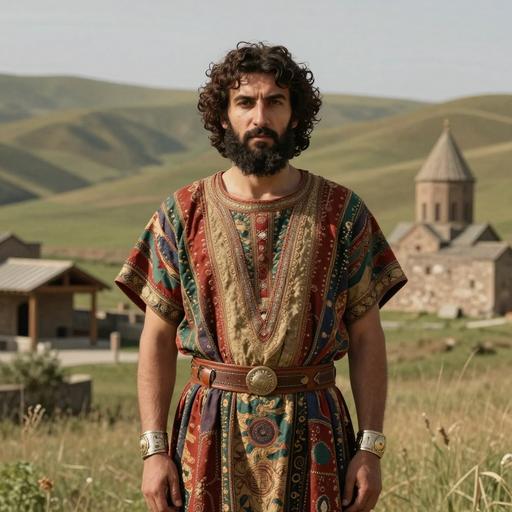
Reconstruction artistique de Beniamin Early Medieval individual, Armenia
Beniamin Early Medieval individual, Armenia
Armenia Armenia_Beniamin_Sasanian 431-545 calCE (1580±15 BP, UCIAMS-235887) Persian Empire F - -
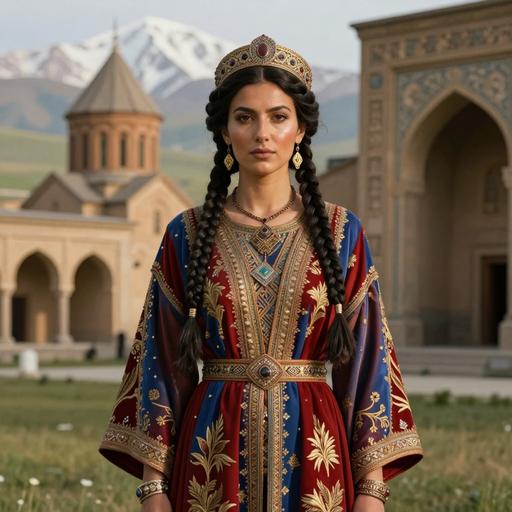
Reconstruction artistique de Beniamin Early Medieval individual, Armenia
Beniamin Early Medieval individual, Armenia
Armenia Armenia_Beniamin_Sasanian 431-545 calCE (1580±15 BP, UCIAMS-237825) Persian Empire M J-Y33322 -
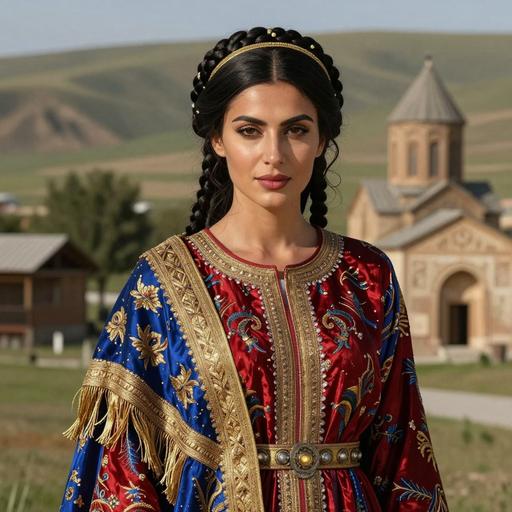
Reconstruction artistique de Beniamin Early Medieval individual, Armenia
Beniamin Early Medieval individual, Armenia
Armenia Armenia_Beniamin_Sasanian 421-538 calCE (1600±15 BP, UCIAMS-237826) Persian Empire F - -
Reconstruction artistique de Beniamin Early Medieval individual, Armenia
Beniamin Early Medieval individual, Armenia
Armenia Armenia_Beniamin_Sasanian 419-538 calCE (1605±15 BP, UCIAMS-237554) Persian Empire F - -
Propulsé par l'IA

Assistant IA

Posez des questions sur la culture Beniamin, Sasanian Armenia (419–545 CE)

Assistant IA par DNAGENICS

Débloquer cette fonction
Posez des questions sur la culture Beniamin, Sasanian Armenia (419–545 CE). L'assistant IA peut expliquer les résultats génétiques, le contexte historique, les preuves archéologiques et les liens génétiques avec les populations actuelles, dans les limites de l'interprétation.
Exemple d'analyse IA

La culture Beniamin, Sasanian Armenia (419–545 CE) représente un chapitre fascinant de l'histoire humaine…

L'analyse génétique met en évidence des similarités avec des populations antérieures et des signes d'adaptations propres. Les échantillons d'ADN ancien éclairent les schémas migratoires et les liens entre populations, avec des limites qui dépendent de l'étude et du contexte archéologique.

Il s'agit d'un aperçu de l'analyse IA. Accédez à l'assistant complet pour explorer :

  • Composition et similarité génétique
  • Schémas migratoires et origines
  • Vie quotidienne et pratiques culturelles
  • Contexte génétique actuel

Explorez d'autres cultures antiques

Découvrez les récits de civilisations issues du monde antique