Préparation du rapport

Chargement des informations et références disponibles

Connexion au corpus archéologique…

Collecte des archives antiques

Aller au contenu principal
Bolshoy: Arctic Bronze-Age Voices
Profil culturel

Bolshoy: Arctic Bronze-Age Voices

Peat‑preserved burials on Bolshoy Oleniy Ostrov reveal a northern coastal lifeway partly echoed in DNA

2050 CE - 1500 BCE
Murmansk (Kola Peninsula), Russia
Faites défiler pour commencer
Chapitre I

Le récit

Comprendre la culture Bolshoy: Arctic Bronze-Age Voices

Archaeological remains from Bolshoy Oleniy Ostrov (Murmansk, Russia) date to 2050–1500 BCE. Limited ancient DNA from six individuals shows mixed northern Eurasian maternal lineages and paternal N markers, suggesting links between Arctic hunter‑fishers and broader northern gene pools. Conclusions are preliminary.

Time Period

2050–1500 BCE

Region

Murmansk (Kola Peninsula), Russia

Common Y-DNA

N (2 of 6)

Common mtDNA

U (2), Z (1), T (1), C4b (1), D (1)

Chapitre II

Chronologie

Moments clés de l'histoire de cette culture

2050 BCE

Intensive use of Bolshoy cemetery

Radiocarbon dates indicate the main phase of burials on Bolshoy Oleniy Ostrov began around 2050 BCE, marking sustained occupation by maritime foragers.

Chapitre III

Origins & Emergence

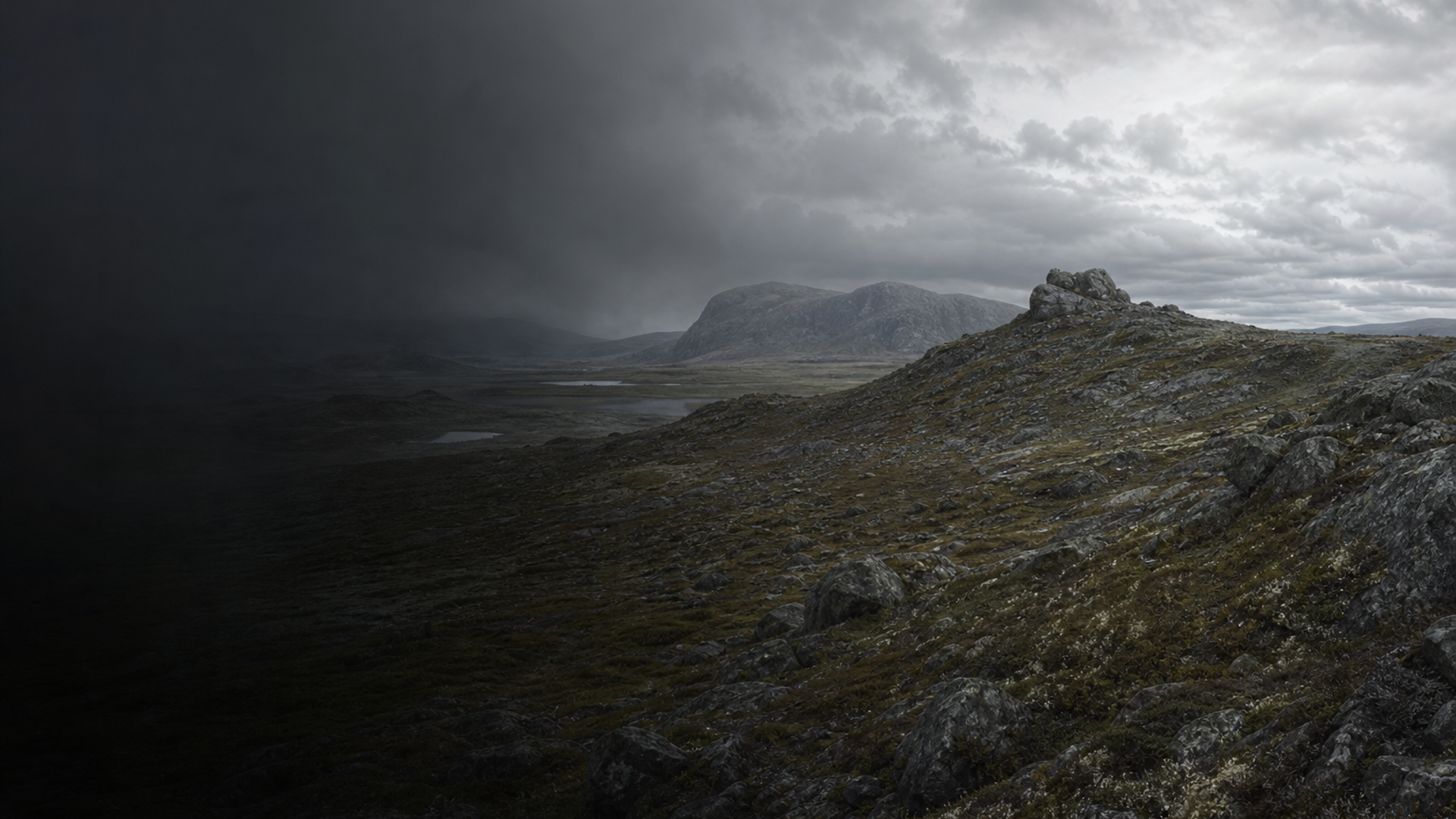
Along the windswept shores of the Kola Peninsula, Bolshoy Oleniy Ostrov preserves a cinematic snapshot of Arctic life in the later Bronze Age. Archaeological data indicates burials cut into peat and organic-rich sediments, a preservational miracle that saved wood, textile impressions and grave goods otherwise lost to time. Radiocarbon dates cluster between about 2050 and 1500 BCE, framing a centuries-long use of this island cemetery by maritime foragers and fishers.

Material culture from the site — worked bone, antler tools, and ornaments — suggests a community adapted to seal, fish and coastal foraging, while stylistic elements hint at networks reaching along the Barents Sea and into inland forest zones. Limited evidence suggests these people were not isolated: trade in exotic beads and parallels in artifact types point to exchanges across northern Fennoscandia and perhaps contacts to the east.

From an archaeological perspective, Bolshoy represents a local Arctic trajectory rather than a sudden migration. However, the genetic evidence (see Genetics) provides an additional layer, showing paternal and maternal lineages characteristic of broader northern Eurasian pools. Because the genetic sample is small (six individuals), interpretations about population origins remain provisional.

  • Peat-preserved cemetery on Bolshoy Oleniy Ostrov, Kola Peninsula
  • Radiocarbon-dated use: ca. 2050–1500 BCE
  • Material culture indicates coastal foraging with long‑distance contacts
Chapitre IV

Daily Life & Society

Archaeological traces evoke a hard, sea‑shaped daily life: narrow boats or skin‑covered craft, seal and fish processing areas, and toolkits focused on bone, antler and stone working. Organic preservation at Bolshoy yields impressions of clothing fragments and wooden implements, suggesting skilled manufacture suited to cold maritime seasons.

Burial practices are particularly revealing. Graves often contain personal items — beads, toggles, and hunting gear — arranged with a sense of individual identity. The prominence of marine resources in grave assemblages reflects both subsistence and cosmology: the sea was life, work and pathway. Spatial patterns in the cemetery may indicate kin groups or craft/age divisions, but archaeological data is not yet sufficient to reconstruct precise social hierarchies.

Seasonal mobility is likely: communities probably moved between coastal islands and inland hunting grounds with the rhythms of fish runs and reindeer movement. Environmental archaeology (faunal remains, isotopes) supports a mixed marine and terrestrial diet, though more sampling is needed to quantify reliance on each resource.

  • Economy centered on seal, fish and coastal foraging
  • Grave goods imply personal identity and long‑distance exchange
Chapitre V

Genetic Profile

The genetic dataset from Bolshoy Oleniy Ostrov is small — six individuals — and so conclusions are tentative. Still, the DNA provides glimpses into the ancestry mosaic of Arctic Bronze‑Age peoples. Two of the six male-associated samples carry Y‑DNA haplogroup N, a paternal lineage today widespread across northern Eurasia and often associated with Uralic‑speaking populations, though presence alone does not prove linguistic identity.

Mitochondrial diversity is notable: two U lineages (frequent in European hunter‑gatherers), one Z, one T, one C4b and one D. Haplogroups C4b and D are more common in Siberia and eastern Eurasia, while Z and U have broad northern distributions. This mixture hints at gene flow between western Eurasian hunter‑gatherer pools and eastern/northeastern groups, consistent with archaeological signs of long‑distance contacts along circumpolar routes.

Autosomal DNA (not publicly detailed here) in similar northern sites often shows a blend of western hunter‑gatherer, eastern Siberian, and later incoming components; for Bolshoy the limited sample likely reflects a northern Eurasian cline. Because sample count is below 10, these patterns should be treated as preliminary; larger datasets are required to test models of continuity versus migration.

  • Paternal lineages include haplogroup N (2 of 6), linking to northern Eurasian pools
  • Maternal lineages show a mix of western (U) and eastern (C4b, D) affinities
Chapitre VI

Legacy & Modern Connections

Bolshoy Oleniy Ostrov occupies a key place in the deep history of the north: archaeologically as a well‑preserved cemetery and genetically as an early snapshot of Arctic diversity. Limited genetic signals — especially the presence of haplogroup N — echo patterns seen in later northern Eurasian populations, suggesting threads of continuity in paternal lines across millennia. Maternal diversity that includes both western and eastern lineages points to long‑term interactions across the circumpolar north.

Caution is essential: with only six samples, claims about direct ancestry to modern populations (for example, Sámi or other Kola communities) remain speculative. What is clear is that Bolshoy represents a dynamic intersection of sea, ice and human networks: people adapted to extreme environments while engaging in far‑reaching exchange. Future genetic and archaeological work will refine how these Bronze‑Age voices contributed to the tapestry of northern Eurasian ancestry.

  • Possible paternal continuity with northern Eurasian lineages (haplogroup N)
  • Maternal diversity suggests long‑distance contacts across the circumpolar zone
Propulsé par l'IA

Assistant IA

Posez des questions sur la culture Bolshoy: Arctic Bronze-Age Voices

Assistant IA par DNAGENICS

Débloquer cette fonction
Posez des questions sur la culture Bolshoy: Arctic Bronze-Age Voices. L'assistant IA peut expliquer les résultats génétiques, le contexte historique, les preuves archéologiques et les liens génétiques avec les populations actuelles, dans les limites de l'interprétation.
Exemple d'analyse IA

La culture Bolshoy: Arctic Bronze-Age Voices représente un chapitre fascinant de l'histoire humaine…

L'analyse génétique met en évidence des similarités avec des populations antérieures et des signes d'adaptations propres. Les échantillons d'ADN ancien éclairent les schémas migratoires et les liens entre populations, avec des limites qui dépendent de l'étude et du contexte archéologique.

Il s'agit d'un aperçu de l'analyse IA. Accédez à l'assistant complet pour explorer :

  • Composition et similarité génétique
  • Schémas migratoires et origines
  • Vie quotidienne et pratiques culturelles
  • Contexte génétique actuel

Explorez d'autres cultures antiques

Découvrez les récits de civilisations issues du monde antique