Préparation du rapport

Chargement des informations et références disponibles

Connexion au corpus archéologique…

Collecte des archives antiques

Aller au contenu principal
Byzantine Anatolia: Stratonikeia & Iznik
Profil culturel

Byzantine Anatolia: Stratonikeia & Iznik

Archaeology and ancient DNA illuminate lives in Byzantine-era western Turkey.

262 CE - 1400 CE
Western Turkey (Aegean & Marmara)
Faites défiler pour commencer
Chapitre I

Le récit

Comprendre la culture Byzantine Anatolia: Stratonikeia & Iznik

Archaeological remains from Stratonikeia, Lagina, Iznik and Ilıpınar (262–1400 CE) paired with 14 ancient genomes reveal a portrait of Byzantine Anatolia—regional continuity, Mediterranean maternal lineages, and layered cultural change across centuries.

Time Period

262–1400 CE

Region

Western Turkey (Aegean & Marmara)

Common Y-DNA

Not consistently reported / varied

Common mtDNA

H (3), U (3), X (2), J (1), H5f (1)

Chapitre II

Chronologie

Moments clés de l'histoire de cette culture

325 CE

Council of Nicaea (near Iznik)

The First Council of Nicaea (325 CE), held at ancient Nicaea near modern İznik, shaped ecclesiastical organization across the Byzantine world—relevant to the region's religious architecture.

Chapitre III

Origins & Emergence

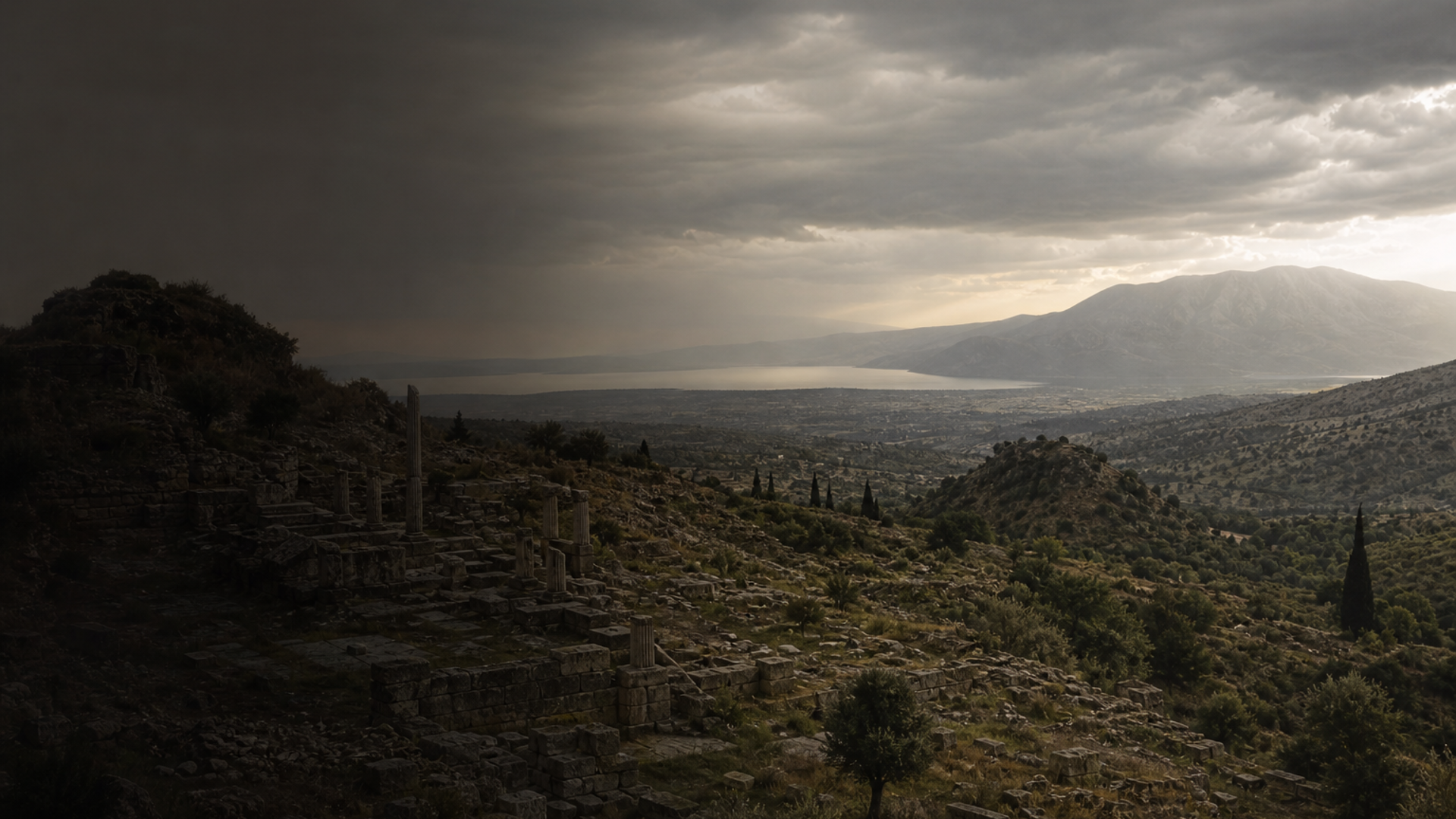
The archaeological footprint of the Turkey_Byzantine samples spans late antiquity into the medieval era (262–1400 CE). Excavations at Stratonikeia and Lagina (Aegean, Muğla; Yatağan district) reveal reused classical civic and sacred architecture transformed into Christian contexts, while the basilica at Iznik (ancient Nicaea, Marmara; İznik) and burials at Ilıpınar (Marmara; Orhangazi) speak to regional continuity and shifting religious landscapes. Material culture—basilica plans, reused columnar fragments, and cemetery architecture—traces a world remade from Roman provincial life into Byzantine institutions.

Cinematic layers of stone and soil record waves of continuity and change: urban centers that once hosted imperial administration became seats of ecclesiastical power; coastal towns remained hubs of trade and cultural exchange. Archaeological data indicate local traditions persisted alongside imported fashions in pottery and liturgical architecture. Limited evidence suggests that some sites saw intermittent population turnover, but the overall picture is one of a region adapting older infrastructures to new political and religious realities.

Taken together with historical sources that document Byzantine administration, these sites form a geographically coherent snapshot of western Anatolia where ancient urbanism and medieval transformation met along trade routes and shorelines.

  • Sites include Stratonikeia, Lagina, Iznik (Nicaea), and Ilıpınar
  • Evidence of architectural reuse from Roman to Byzantine contexts
  • Archaeology shows continuity of urban and ecclesiastical life
Chapitre IV

Daily Life & Society

Daily life in Byzantine western Anatolia was textured by maritime trade, agriculture, and the rhythms of church calendars. In towns such as Stratonikeia and Iznik, basilicas and parish structures anchored neighborhood life; markets, inns, and workshops supported craftsmen and merchants who connected inland Anatolia with the Aegean and Marmara seas. Ceramic assemblages, manufacturing debris, and building repairs indicate active local economies alongside imported luxury goods—an echo of long-standing trade networks.

Burial practices recovered at the sampled cemeteries range from simple inhumations to graves associated with church precincts. Such funerary contexts suggest a community structured by parish identity and family ties. Paleopathological indicators (where preserved) point to habitual workloads, intermittent nutritional stress, and infectious disease—patterns common to urban and rural Byzantine populations across the eastern Mediterranean.

Social life was also shaped by linguistic and cultural plurality. Greek-speaking elites, local Anatolian traditions, and itinerant traders likely coexisted. Archaeological evidence indicates adaptation to theological and administrative shifts—church rebuilding, liturgical fittings, and renewed communal investments—reflecting both resilience and the strains of a changing empire.

  • Economies tied to maritime trade, agriculture, and local crafts
  • Burials indicate parish-centered community life and varied funerary practice
Chapitre V

Genetic Profile

Fourteen ancient genomes from sites in western Anatolia (Stratonikeia, Lagina, Stratonikeia-West Church, Iznik basilica, and Ilıpınar) provide a first-order genetic portrait of Byzantine-era communities in this region. Maternal lineages are dominated by western Eurasian haplogroups: H (3 counts including H5f), U (3), X (2), and J (1). These mtDNA profiles are consistent with broader Mediterranean and Anatolian maternal ancestry observed in a number of ancient and modern datasets.

Y-chromosome haplogroups were not consistently reported across these 14 samples, so paternal-line patterns remain less certain for this dataset. With a modest sample size, interpretations must be cautious: the 14 genomes offer valuable signals but cannot capture the full demographic complexity of Byzantine Anatolia. Archaeogenetic analyses indicate a mixture of local Anatolian ancestry with continued gene flow from Mediterranean and, at times, Balkan or eastern influences—reflecting trade, migration, and imperial connections.

Importantly, the mtDNA composition suggests continuity of local maternal lines through centuries of cultural change rather than wholesale population replacement. Still, finer-scale admixture modeling and larger sample counts would be needed to resolve contributions from specific source populations (e.g., Anatolian Neolithic descendant groups, Aegean populations, or post-Roman migrants).

  • mtDNA dominated by western Eurasian lineages (H, U, X, J); includes H5f
  • 14 genomes provide preliminary but meaningful signals of local continuity and admixture
Chapitre VI

Legacy & Modern Connections

The skeletal remains and genomes from these sites bridge ancient urban life with the genetics of later Anatolian communities. The persistence of maternal lineages common across the Mediterranean suggests that many modern inhabitants of western Turkey may inherit threads of continuity running back to the Byzantine period. Archaeological continuity—redesigned civic spaces, enduring settlement locations, and church-centered communities—aligns with genetic signals of long-term local ancestry.

However, Byzantine Anatolia was a crossroads. Trade, warfare, ecclesiastical networks, and population movements over centuries layered new influences atop older ones. The DNA evidence from 14 samples implies resilience of local maternal ancestry but does not preclude later admixture that shaped the genetic landscape into the Ottoman period and beyond. Future sampling across more sites and time slices will more finely trace how the demographic tapestry evolved from late antiquity into the medieval and modern eras.

  • Maternal lineages suggest continuity between Byzantine and later Anatolian populations
  • Regional role as a crossroads implies layered genetic contributions through time
Propulsé par l'IA

Assistant IA

Posez des questions sur la culture Byzantine Anatolia: Stratonikeia & Iznik

Assistant IA par DNAGENICS

Débloquer cette fonction
Posez des questions sur la culture Byzantine Anatolia: Stratonikeia & Iznik. L'assistant IA peut expliquer les résultats génétiques, le contexte historique, les preuves archéologiques et les liens génétiques avec les populations actuelles, dans les limites de l'interprétation.
Exemple d'analyse IA

La culture Byzantine Anatolia: Stratonikeia & Iznik représente un chapitre fascinant de l'histoire humaine…

L'analyse génétique met en évidence des similarités avec des populations antérieures et des signes d'adaptations propres. Les échantillons d'ADN ancien éclairent les schémas migratoires et les liens entre populations, avec des limites qui dépendent de l'étude et du contexte archéologique.

Il s'agit d'un aperçu de l'analyse IA. Accédez à l'assistant complet pour explorer :

  • Composition et similarité génétique
  • Schémas migratoires et origines
  • Vie quotidienne et pratiques culturelles
  • Contexte génétique actuel

Explorez d'autres cultures antiques

Découvrez les récits de civilisations issues du monde antique