Préparation du rapport

Chargement des informations et références disponibles

Connexion au corpus archéologique…

Collecte des archives antiques

Aller au contenu principal
Caishichang: Echoes of the Iron Age
Profil culturel

Caishichang: Echoes of the Iron Age

Xinjiang burials (800–1 BCE) revealing a tentative blend of eastern and western maternal and paternal lineages.

800 CE - 1 BCE
Xinjiang, China (Yili Region, Nileke County)
Faites défiler pour commencer
Chapitre I

Le récit

Comprendre la culture Caishichang: Echoes of the Iron Age

Archaeological and ancient-DNA evidence from Caishichang (Yili Region, Xinjiang) dated 800–1 BCE suggests a small Iron Age community with mixed maternal and paternal ancestry, reflecting frontier networks between East Asia and the Eurasian steppe. Conclusions are preliminary (n=8).

Time Period

800–1 BCE

Region

Xinjiang, China (Yili Region, Nileke County)

Common Y-DNA

Q, J, Q1a (observed; low n=8)

Common mtDNA

U, M3, A11, T, D

Chapitre II

Chronologie

Moments clés de l'histoire de cette culture

800 BCE

Earliest Caishichang Assemblage

Earliest secure contexts at Caishichang date to around 800 BCE, marking the site's occupation in the late Iron Age frontier of Xinjiang.

Chapitre III

Origins & Emergence

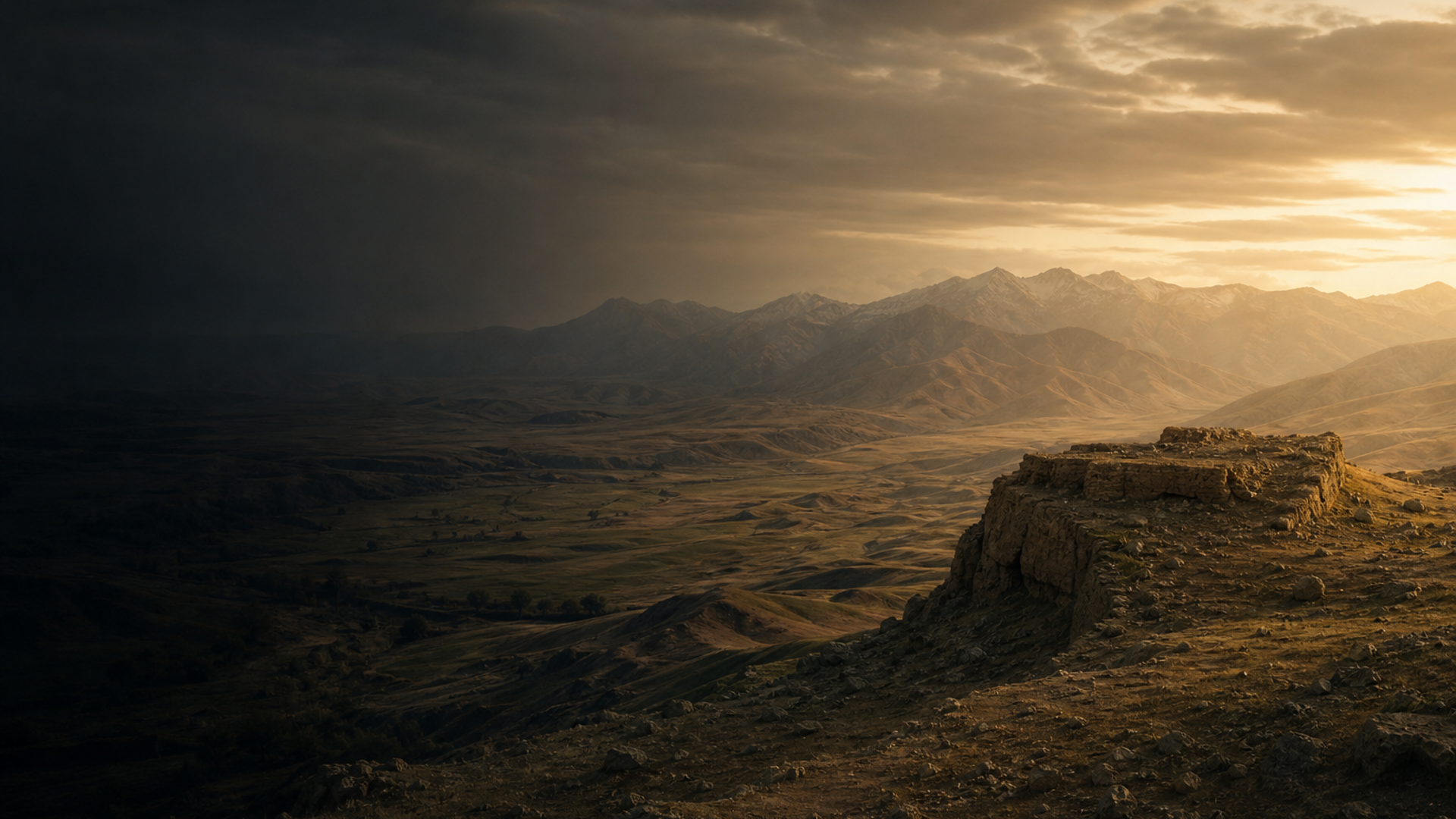
Set in the fertile corridor of the Yili Valley, the Caishichang assemblage sits at a crossroads where mountain passes and steppe tracks converge. Archaeological data indicates human activity around Caishichang in Nileke County during the later first millennium BCE, a period when mobility and long-distance exchange intensified across Xinjiang.

Limited evidence suggests Caishichang was neither an isolated hamlet nor a major metropolis but part of a network of small Iron Age settlements that negotiated cultural influence from both eastern China and the Eurasian interior. Material traces—burial clusters and fragmentary field contexts—point to local adaptations of widely shared practices rather than wholesale cultural replacement. The chronology (800–1 BCE) places these people in the broader era of regional reorganization: the growth of interstate polities to the east and shifting pastoral dynamics to the west.

Genetically, the site captures that liminal quality: paternal and maternal lineages show signatures commonly associated with both East Asian and western Eurasian ancestries, reflecting routes of contact along the northern Silk Road corridors. Because the dataset is small (eight individuals), these patterns should be read as preliminary glimpses of population dynamics rather than definitive population histories.

  • Located in Caishichang, Nileke County, Yili Region (Xinjiang)
  • Chronology: 800–1 BCE, late Iron Age contexts
  • Evidence indicates frontier interactions between East Asia and the Eurasian interior
Chapitre IV

Daily Life & Society

Archaeological traces from Caishichang suggest a community shaped by mobility and resource diversity. The landscape—mountain-fed valleys and steppe margins—supported mixed subsistence strategies: pastoral herding, localized farming in irrigable pockets, and participation in exchange networks that brought exotic raw materials and ideas.

Burial contexts, the primary archaeological window at Caishichang, reveal structured attention to the dead and variable grave assemblages that imply differences in age, sex, or social role. Archaeological data indicates craft specialization may have existed on a modest scale, with households participating in both local production and long-distance trade. Social organization likely balanced kinship-based groups with flexible alliances formed around seasonal movements and trade routes.

Culturally, the site embodies hybridity: material culture elements align neither exclusively with steppe nomadism nor with the settled agricultural traditions to the east. Instead, Caishichang represents a living frontier where people adapted practices as opportunities and relationships evolved. Given the limited excavation and the small number of ancient genomes, reconstructions of daily life remain provisional and should be refined with more fieldwork and a larger DNA sample.

  • Mixed subsistence: pastoralism alongside localized agriculture
  • Burial variability suggests social differentiation; interpretations are provisional
Chapitre V

Genetic Profile

Ancient DNA from eight individuals at Caishichang provides a compact but revealing picture of biological ancestry during the late first millennium BCE. Y-chromosome results include haplogroups Q (including Q1a) and J. Haplogroup Q and Q1a are often associated with populations of northern Eurasia and the steppe corridor, while J is more frequently observed in West Eurasian and southwest Asian contexts; the presence of both hints at male-mediated connections across east–west routes. Because only three Y-lineages are reported (Q, J, Q1a total counts include overlap), and the overall sample count is eight, any Y-based inference is preliminary.

Mitochondrial (maternal) diversity at Caishichang is notable: U (3 individuals), M3 (2), A11 (1), T (1), and D (1). Haplogroup U and T are typically found in West Eurasian and European contexts as well as western steppe groups; M3, A11, and D are characteristic of East Asian and Inner Asian populations. This mix of maternal lineages suggests admixed ancestry or sustained contact between eastern and western gene pools in the region. Archaeogenetic patterns from Xinjiang more broadly have shown such admixture across millennia, and Caishichang appears to fit that mosaic.

Important caveats: with only eight genomes, statistical power is limited. These data provide a snapshot that aligns with a picture of frontier admixture—male and female lineages reflecting both eastward and westward connections—but more samples are needed to resolve proportions, timing, and the social mechanisms behind gene flow.

  • Y-DNA: presence of Q, Q1a, and J suggests mixed paternal links (steppe and west-Asian signals)
  • mtDNA: U, M3, A11, T, D indicate maternal diversity consistent with east–west admixture; sample size is small (n=8)
Chapitre VI

Legacy & Modern Connections

Caishichang offers a vivid tableau of Iron Age frontier life whose genetic echoes persist in the tapestry of Central and East Asia. The mingling of haplogroups at the site resonates with modern genetic diversity across Xinjiang and adjacent regions, where descendants carry layered ancestries shaped by millennia of mobility. Archaeological data indicates that places like Caishichang were conduits for people, goods, and genes—small nodes whose cumulative activity helped shape broader population landscapes.

Because the dataset is limited, Caishichang's contribution to modern populations should be seen as suggestive rather than conclusive. Ongoing and future ancient-DNA sampling in the Yili Valley and surrounding basins will be necessary to trace the persistence and transformation of these lineages into later historical populations. Nevertheless, the site captures how human lives at a contested ecological threshold can leave an outsized genetic and cultural imprint on subsequent generations.

  • Reflects genetic mixing consistent with modern Xinjiang heterogeneity
  • Preliminary patterns underscore need for more sampling to map long-term genetic continuity
Propulsé par l'IA

Assistant IA

Posez des questions sur la culture Caishichang: Echoes of the Iron Age

Assistant IA par DNAGENICS

Débloquer cette fonction
Posez des questions sur la culture Caishichang: Echoes of the Iron Age. L'assistant IA peut expliquer les résultats génétiques, le contexte historique, les preuves archéologiques et les liens génétiques avec les populations actuelles, dans les limites de l'interprétation.
Exemple d'analyse IA

La culture Caishichang: Echoes of the Iron Age représente un chapitre fascinant de l'histoire humaine…

L'analyse génétique met en évidence des similarités avec des populations antérieures et des signes d'adaptations propres. Les échantillons d'ADN ancien éclairent les schémas migratoires et les liens entre populations, avec des limites qui dépendent de l'étude et du contexte archéologique.

Il s'agit d'un aperçu de l'analyse IA. Accédez à l'assistant complet pour explorer :

  • Composition et similarité génétique
  • Schémas migratoires et origines
  • Vie quotidienne et pratiques culturelles
  • Contexte génétique actuel

Explorez d'autres cultures antiques

Découvrez les récits de civilisations issues du monde antique