Préparation du rapport

Chargement des informations et références disponibles

Connexion au corpus archéologique…

Collecte des archives antiques

Aller au contenu principal
Carrowkeel Voices: Ireland Late Neolithic
Profil culturel

Carrowkeel Voices: Ireland Late Neolithic

Genetic echoes from Carrowkeel passage tombs, 3087–2466 BCE — small sample, big questions.

3087 CE - 2466 BCE
Sligo, Ireland (Carrowkeel passage tombs)
Faites défiler pour commencer
Chapitre I

Le récit

Comprendre la culture Carrowkeel Voices: Ireland Late Neolithic

Preliminary ancient DNA from five individuals (Carrowkeel, Sligo) dated 3087–2466 BCE reveals a predominance of Y‑haplogroup I and diverse maternal lineages (W5b, H1, J, H, H*). Archaeology and aDNA together illuminate Late Neolithic burial practice, kinship, and population continuity in Ireland.

Time Period

3087–2466 BCE (Late Neolithic)

Region

Sligo, Ireland (Carrowkeel passage tombs)

Common Y-DNA

I (predominant in these samples: 3/5)

Common mtDNA

W5b, H1, J, H, H* (one each)

Chapitre II

Chronologie

Moments clés de l'histoire de cette culture

2500 BCE

Construction and Use of Carrowkeel Passage Tombs

Carrowkeel cairns in Sligo were active funerary centers, hosting repeated burial rites and community gatherings in the mid-3rd millennium BCE.

Chapitre III

Origins & Emergence

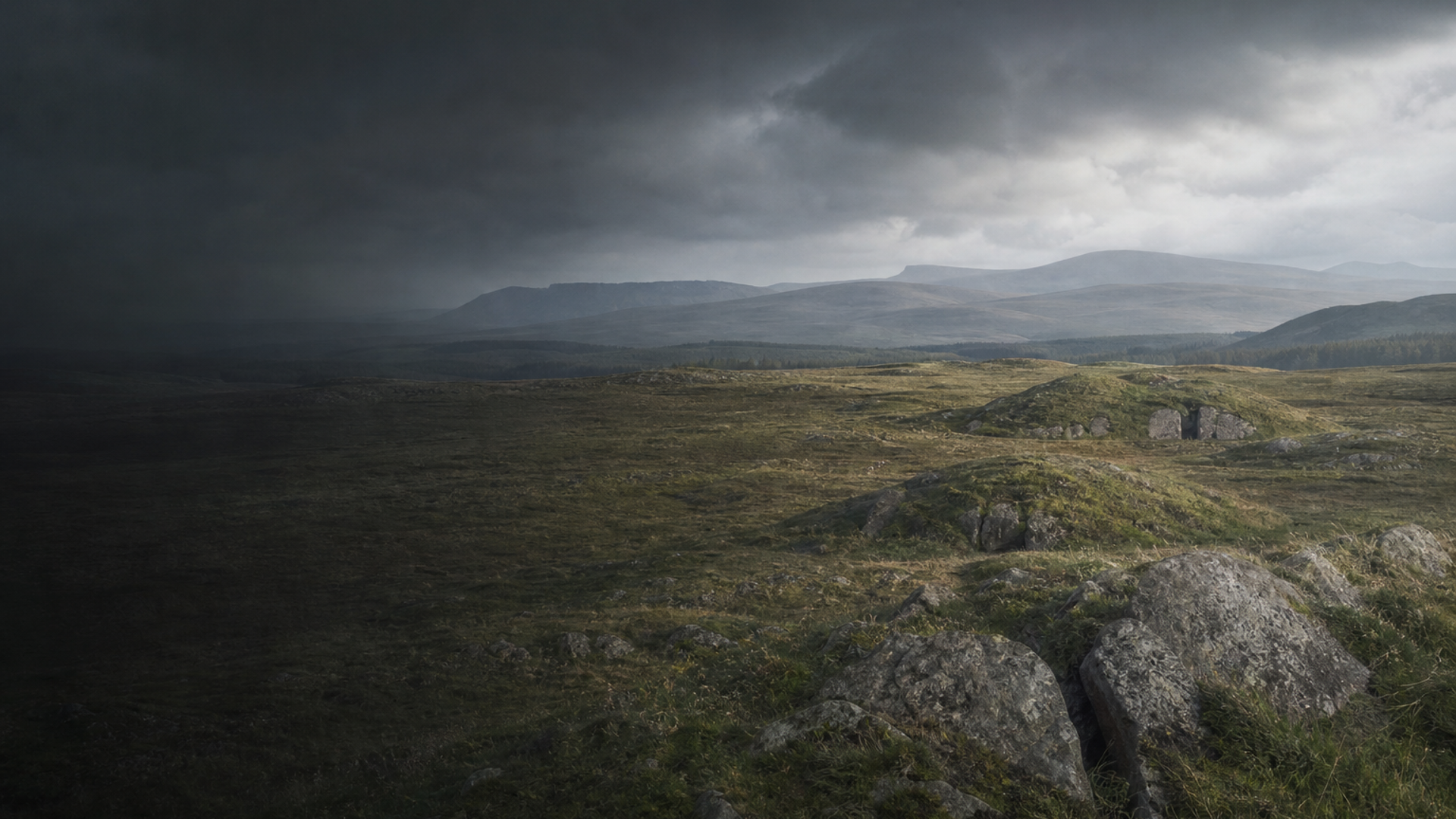
The Carrowkeel complex in County Sligo sits atop a wind-swept limestone plateau, a cinematic landscape of cairns and curving passages that served as a stage for funerary performance across the Late Neolithic. Archaeological data indicates active use of passage tombs here during the third millennium BCE. Radiocarbon dates from associated contexts cluster within the range 3087–2466 BCE for the individuals sampled.

Limited genomic evidence from five individuals suggests a local population with deep roots. Three of the five male-associated samples carry Y‑haplogroup I, a lineage with a long presence in northwest Europe; this may reflect regional continuity of paternal lines or retention of earlier male ancestry into the Neolithic. Maternal diversity—represented by W5b, H1, J, H, and an unresolved H*—points to a mixture of lineages that archaeologists often associate with the gradual blending of local hunter‑gatherers and incoming farming communities.

Because the sample count is small, these inferences must remain tentative. Still, when placed beside the architecture and mortuary practice visible at Carrowkeel, the genetic signals hint at communities that were anchored to place, burying their dead in monumental stone while negotiating new social networks across Ireland and the Irish Sea.

  • Passage tombs at Carrowkeel in Sligo used in late 4th–mid 3rd millennium BCE
  • Genetic sampling (n=5) shows majority Y‑haplogroup I, diverse mtDNA
  • Limited sample size—interpretations are preliminary
Chapitre IV

Daily Life & Society

Stone and soil preserve echoes of everyday practice and ritual at Carrowkeel. The monuments themselves—long cairns with stone chambers—are archaeological evidence of organized labor, landscape planning, and communal identity. Excavated deposits from passage tombs in the region often include disarticulated bone, occasional grave offerings, and traces of repeated visiting events; such patterns suggest cyclical ceremonies, ancestor remembrance, and possibly seasonal gatherings.

Material remains for ordinary domestic life are more ephemeral in the record close to the tombs, but environmental samples and nearby settlement surveys point to mixed farming economies: cereals, domesticated animals, and wild resource use in upland and coastal niches. Socially, the interaction of burial architecture and aDNA hints at kin-based groups who emphasized lineage ties and collective ancestry in their monuments. The predominance of one Y‑lineage in these five individuals could reflect patrilineal practices or burial selection, while the range of maternal haplogroups suggests women from varied maternal backgrounds were part of these groups.

Archaeological data indicates that Carrowkeel functioned as both cemetery and communal landscape anchor; genetic data adds a human element to that picture, though more samples are needed to understand household composition, marriage patterns, or social hierarchy.

  • Monumental labor and repeated ritual use indicate communal identity
  • Archaeobotanical and faunal evidence points to mixed farming and local resource use
Chapitre V

Genetic Profile

Ancient DNA from five individuals from Carrowkeel provides a narrow but evocative window into population dynamics during Ireland's Late Neolithic. Y‑chromosome data are dominated here by haplogroup I (3 of 5 males), a lineage that appears in European Mesolithic contexts and persists into later periods; its presence may signal continuity of local paternal ancestry, conservative male lineage transmission, or burial sampling bias.

Mitochondrial diversity is notable: the five maternal lineages—W5b, H1, J, H, and H*—include both typically widespread European types (H variants) and lineages less common in large Neolithic series (W5b). Haplogroup J has often been associated with Neolithic farmer expansions from the Near East and Anatolia; its occurrence here, alongside hunter‑gatherer‑associated signals, is consistent with admixture scenarios documented elsewhere in Europe.

However, with only five genomes the statistical power is weak. Patterns such as the apparent overrepresentation of haplogroup I or the specific mtDNA mix could change with additional sampling. Archaeogeneticists therefore treat these results as preliminary: they are valuable signposts that must be integrated with broader datasets from Ireland and western Britain to map migration, continuity, and social structure across the Late Neolithic.

  • Y‑haplogroup I present in 3 of 5 samples—suggests paternal continuity or sampling bias
  • mtDNA shows mixed maternal ancestry (W5b, H1, J, H, H*); limited sample size
Chapitre VI

Legacy & Modern Connections

The stones of Carrowkeel still command the skyline of Sligo, and the genetic echoes found in a handful of burials connect those monuments to living people today. Modern Irish populations carry a complex tapestry of Y and mitochondrial lineages, with haplogroup I remaining part of the genetic landscape but not necessarily dominant—later Bronze Age and Iron Age processes (visible in other aDNA studies) reshaped paternal lineages across northwest Europe. The absence of some later common haplogroups in this small Carrowkeel sample underlines how genetic landscapes shift over millennia.

Culturally, the enduring presence of passage tombs in the Irish countryside offers a tangible link between ancient practice and contemporary identity: archaeology and ancient DNA together allow museum visitors and descendants to imagine both continuity and change. But given the small number of genomes from Carrowkeel, any direct line drawn between these five individuals and broad modern populations must be cautious. Further sampling across regions and time will refine how these Late Neolithic people contributed to the genetic tapestry of Ireland.

  • Carrowkeel contributes to narratives of continuity and change in Ireland's ancestry
  • Small sample size means links to modern populations are tentative
Propulsé par l'IA

Assistant IA

Posez des questions sur la culture Carrowkeel Voices: Ireland Late Neolithic

Assistant IA par DNAGENICS

Débloquer cette fonction
Posez des questions sur la culture Carrowkeel Voices: Ireland Late Neolithic. L'assistant IA peut expliquer les résultats génétiques, le contexte historique, les preuves archéologiques et les liens génétiques avec les populations actuelles, dans les limites de l'interprétation.
Exemple d'analyse IA

La culture Carrowkeel Voices: Ireland Late Neolithic représente un chapitre fascinant de l'histoire humaine…

L'analyse génétique met en évidence des similarités avec des populations antérieures et des signes d'adaptations propres. Les échantillons d'ADN ancien éclairent les schémas migratoires et les liens entre populations, avec des limites qui dépendent de l'étude et du contexte archéologique.

Il s'agit d'un aperçu de l'analyse IA. Accédez à l'assistant complet pour explorer :

  • Composition et similarité génétique
  • Schémas migratoires et origines
  • Vie quotidienne et pratiques culturelles
  • Contexte génétique actuel

Explorez d'autres cultures antiques

Découvrez les récits de civilisations issues du monde antique