Préparation du rapport

Chargement des informations et références disponibles

Connexion au corpus archéologique…

Collecte des archives antiques

Aller au contenu principal
Central Saka of the Kazakh Steppe
Profil culturel

Central Saka of the Kazakh Steppe

Iron Age horsemen and mound-builders of Tian Shan, revealed by archaeology and ancient DNA

777 CE - 416 BCE
Central Steppe, Kazakhstan (Tian Shan; Taldy-2)
Faites défiler pour commencer
Chapitre I

Le récit

Comprendre la culture Central Saka of the Kazakh Steppe

Central Saka communities (777–416 BCE) of the Kazakh steppe—burials from Tian Shan and Taldy-2—show mounted pastoral lifeways. Six ancient genomes reveal predominant Y haplogroup R and diverse maternal lineages (U, A, H, F, C4d). Low sample count makes conclusions preliminary.

Time Period

777–416 BCE

Region

Central Steppe, Kazakhstan (Tian Shan; Taldy-2)

Common Y-DNA

R (4 of 6 samples)

Common mtDNA

U (2), A, H, F, C4d

Chapitre II

Chronologie

Moments clés de l'histoire de cette culture

777 BCE

Earliest sampled Central Saka burial

One of the oldest dated genomes in this series originates around 777 BCE from the Tian Shan / Taldy-2 area, anchoring the sampled sequence in the early Central Saka timeframe.

Chapitre III

Origins & Emergence

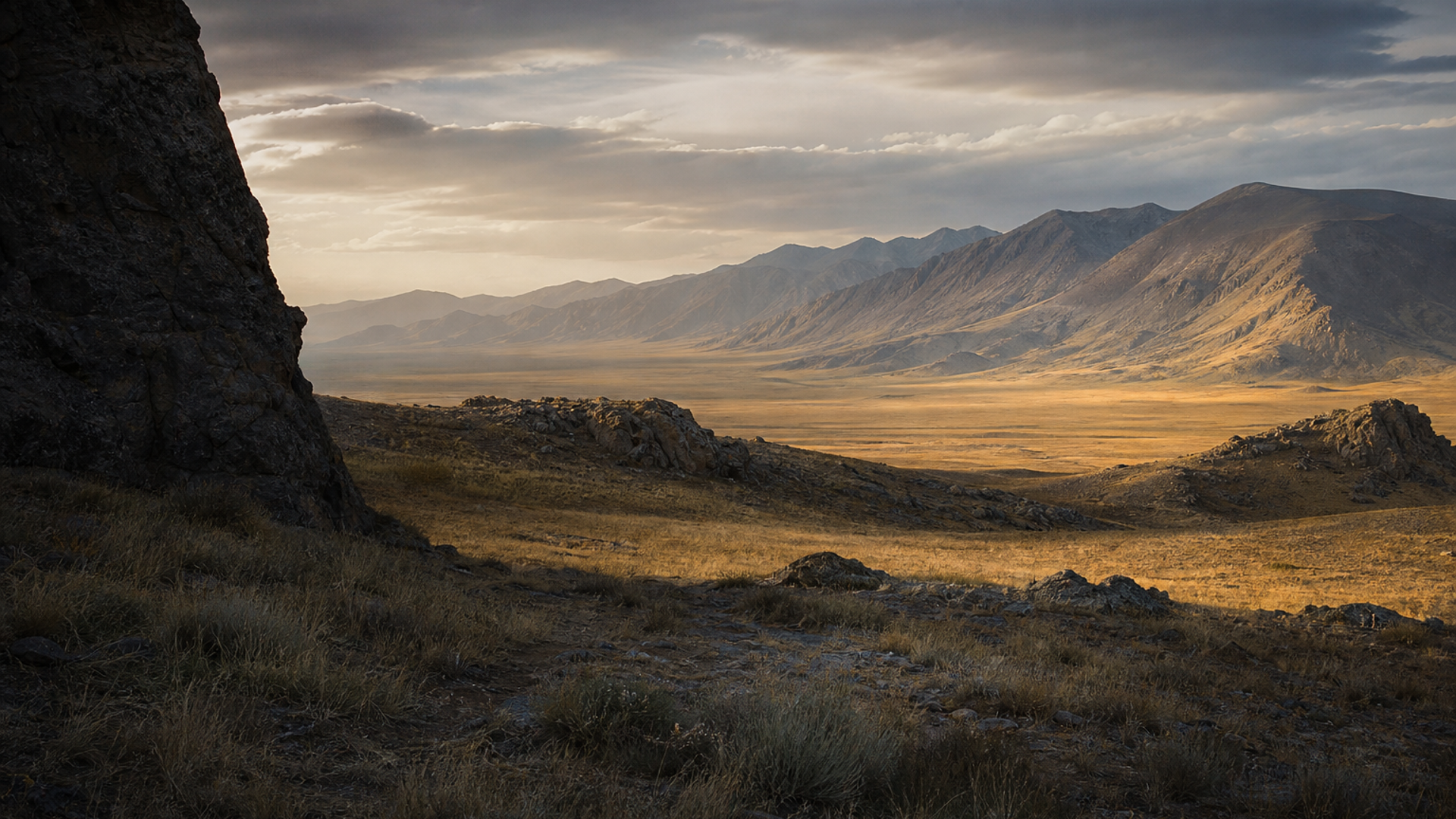
Across the wind-swept grasslands of the Central Steppe the Central Saka emerge in the archaeological record as a regional expression of the wider Saka cultural horizon. Archaeological data indicates burials, often in kurgan mounds, clustered in upland margins such as the Tian Shan foothills and at specific sites like Taldy-2 (Mound 4). Material culture associated with Saka groups—mounted pastoral gear, weapons, and ornate metalwork—suggests a mobile horse-centered economy and regional networks of exchange from roughly the late 8th to mid 5th centuries BCE (here represented by samples dated 777–416 BCE).

Limited evidence suggests that the Central Saka were neither a single homogeneous polity nor a static population; rather, they represent a tapestry of mobile pastoral communities interacting across the steppe corridor. The archaeological picture—mound burials, differential grave goods, and widespread animal husbandry traces—implies social differentiation and long-distance connections that fit the image of dynamic Iron Age steppe societies. However, the small number of securely sampled genomes (six individuals) means that any model of origins must remain provisional. Future excavations and additional ancient DNA sampling across more kurgans and habitation sites are required to test hypotheses about regional continuity, migration, and the role of the Tian Shan highlands in Saka lifeways.

  • Kurgan burials at Tian Shan foothills and Taldy-2 anchor the culture in place and time
  • Material culture indicates mounted pastoralism and long-distance exchange
  • Sparse genomic sampling means models of emergence are preliminary
Chapitre IV

Daily Life & Society

Archaeological data paints a cinematic but evidence-based portrait of Central Saka daily life: herds of sheep and horses shaping seasonal movement, leather and textile technologies adapted to mobile life, and ritualized burial practices that returned the dead beneath stone and earth mounds. Excavations of Saka contexts in Kazakhstan commonly reveal horse tack fragments, weaponry, and personal ornaments—objects that speak to a culture organized around herding, riding, and martial display.

The scale and contents of mounds such as Taldy-2 Mound 4 suggest social differentiation—some individuals received richer grave assemblages and more elaborate burial treatments, indicating status hierarchies within these communities. Caravan routes skirting the Tian Shan foothills would have linked Central Saka groups to neighboring steppe and mountain peoples, facilitating exchange of goods, ideas, and perhaps people. Seasonal mobility, reliance on pastoral resources, and the symbolic centrality of the horse are recurrent themes in the archaeological record, but many aspects of household organization, craft specialization, and internal social structures remain under-documented for this subregion of the Saka world.

  • Horse-centered pastoralism with seasonal movement patterns
  • Kurgan variability indicates social differentiation and long-distance ties
Chapitre V

Genetic Profile

Ancient DNA from six individuals associated with Kazakhstan_Central_Saka (dated 777–416 BCE) offers a preliminary window into the biological ancestry of these Iron Age steppe communities. Four of the six male-associated samples carry Y-chromosome haplogroup R (unspecified sublineages in the available data), a lineage commonly found across many earlier and contemporary steppe pastoralist groups. This concentration of R suggests a degree of male-line continuity with broader steppe populations, but without subclade resolution the geographic specificity of that continuity remains uncertain.

Mitochondrial diversity among the six samples is notable: two U haplogroups, and one each of A, H, F, and C4d. U and H are typically associated with West Eurasian maternal ancestries, while A and C4d are more common in East Eurasian lineages; F has broad Eurasian distribution. Together, these mitochondrial lineages point to mixed maternal ancestry within the sampled group, consistent with archaeological indications of long-distance connections across the steppe.

Crucially, the sample count is small (<10), so any population-level inference is tentative. The genetic signal hints at a community shaped by steppe male-line continuity and diverse female-line inputs—plausibly reflecting mobility, exchange marriages, or incorporation of groups along trade routes—but larger, more geographically and temporally dense sampling is needed to test these patterns robustly.

  • Y-DNA: Predominance of haplogroup R (4 of 6), suggesting male-line links to steppe populations
  • mtDNA: Mixed West and East Eurasian maternal lineages (U, H, A, F, C4d) indicating diverse ancestry
Chapitre VI

Legacy & Modern Connections

The Central Saka of the Kazakh steppe contribute to the deep palimpsest of Central Asian history. Archaeologically they are part of the broader Saka/Scythian cultural horizon whose material motifs and mobile lifeways influenced later nomadic polities across Eurasia. Genetically, the mixed maternal and steppe-associated paternal signatures seen in this small sample mirror the complex admixture processes that have shaped modern Central Asian populations: layers of steppe ancestry overlaid by gene flow from eastern and western neighbors.

It is important to avoid deterministic claims: direct one-to-one ancestry between these six individuals and any modern group cannot be assumed. Instead, these genomes illuminate processes—mobility, exchange, and social incorporation—that produce the genetic mosaics observed today. Continued archaeological work and expanded ancient DNA sampling will better resolve how Central Saka communities contributed to the genetic and cultural tapestry of Kazakhstan and the wider steppe.

  • Part of the wider Saka/Scythian horizon that shaped Eurasian steppe dynamics
  • Preliminary genetic signals reflect the mixing processes that underlie modern Central Asian diversity
Propulsé par l'IA

Assistant IA

Posez des questions sur la culture Central Saka of the Kazakh Steppe

Assistant IA par DNAGENICS

Débloquer cette fonction
Posez des questions sur la culture Central Saka of the Kazakh Steppe. L'assistant IA peut expliquer les résultats génétiques, le contexte historique, les preuves archéologiques et les liens génétiques avec les populations actuelles, dans les limites de l'interprétation.
Exemple d'analyse IA

La culture Central Saka of the Kazakh Steppe représente un chapitre fascinant de l'histoire humaine…

L'analyse génétique met en évidence des similarités avec des populations antérieures et des signes d'adaptations propres. Les échantillons d'ADN ancien éclairent les schémas migratoires et les liens entre populations, avec des limites qui dépendent de l'étude et du contexte archéologique.

Il s'agit d'un aperçu de l'analyse IA. Accédez à l'assistant complet pour explorer :

  • Composition et similarité génétique
  • Schémas migratoires et origines
  • Vie quotidienne et pratiques culturelles
  • Contexte génétique actuel

Explorez d'autres cultures antiques

Découvrez les récits de civilisations issues du monde antique