Aller au contenu principal
Profil culturel

Coastal Echoes: Belize 4,600 Years Ago

Archaeology and mtDNA from Mayahak Cab Pek and Saki Tzul illuminate early coastal lifeways

2950 CE - 2469 BCE
Belize (Mesoamerica)

Le récit

Archaeological and genetic glimpses from two Belizean sites (Mayahak Cab Pek, Saki Tzul) dated 2950–2469 BCE. Five samples show mtDNA lineages C5b, C1c, D, and A, suggesting Pan‑American founder ancestries and possible local matrilineal continuity; conclusions remain preliminary.

Time Period

2950–2469 BCE

Region

Belize (Mesoamerica)

Common Y-DNA

Not reported / unknown

Common mtDNA

C5b (2), C1c (1), D (1), A (1)

Chronologie

2500 BCE

Coastal occupations at Mayahak Cab Pek and Saki Tzul

Archaeological and genetic evidence records human use of coastal Belizean sites around 2950–2469 BCE, with mtDNA lineages indicating Pan‑American maternal ancestries. Interpretations remain preliminary due to small sample size.

Origins & Emergence

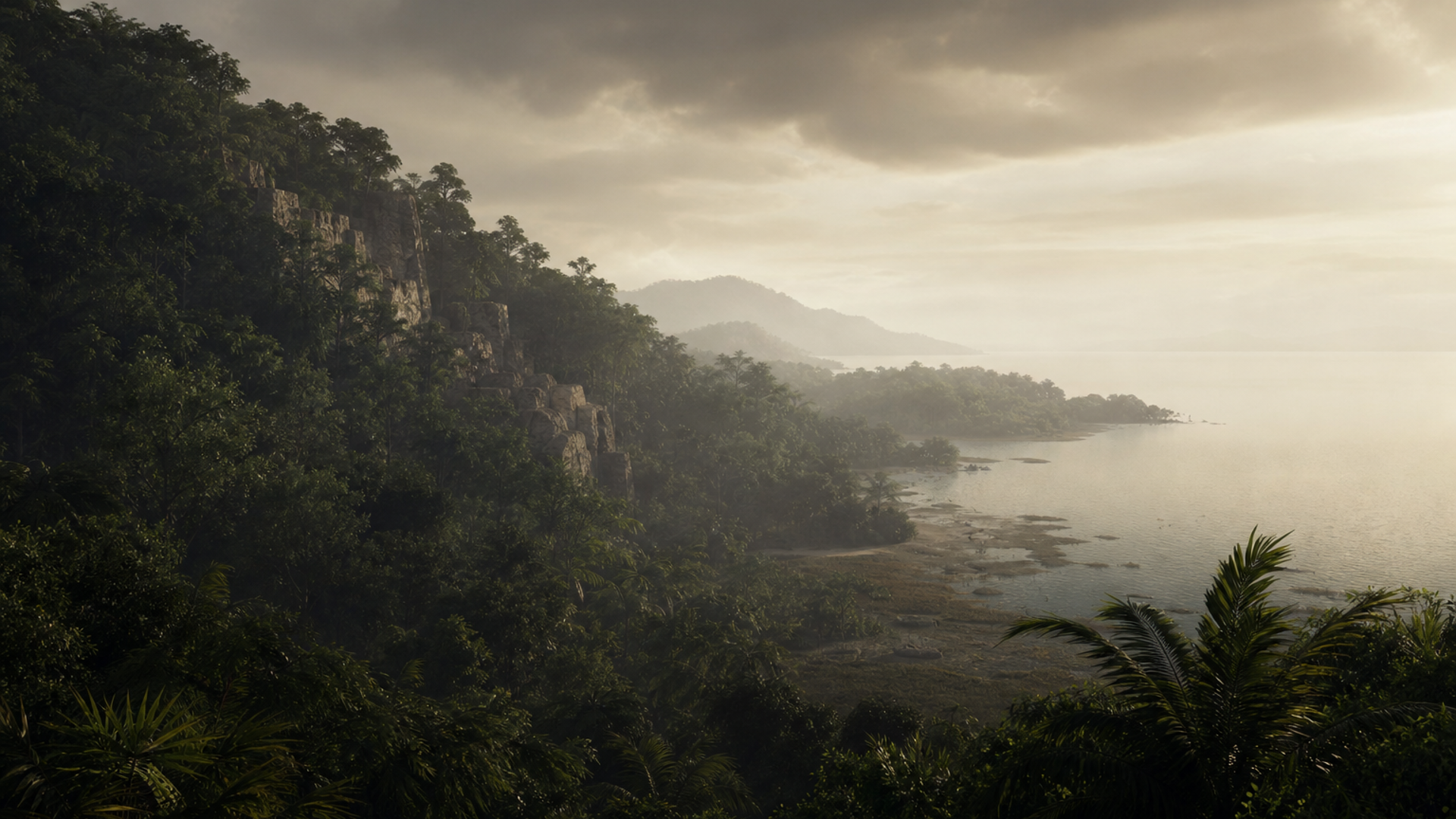
The Belize_4600BP assemblage sits within a horizon of prolonged coastal occupation in southern Mesoamerica. Archaeological data indicates human presence at Mayahak Cab Pek and Saki Tzul between 2950 and 2469 BCE, a period when shorelines and estuarine wetlands supported rich fisheries and mangrove resources. Excavations at similar coastal localities in Belize often preserve shell middens, lithic scatters, and occasional burial contexts; these features suggest repeated seasonal or year-round use rather than large, nucleated settlements.

Climatic conditions in the mid‑Holocene had largely stabilized after earlier post‑glacial adjustments, producing productive coastal ecologies that could sustain small, mobile populations. Limited evidence suggests that communities combined marine foraging with riverine resource use and freshwater wetland exploitation. The mtDNA signals from these burials point to deep-rooted Pan‑American maternal lineages, indicating that these coastal groups were part of broader population networks that trace back to the initial peopling of the Americas.

Caution is warranted: with only five genetic samples and fragmentary archaeological contexts, current reconstructions remain tentative. Continued stratigraphic work, more radiocarbon dates, and expanded sampling are required to resolve settlement duration, mobility patterns, and connections to inland groups.

  • Sites: Mayahak Cab Pek and Saki Tzul (Belize)
  • Dates: 2950–2469 BCE (ca. 4,600 years before present)
  • Environment: Coastal, estuarine, mangrove-dominated ecologies

Daily Life & Society

Life along the Belizean shores at 4,600 years ago can be imagined as rhythmic and elemental: tides shaping access to fish and shellfish, mangrove channels guiding canoe routes, and small hearths steaming fish and mollusks. Archaeological indicators from comparable coastal sites include dense shell middens, grinding stones, and simple stone tools — evidence of diets heavily based on marine and wetland resources.

Social organization at this scale was likely flexible and kin‑based. Burials recovered in coastal contexts are often few and dispersed, suggesting small community sizes or episodic use of specific locales. Artifact variability and spatial patterning hint at networks of exchange for valued items such as high-quality lithic material and possibly early plant domesticates introduced from inland zones. Cultural behaviors — craft, food processing, and watercraft use — left ephemeral traces, so interpretations rely on careful integration of midden composition, tool types, and spatial distribution.

Archaeobotanical and faunal data remain limited for these two sites, so claims about horticulture or intensive agriculture are premature. What emerges more clearly is a resilient adaptation to coastal resources, with mobility strategies tuned to seasonal abundance and a social landscape shaped by kin ties and resource-sharing practices.

  • Economy centered on marine and wetland resources
  • Small, mobile or seasonally aggregated communities

Genetic Profile

The genetic dataset from Belize_4600BP comprises five mitochondrial genomes recovered from burials at Mayahak Cab Pek and Saki Tzul. mtDNA haplogroups observed are A, C1c, C5b (two individuals), and D. These haplogroups are part of the set of founding maternal lineages widely distributed among Indigenous peoples across North and South America, reflecting deep ancestry that likely stems from Beringian and early post‑Beringian population movements.

Two individuals carrying C5b suggest a locally recurring maternal lineage in this small sample, while the presence of A, C1c, and D indicates participation in a broader Pan‑American maternal gene pool. No Y‑chromosome (paternal) haplogroups are reported for these samples, so insights into male‑mediated migration or patrilineal structure are unavailable.

Importantly, the sample count is very small (<10). This limited dataset restricts statistical confidence: observed frequencies may not represent the full diversity of the population or region. Archaeogenetic interpretation must therefore remain cautious — these mtDNA results are consistent with continuity of ancient pan‑American maternal lineages in Mesoamerica, but they do not resolve questions about population size, admixture events, or links to later Maya and pre‑Maya groups without substantially more data.

  • mtDNA: C5b (2), C1c (1), D (1), A (1)
  • Sample size small (5): conclusions are preliminary

Legacy & Modern Connections

The maternal lineages detected at Belize_4600BP echo genetic threads still present today across the Americas. MtDNA haplogroups A, C, and D form part of a genetic legacy linking ancient coastal foragers to later Indigenous populations. Archaeological continuity in coastal lifeways and the persistence of these haplogroups suggest long-standing demographic connections, but direct ancestral lines to specific modern communities cannot be asserted from five samples alone.

Cultural legacies are also living: modern Indigenous knowledge of coastal ecology, fishing techniques, and seasonal resource use resonates with the adaptations inferred for these ancient communities. For a robust picture of continuity and change, future work must combine wider ancient DNA sampling, comparative studies with inland sites, and collaborative research with descendant communities to place genetic signals within a richer cultural and historical framework.

  • mtDNA lineages align with pan‑American founder ancestries
  • Direct continuity to modern groups requires broader sampling and community collaboration

Assistant IA

Assistant IA par DNAGENICS

Débloquer cette fonction
Posez des questions sur la culture Coastal Echoes: Belize 4,600 Years Ago. L'assistant IA peut expliquer les résultats génétiques, le contexte historique, les preuves archéologiques et les liens génétiques avec les populations actuelles, dans les limites de l'interprétation.
Exemple d'analyse IA

La culture Coastal Echoes: Belize 4,600 Years Ago représente un chapitre fascinant de l'histoire humaine…

L'analyse génétique met en évidence des similarités avec des populations antérieures et des signes d'adaptations propres. Les échantillons d'ADN ancien éclairent les schémas migratoires et les liens entre populations, avec des limites qui dépendent de l'étude et du contexte archéologique.

Il s'agit d'un aperçu de l'analyse IA. Accédez à l'assistant complet pour explorer :

  • Composition et similarité génétique
  • Schémas migratoires et origines
  • Vie quotidienne et pratiques culturelles
  • Contexte génétique actuel