Préparation du rapport

Chargement des informations et références disponibles

Connexion au corpus archéologique…

Collecte des archives antiques

Aller au contenu principal
Cueva Roja Archaic Horizon
Profil culturel

Cueva Roja Archaic Horizon

Coastal foragers of Cueva Roja (1300 BCE–200 CE), revealed by artifacts and ancient DNA

1300 BCE - 200 CE
Dominican Republic (Cueva Roja)
Faites défiler pour commencer
Chapitre I

Le récit

Comprendre la culture Cueva Roja Archaic Horizon

Archaeological and aDNA evidence from Cueva Roja, Dominican Republic (1300 BCE–200 CE) offers a glimpse into Archaic coastal foragers. Three samples show Y‑DNA Q and mtDNA D1/C; small sample size makes conclusions preliminary.

Time Period

1300 BCE–200 CE

Region

Dominican Republic (Cueva Roja)

Common Y-DNA

Q (1 sample)

Common mtDNA

D1 (2), C (1)

Chapitre II

Chronologie

Moments clés de l'histoire de cette culture

1300 BCE

Earliest documented occupation

Cueva Roja shows early Archaic use with shell middens and lithic scatters dated to c. 1300 BCE.

Chapitre III

Origins & Emergence

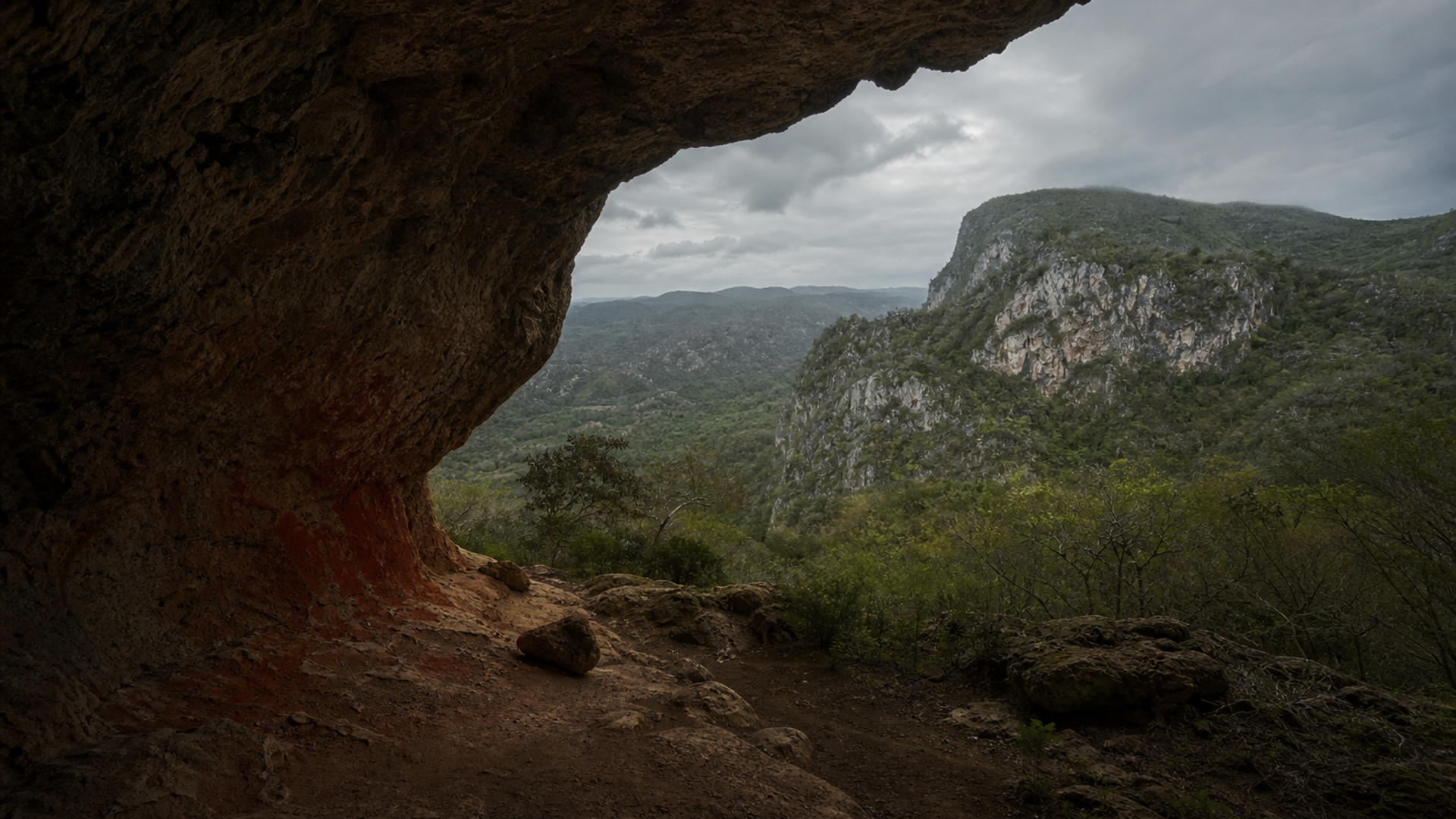
Cueva Roja sits like a red-stained inlet in the deep-time shorelines of Hispaniola. Archaeological data indicates human use of the cave and nearby coastal foraging zones between roughly 1300 BCE and 200 CE, within the broader Caribbean Archaic tradition. Excavations have recovered shell middens, flaked stone tools and organic traces that suggest repeated seasonal occupations and a nuanced knowledge of littoral resources.

Limited evidence suggests the people who used Cueva Roja were part of mobile coastal forager networks that linked islands and nearby continental coasts. The material culture—simple but effective lithics and dense shell deposits—echoes other Antillean Archaic localities, yet each site retains local signatures in tool morphologies and refuse patterns. Archaeological interpretations remain cautious: stratigraphic mixing, coastal erosion, and intermittent excavation histories mean that our picture is fragmentary.

When combined with ancient DNA from three individuals, a tentative narrative emerges: these were Indigenous American lineages deeply adapted to island life, moving and exchanging across maritime landscapes. However, because only three genetic samples are currently available, any model of migration or population continuity must be treated as provisional. Ongoing fieldwork and more aDNA samples are required to trace origins more precisely.

  • Occupation at Cueva Roja dated c. 1300 BCE–200 CE
  • Coastal forager lifeways indicated by shell middens and lithics
  • Interpretations provisional due to limited samples and site disturbance
Chapitre IV

Daily Life & Society

The archaeological record at Cueva Roja evokes a rhythm of tides and seasons. Dense shell layers point to sustained exploitation of mollusks and crustaceans; fish bone and possible net sinkers imply sophisticated marine foraging. Stone tools—small flakes, scrapers and ad hoc blades—suggest tasks of processing food, working plant fibers and hide preparation. Hearth features and charcoal fragments indicate on-site cooking and warmth against coastal winds.

Social organization for Archaic communities in the Dominican Republic is inferred from spatial patterns rather than monumental architecture. Occupation appears to have been episodic and mobile, with groups probably moving between caves, beaches and inland patches of resources. Exchange of raw materials and stylistic traits seen regionally hints at inter-island connections: people who knew the sea also maintained social ties across watery corridors.

Archaeological data indicates a subsistence economy built around marine resources, supplemented by wild plants and occasional terrestrial hunting. Mortuary evidence from Cueva Roja is limited; therefore, social stratification and ceremonial life remain poorly understood. The cave captures everyday resilience—hands at work, fires at night, boats cutting the horizon—more than grand social hierarchies.

  • Foraging focused on shellfish, fish and coastal resources
  • Mobile, seasonally occupied sites with evidence of inter-island connections
Chapitre V

Genetic Profile

Ancient DNA recovered from three individuals at Cueva Roja offers a rare genetic window into early inhabitants of Hispaniola. The small dataset includes one individual with Y‑DNA haplogroup Q and three mitochondrial genomes: two assigned to mtDNA D1 and one to mtDNA C. Both D1 and C are among the founding maternal lineages of Indigenous peoples across the Americas; Y‑DNA Q is a common paternal lineage in Native American populations. These findings are consistent with an Indigenous American ancestry for the Cueva Roja occupants.

Archaeological and genetic signals align in showing connections to the broader Indigenous gene pool of the Americas, but geographic specifics remain unresolved. Haplogroups D1 and C are widespread and do not by themselves pinpoint a precise continental source—both appear across North, Central and South America at varying frequencies. Similarly, Y‑DNA Q indicates a continuity of Native American paternal lineages but cannot alone reveal migration routes or timing.

Crucially, the sample count is very low (n=3). With fewer than ten samples, conclusions about population continuity, demographic change, or sex-biased migration are preliminary. Additional radiocarbon-dated genomes from Cueva Roja and neighboring sites are needed to model population structure, admixture, and temporal shifts in ancestry across the Archaic to Ceramic transition in the Caribbean.

  • Three samples: Y‑DNA Q (1); mtDNA D1 (2), C (1)
  • Haplogroups consistent with Indigenous American ancestry, but sample size is too small for firm demographic claims
Chapitre VI

Legacy & Modern Connections

Cueva Roja's echoes reach into modern understandings of Caribbean origins. The genetic signatures—Q, D1 and C—tie the cave's occupants to the deep Indigenous heritage of the Americas and provide baseline data for comparing later populations, including Ceramic-age groups and historical Taíno communities. Archaeological continuity in coastal subsistence strategies also suggests long-standing human adaptations to island ecosystems.

Yet the story is not linear. Centuries of migration, contact and post-Columbian admixture reshaped island populations. The Cueva Roja data are valuable as an anchor point: they preserve fragments of pre-contact genetic diversity and lifeways. For descendant and local communities, these findings can inform cultural heritage and scientific collaboration, but researchers must communicate uncertainties clearly and expand sampling ethically to build a fuller, respectful narrative.

  • Provides genetic baseline for pre-ceramic Caribbean populations
  • Highlights need for expanded, ethical sampling to clarify continuity with later groups
Propulsé par l'IA

Assistant IA

Posez des questions sur la culture Cueva Roja Archaic Horizon

Assistant IA par DNAGENICS

Débloquer cette fonction
Posez des questions sur la culture Cueva Roja Archaic Horizon. L'assistant IA peut expliquer les résultats génétiques, le contexte historique, les preuves archéologiques et les liens génétiques avec les populations actuelles, dans les limites de l'interprétation.
Exemple d'analyse IA

La culture Cueva Roja Archaic Horizon représente un chapitre fascinant de l'histoire humaine…

L'analyse génétique met en évidence des similarités avec des populations antérieures et des signes d'adaptations propres. Les échantillons d'ADN ancien éclairent les schémas migratoires et les liens entre populations, avec des limites qui dépendent de l'étude et du contexte archéologique.

Il s'agit d'un aperçu de l'analyse IA. Accédez à l'assistant complet pour explorer :

  • Composition et similarité génétique
  • Schémas migratoires et origines
  • Vie quotidienne et pratiques culturelles
  • Contexte génétique actuel

Explorez d'autres cultures antiques

Découvrez les récits de civilisations issues du monde antique