Préparation du rapport

Chargement des informations et références disponibles

Connexion au corpus archéologique…

Collecte des archives antiques

Aller au contenu principal
Dornod Late Medieval Steppe
Profil culturel

Dornod Late Medieval Steppe

Burials at Tsagaan Chuluut and Ugoomor illuminate Mongolian frontiers, 1000–1500 CE

1000 CE - 1500 CE
Dornod province, Mongolia (Tsagaan Chuluut; Ugoomor)
Faites défiler pour commencer
Chapitre I

Le récit

Comprendre la culture Dornod Late Medieval Steppe

Nine medieval burials from Dornod (Tsagaan Chuluut, Ugoomor), Mongolia (1000–1500 CE) show a mixed Northeastern Asian genetic profile (Y: C, D, N, O; mtDNA: D, T, Z1a, F, M). Limited sample size makes conclusions preliminary, but archaeology and aDNA hint at steppe mobility and regional exchange.

Time Period

1000–1500 CE

Region

Dornod province, Mongolia (Tsagaan Chuluut; Ugoomor)

Common Y-DNA

C (3), D (1), N (1), O (1) — others unassigned (9 samples)

Common mtDNA

D (3), T (1), Z1a (1), F (1), M (1) — others unassigned (9 samples)

Chapitre II

Chronologie

Moments clés de l'histoire de cette culture

1000 CE

Local Late Medieval Occupation

Earliest part of the Dornod sample range; communities practiced pastoralism and engaged in long-distance exchange across the steppe.

1206 CE

Mongol Empire Emergence

Founding of the Mongol Empire reconfigured political and demographic landscapes across Mongolia and the steppe, potentially increasing mobility and gene flow.

1400 CE

Late Medieval Regional Transformations

Centuries of imperial change, trade, and climate variability continued to shape population interactions in eastern Mongolia.

Chapitre III

Origins & Emergence

The Dornod Late Medieval assemblage occupies a liminal moment on the eastern Eurasian steppe. Between 1000 and 1500 CE, communities in what is today Dornod Province lived amid the rise and fragmentation of steppe polities — most dramatically the Mongol Empire after 1206 CE — and along routes that connected East Asian, Siberian and Central Asian spheres. Archaeological data from the burial contexts at Tsagaan Chuluut and Ugoomor indicate mobile pastoral lifeways punctuated by long-distance exchange: artifacts and burial practices suggest contact with neighboring Mongolic and Tungusic groups, while the landscape of riverine valleys and grassland supported horse-based herding.

Genetically, the available ancient DNA paints a picture of Northeastern Asian continuity with threads of external influence. The predominance of Y-haplogroup C aligns with broader Mongolic-associated paternal lineages on the steppe, while mtDNA lineages such as D and Z1a point to maternal ancestries common across northeastern Eurasia. Limited evidence suggests periodic influxes of western or more southerly lineages (mtDNA T, Y-haplogroup O), perhaps reflecting trade, marriage networks, or the demographic upheavals of imperial expansions. Given the small sample size (9 individuals), these patterns should be treated as preliminary hypotheses rather than definitive histories.

  • Occupies Dornod frontier, 1000–1500 CE, amid Mongol-era transformations
  • Archaeological contexts indicate pastoral mobility and interregional exchange
  • Genetic signals suggest Northeastern Asian continuity with episodic external inputs
Chapitre IV

Daily Life & Society

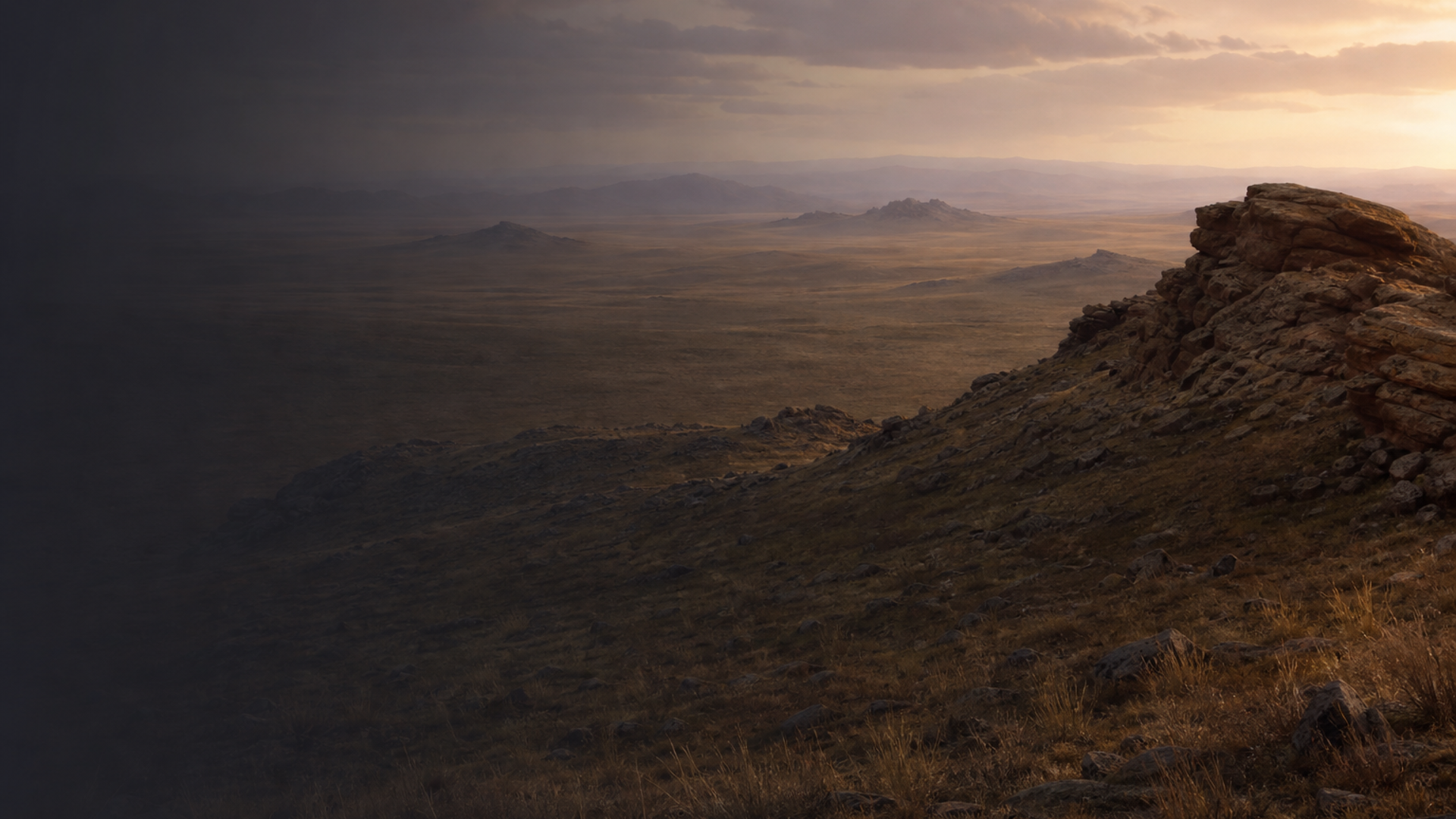
Life in the Dornod steppe unfolded in wide, wind-swept panoramas where seasonal movement governed survival. Households likely centered on herd animals — horses, sheep, goats, and cattle — and archaeological traces from similar Late Medieval Mongolian contexts point to felt dwellings, mounted pastoralism, and material cultures adapted for mobility: lightweight metalwork, tools suited to herding economies, and small trade items carried along long-distance routes. Rivers and floodplain pockets created productive grazing corridors and focal points for winter camps.

Burial practices at Tsagaan Chuluut and Ugoomor, while variable, convey social differentiation: some graves contain personal items that imply status or specialized roles, others are modest, reflecting common pastoral households. The cinematic rhythm of the steppe — dawn rides across grass seas, sudden storms, long-distance caravans threading between tribes — is supported by both the material record and genetic indications of movement. Ancient DNA hints at networks of kinship that stretched beyond local valleys; mitochondrial diversity suggests women entered local communities from multiple regional pools, which would shape household composition and cultural blending.

Archaeological data indicates resilience amid climatic shifts and political change. However, many aspects of daily life remain obscure at these two sites: preservation bias and limited excavation mean that reconstructions rely on analogy and cautious inference.

  • Pastoral mobility centered around seasonal herding and horse culture
  • Burial variation suggests social differentiation and regional connections
Chapitre V

Genetic Profile

Ancient DNA from nine individuals at Dornod (Tsagaan Chuluut and Ugoomor) reveals a mosaic typical of northeastern Eurasia in the Late Medieval period, but the sample size is small and conclusions must remain cautious. Observed Y-chromosome haplogroups include C (3 individuals), D (1), N (1), and O (1). Haplogroup C is frequently associated with Mongolic and other steppe paternal lineages; haplogroup N is common among northern Eurasian and Tungusic-speaking populations; haplogroups D and O reflect wider East Asian variation. The remaining male samples lacked resolvable haplogroup calls or were unreported, so paternal diversity may be underestimated.

Mitochondrial DNA shows greater maternal diversity: D (3), T (1), Z1a (1), F (1), and M (1). Haplogroup D is widespread across Northeast Asia and Siberia; Z1a is commonly documented among Siberian and north Eurasian groups; F and M lineages are widespread in East and Southeast Asia; the presence of T — more typical in western Eurasia — hints at occasional western maternal gene flow into the region. This mix could reflect sex-biased processes (for example, male-line continuity with incoming women from varied regions), but with only nine samples such scenarios are speculative.

Genetic data complements the archaeological picture: the combined evidence points to a community rooted in Northeastern Asian ancestry yet touched by interregional movement. Additional sampling is essential to test whether these patterns represent local continuity, episodic migration, or complex demographic shifts tied to the era’s political transformations.

  • Y-DNA dominated by C; presence of D, N, O indicates East and North Asian links
  • mtDNA diversity (D, Z1a, T, F, M) suggests mixed maternal origins and potential exchange
Chapitre VI

Legacy & Modern Connections

The genetic and archaeological echoes of the Dornod Late Medieval communities survive in present-day Northeast Asia. Haplogroup C remains common among Mongolic groups, and mitochondrial lineages such as D and Z persist across Siberia and Mongolia, connecting modern populations to medieval steppe ancestors. Limited signals of western lineages testify to a longue durée of exchange across Eurasia, reminding us that the steppe was not isolated but a conduit for people and genes.

For modern genetic studies and public audiences, these nine genomes serve as preliminary waypoints: they suggest continuity and connectivity but cannot alone map the full demographic history of Dornod. They underscore the promise of combining archaeology with aDNA — where burial contexts, artifact assemblages, and landscape analysis anchor genetic signals in lived human stories. Future sampling across additional sites and times will be critical to transform tantalizing hints into robust narratives about who lived on the eastern edge of the medieval Mongolian world and how they contributed to the region’s genetic tapestry.

  • Modern Mongolic and Siberian populations retain many lineages seen in Dornod samples
  • The small sample set highlights the need for more aDNA to clarify regional demographic history
Propulsé par l'IA

Assistant IA

Posez des questions sur la culture Dornod Late Medieval Steppe

Assistant IA par DNAGENICS

Débloquer cette fonction
Posez des questions sur la culture Dornod Late Medieval Steppe. L'assistant IA peut expliquer les résultats génétiques, le contexte historique, les preuves archéologiques et les liens génétiques avec les populations actuelles, dans les limites de l'interprétation.
Exemple d'analyse IA

La culture Dornod Late Medieval Steppe représente un chapitre fascinant de l'histoire humaine…

L'analyse génétique met en évidence des similarités avec des populations antérieures et des signes d'adaptations propres. Les échantillons d'ADN ancien éclairent les schémas migratoires et les liens entre populations, avec des limites qui dépendent de l'étude et du contexte archéologique.

Il s'agit d'un aperçu de l'analyse IA. Accédez à l'assistant complet pour explorer :

  • Composition et similarité génétique
  • Schémas migratoires et origines
  • Vie quotidienne et pratiques culturelles
  • Contexte génétique actuel

Explorez d'autres cultures antiques

Découvrez les récits de civilisations issues du monde antique