Préparation du rapport

Chargement des informations et références disponibles

Connexion au corpus archéologique…

Collecte des archives antiques

Aller au contenu principal
Goyet Q56-16: A Paleolithic Echo
Profil culturel

Goyet Q56-16: A Paleolithic Echo

Single Upper Paleolithic genome from Goyet cave illuminates life in Belgium ~24.8–24.0k BCE

24847 CE - 24025 BCE
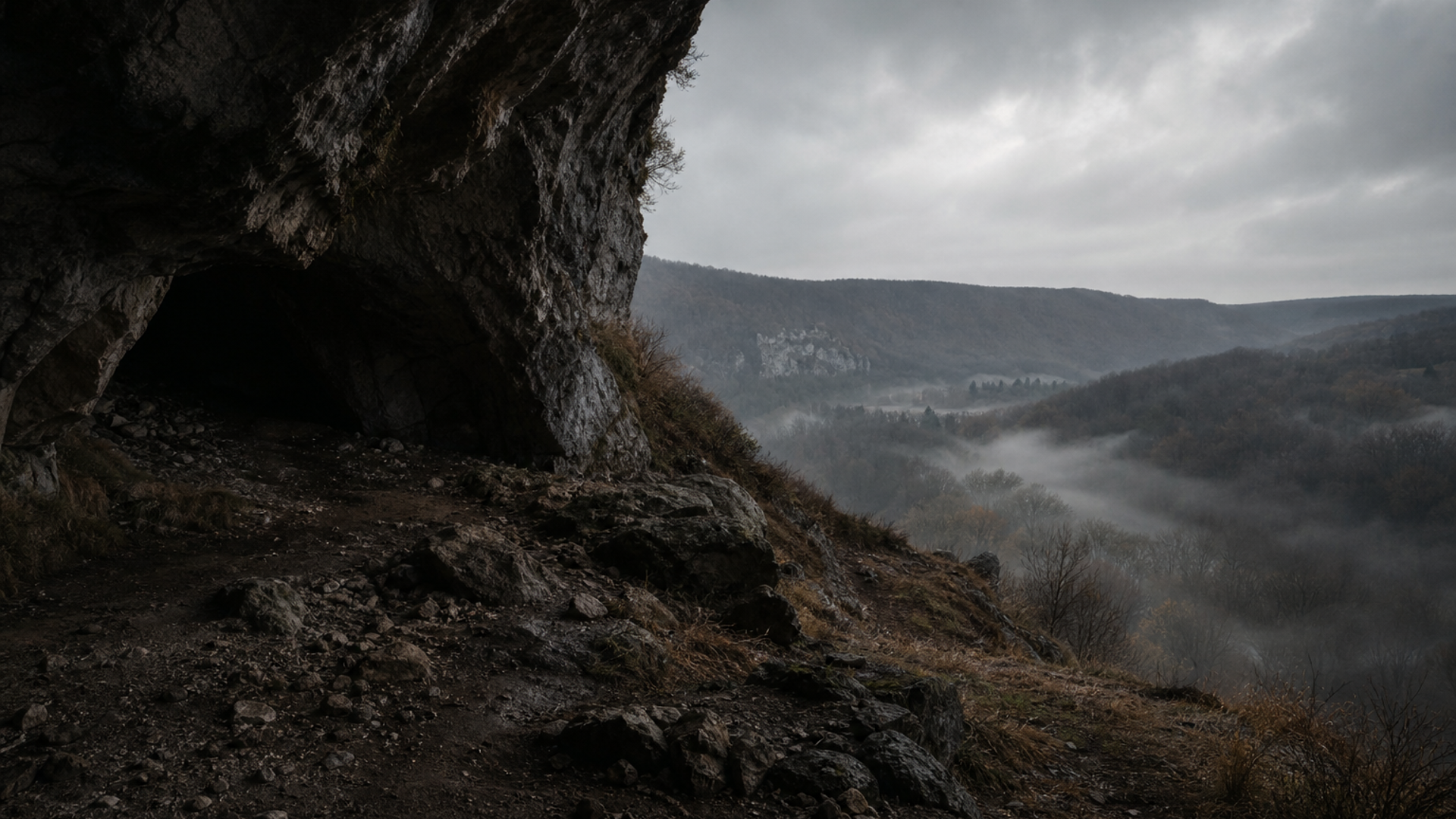
Goyet Cave, Namur province, Belgium
1 échantillons d'ADN antique
Faites défiler pour commencer
Chapitre I

Le récit

Comprendre la culture Goyet Q56-16: A Paleolithic Echo

Single Upper Paleolithic individual from the Troisième caverne of Goyet cave (c. 24,847–24,025 BCE). Archaeological context and mtDNA U2 connect this person to wider Paleolithic networks across Europe; conclusions are preliminary due to a single sample.

Time Period

c. 24,847–24,025 BCE

Region

Goyet Cave, Namur province, Belgium

Common Y-DNA

Not reported (no Y data)

Common mtDNA

U2 (1 individual)

Chapitre II

Chronologie

Moments clés de l'histoire de cette culture

24500 BCE

Occupational phase at Goyet c. 24.5k BCE

Human use of Troisième caverne documented by lithics, hearths, and the individual dated to 24.8–24.0k BCE.

Chapitre III

Origins & Emergence

The individual labelled Belgium_UP_GoyetQ56_16 comes from the Troisième caverne (Third Cave) of Goyet cave, a deep, stratified karst site near the village of Goyet in Namur province. Radiocarbon-calibrated dates place the bone between 24,847 and 24,025 BCE, situating it firmly within the Upper Paleolithic horizon in northwestern Europe. Archaeological data indicates repeated human occupation of Goyet across millennia, with dense lithic scatters and faunal remains that speak to seasonal hunting, tool production, and long-term use of sheltered cave spaces.

Limited evidence suggests this individual belonged to mobile hunter-gatherer networks that exploited river valleys and upland plateaus of the Meuse basin. The material culture at Goyet shows technological affinities consistent with Upper Paleolithic adaptations—blade production, curated tools, and specialized hunting remains—though assigning a precise cultural label remains difficult without broader stratigraphic synthesis.

Because this genetic record is a single genome, any model of population emergence or migration must be cautious: it provides a luminous but solitary data point. Archaeology frames the human story; this genome adds genetic color to those layers, hinting at connections across Western Europe during a time of climatic oscillation and cultural innovation.

  • From Troisième caverne, Goyet cave (Namur, Belgium)
  • Radiocarbon range: 24,847–24,025 BCE (Upper Paleolithic)
  • Single specimen—interpretations remain preliminary
Chapitre IV

Daily Life & Society

The world of Goyet’s Upper Paleolithic inhabitants would have been carved from mobility, seasonal resource tracking, and intimate knowledge of riverine landscapes. Archaeological layers in Goyet record hearths, stone tool concentrations, and faunal bones—evidence of repeated occupation and on-site processing of large game. Bone and teeth suggest butchery and marrow extraction were integrated into food economies; ochre and worked objects imply symbolic behaviors and personal adornment.

Social groups were likely small, flexible bands practicing extensive exchange and occasional long-distance contacts. The cave’s sheltering geometry made it a focal point for multi-generational use: repositories of lived memory, tool caches, and perhaps ritual practice. Limited direct evidence for settlement structure means much is inferred from analogous Upper Paleolithic sites: clusters of hearths, spatial segregation of work areas, and curated toolkits that traveled with people.

Archaeological data indicates that those who used Goyet exploited both woodland and open-country resources, shifting strategies with seasonal abundance. The solitary genetic sample from Q56-16 offers a human face to these behaviors—one individual embedded in a landscape of crafted stones, hunted herds, and social ties etched into the cave’s deep sediments.

  • Evidence for repeated occupation: hearths, tool scatters, faunal processing
  • Mobile hunter-gatherer lifeways with seasonal resource tracking
Chapitre V

Genetic Profile

Genetic data from Belgium_UP_GoyetQ56_16 is limited but informative. The sequenced mitochondrial genome belongs to haplogroup U2—an early European maternal lineage observed in several Upper Paleolithic contexts across the continent. Haplogroup U2 is less common in later Neolithic and Bronze Age populations, which suggests continuity of distinct Paleolithic maternal lineages and later demographic turnovers across Europe.

Important caveats apply: this dataset comprises a single individual, so population-level inferences are preliminary. The absence of recovered Y-chromosome data prevents insight into paternal lineages and sex-biased demographic processes at Goyet. Nevertheless, the mtDNA result aligns with broader patterns from late Pleistocene Europe, where U-lineages (U2, U4, U5 and related branches) are recurrent in Upper Paleolithic and Mesolithic assemblages.

When integrated with archaeology, the genetic signal supports a view of Goyet’s occupants as part of wide-ranging Paleolithic networks rather than isolated refugia. Ancient DNA can reveal affinities to individuals found in sites across Western and Central Europe, but robust models require more genomes from Goyet and contemporaneous contexts to chart migration, kinship, and admixture. In short: this mitochondrial finding is a valuable glimpse into maternal ancestry, but it must be read as preliminary until sample sizes increase.

  • mtDNA: U2 (single individual)
  • No Y-DNA reported—paternal ancestry unknown; conclusions preliminary
Chapitre VI

Legacy & Modern Connections

The genetic whisper from Goyet Q56-16 connects deep time to present landscapes: maternal lineages like U2 remind us that modern European genetic diversity rests upon layered Paleolithic foundations. Archaeological continuity at Goyet illustrates enduring human strategies of shelter, tool use, and seasonal mobility that resonate with hunter-gatherer ecologies across Europe.

However, the legacy must be framed with caution. A single mitochondrial genome cannot trace direct ancestry to living populations or map migration routes uniquely. Instead, it contributes a crucial data point to an expanding tapestry—highlighting regions where future sampling could clarify how Paleolithic communities contributed to later Neolithic and Bronze Age gene pools. As more genomes are recovered, researchers will better resolve how individuals like the Goyet occupant fit into broader stories of survival, movement, and cultural innovation across Ice Age Europe.

  • Connects Paleolithic maternal lineages to wider European patterns
  • Single-sample legacy highlights need for more data to map ancestry
Chapitre VII

Catalogue d'échantillons

1 échantillons d'ADN antique associés à la culture Goyet Q56-16: A Paleolithic Echo offrent des repères génétiques sur les populations de cette période.

1 / 1 échantillons
Portrait Échantillon Pays Époque Date Culture Sexe Y-ADN ADNmt
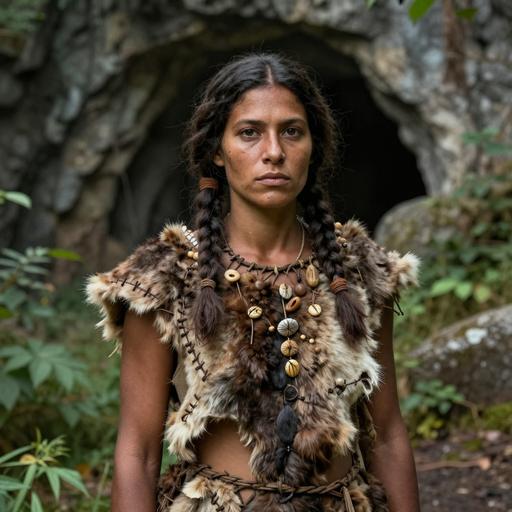
Reconstruction artistique de European Paleolithic individual, Belgium
European Paleolithic individual, Belgium
Belgium Belgium_UP_GoyetQ56_16 24847 BCE European Paleolithic F - U2
Propulsé par l'IA

Assistant IA

Posez des questions sur la culture Goyet Q56-16: A Paleolithic Echo

Assistant IA par DNAGENICS

Débloquer cette fonction
Posez des questions sur la culture Goyet Q56-16: A Paleolithic Echo. L'assistant IA peut expliquer les résultats génétiques, le contexte historique, les preuves archéologiques et les liens génétiques avec les populations actuelles, dans les limites de l'interprétation.

Exemple d'analyse IA

La culture Goyet Q56-16: A Paleolithic Echo représente un chapitre fascinant de l'histoire humaine…

L'analyse génétique met en évidence des similarités avec des populations antérieures et des signes d'adaptations propres. Les échantillons d'ADN ancien éclairent les schémas migratoires et les liens entre populations, avec des limites qui dépendent de l'étude et du contexte archéologique.

Il s'agit d'un aperçu de l'analyse IA. Accédez à l'assistant complet pour explorer :

  • Composition et similarité génétique
  • Schémas migratoires et origines
  • Vie quotidienne et pratiques culturelles
  • Contexte génétique actuel

Explorez d'autres cultures antiques

Découvrez les récits de civilisations issues du monde antique