Préparation du rapport

Chargement des informations et références disponibles

Connexion au corpus archéologique…

Collecte des archives antiques

Aller au contenu principal
Grotta La Sassa: Echoes of Copper-Age Lazio
Profil culturel

Grotta La Sassa: Echoes of Copper-Age Lazio

Three ancient genomes from Sonnino illuminate a fleeting chapter of Italy's Copper Age

2868 CE - 2488 BCE
Latina province, Sonnino (Grotta La Sassa), Italy
Faites défiler pour commencer
Chapitre I

Le récit

Comprendre la culture Grotta La Sassa: Echoes of Copper-Age Lazio

Archaeological and genomic data from three individuals (2868–2488 BCE) at Grotta La Sassa, Sonnino (Latina, Italy) reveal a mix of paternal J lineages and maternal H/J haplogroups. Limited samples suggest links to broader Mediterranean Neolithic ancestry with important caveats.

Time Period

2868–2488 BCE (Copper Age)

Region

Latina province, Sonnino (Grotta La Sassa), Italy

Common Y-DNA

J (2 of 3 samples)

Common mtDNA

H (2), J (1)

Chapitre II

Chronologie

Moments clés de l'histoire de cette culture

2500 BCE

Grotta La Sassa human activity

Radiocarbon dates place human remains and activity at Grotta La Sassa around 2868–2488 BCE, within the late Copper Age La Sassa horizon in central Italy.

Chapitre III

Origins & Emergence

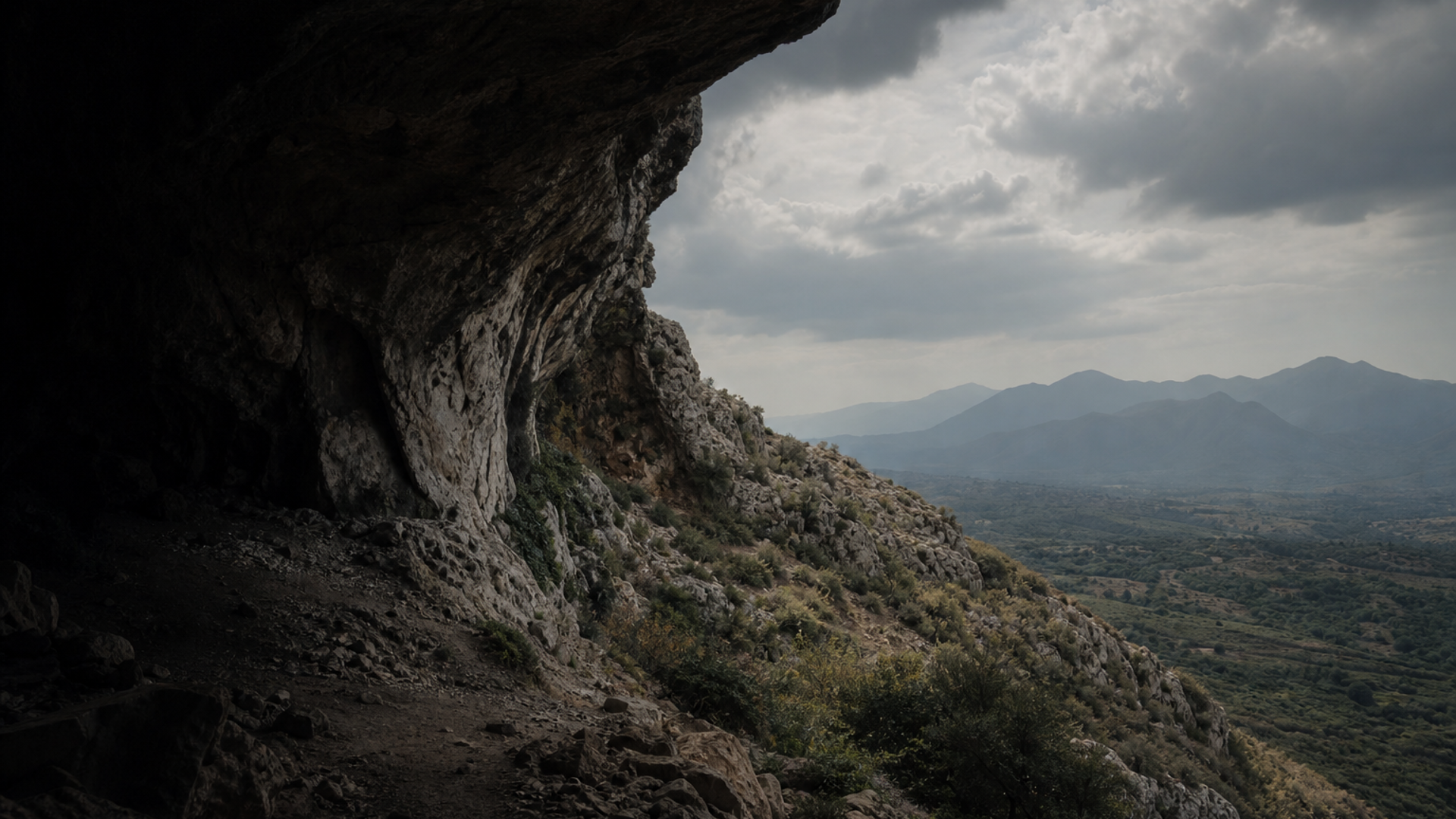
Grotta La Sassa sits in a limestone hollow above the coastal plains of southern Lazio, where human footsteps echoed through a long sequence of use during the Copper Age. Archaeological data indicates episodic occupation and funerary activity during the late 3rd millennium BCE, tied to the regional La Sassa cultural horizon. Radiocarbon dates associated with the recovered human remains range from 2868 to 2488 BCE, placing these individuals in the waning centuries of the Copper Age when small-scale communities exploited both inland uplands and nearby coastal resources.

Material culture in the La Sassa tradition—pottery forms, flint tools, and localized burial practices—suggests people living in networks of valleys and coastal plains rather than large urban centers. Limited evidence implies interaction with neighboring cultural spheres across the central Mediterranean, where mobility along rivers and coastal routes could carry ideas and genes. The three genomic samples come from a restricted assemblage and thus offer a narrow window: they illuminate presence and possible affinities but cannot define the population as a whole.

Viewed with measured expectancy, Grotta La Sassa’s people emerge as local actors within a broader tapestry of Late Neolithic and Copper-Age transformations in Italy—communities shaped by long-standing Neolithic ancestry, regional innovations, and episodic long-distance connections.

  • Grotta La Sassa: cave site near Sonnino, Latina (Lazio), Italy
  • Radiocarbon-dated individuals: 2868–2488 BCE (late Copper Age)
  • Archaeology indicates localized La Sassa cultural practices and regional interactions
Chapitre IV

Daily Life & Society

Archaeological traces from La Sassa contexts evoke a life lived on the margins of sea and hill—herds grazed on terraced slopes, fields were tilled in fertile valleys, and caves like Grotta La Sassa were alternately shelter, ritual place, and repository for the dead. Pottery fragments preserved within the site show hand-built and lightly decorated wares consistent with Copper Age domestic assemblages in central and southern Italy. Flint tools and occasional ornaments point to craft specialization at a household level rather than mass production.

Social organization in this period likely revolved around small kin groups or extended households, with seasonal rhythms set by agriculture, herding, and coastal foraging. Burial practices at cave and rock-shelter sites often display variability—some individuals receive formal interment, while others leave more ephemeral traces—hinting at social differentiation or changing ritual norms. Environmental reconstructions for Lazio suggest a patchwork landscape: wooded uplands, cleared arable plots, and access to maritime resources, all shaping mobility, diet, and exchange.

Cinematic in its contrasts—stone hollows filled with quiet graves, pottery caught by lamplight—Grotta La Sassa preserves intimate fragments of daily existence. Yet the archaeological record is partial, and the small number of human remains recovered cautions against broad reconstructions of community life.

  • Economy: mixed farming, herding, coastal foraging suggested by regional data
  • Social scale: likely small kin-based groups with varied burial practices
Chapitre V

Genetic Profile

Three genomic samples from Grotta La Sassa provide a slender but revealing glimpse of the people who occupied this cave. Two males carry Y-chromosome haplogroup J, a lineage today and historically frequent across the Near East and parts of the Mediterranean; one individual carries mtDNA haplogroup J and two carry H. These mitochondrial types are widespread in Europe from the Neolithic onward—H is especially common in later prehistoric and modern Europeans, while J is often associated with Neolithic dispersals and Near Eastern connections.

Because only three individuals were sampled, conclusions must be cautious. The prevalence of Y‑J in this tiny set may reflect local paternal continuity, recent male-mediated connections with Mediterranean or Anatolian networks, or simply sampling bias. Notably, these samples do not show dominance of some Steppe-associated Y lineages that appear elsewhere in Europe after the 3rd millennium BCE, but the absence in three genomes is not evidence of absence in the broader population.

Genomic data from La Sassa align with a broader picture in which central Italian Copper Age groups often carry a mosaic of ancestries: persistent Neolithic farmer heritage, local hunter‑gatherer contributions, and episodic gene flow from Mediterranean and eastern sources. Future sampling (many more than the current three individuals) is required to test hypotheses about sex-biased migration, population continuity, and regional contact.

  • Y-DNA: J observed in 2 of 3 samples; suggests possible Mediterranean/Anatolian connections
  • mtDNA: H (2) and J (1); consistent with widespread Neolithic-derived maternal lineages
Chapitre VI

Legacy & Modern Connections

Grotta La Sassa’s three genomes join a growing chorus of ancient DNA that helps trace the deep ancestry of modern Italians. The mix of maternal H and J haplogroups and paternal J lineages fits within a long-running Mediterranean dialogue: Millennia of farming, coastal trade, and episodic migration layered genetic signals across central Italy. While modern populations in Lazio and elsewhere inherit threads from these ancient peoples, continuity is complex—successive waves of movement in the Bronze Age and later eras reshaped genetic landscapes.

For contemporary descendants, the La Sassa data are evocative rather than conclusive. They remind us that the genetic makeup of any region is an accumulation of countless small stories: kin groups who tilled fields, families who used caves for ritual, and travelers who crossed seas. As ancient DNA sampling increases, places like Grotta La Sassa will shift from intriguing microcosm to well-contextualized chapter in Italy’s deep past.

  • Ancient genomes contribute to the long-term genetic tapestry of central Italy
  • Current conclusions are preliminary; more samples needed to trace direct modern links
Propulsé par l'IA

Assistant IA

Posez des questions sur la culture Grotta La Sassa: Echoes of Copper-Age Lazio

Assistant IA par DNAGENICS

Débloquer cette fonction
Posez des questions sur la culture Grotta La Sassa: Echoes of Copper-Age Lazio. L'assistant IA peut expliquer les résultats génétiques, le contexte historique, les preuves archéologiques et les liens génétiques avec les populations actuelles, dans les limites de l'interprétation.
Exemple d'analyse IA

La culture Grotta La Sassa: Echoes of Copper-Age Lazio représente un chapitre fascinant de l'histoire humaine…

L'analyse génétique met en évidence des similarités avec des populations antérieures et des signes d'adaptations propres. Les échantillons d'ADN ancien éclairent les schémas migratoires et les liens entre populations, avec des limites qui dépendent de l'étude et du contexte archéologique.

Il s'agit d'un aperçu de l'analyse IA. Accédez à l'assistant complet pour explorer :

  • Composition et similarité génétique
  • Schémas migratoires et origines
  • Vie quotidienne et pratiques culturelles
  • Contexte génétique actuel

Explorez d'autres cultures antiques

Découvrez les récits de civilisations issues du monde antique