Préparation du rapport

Chargement des informations et références disponibles

Connexion au corpus archéologique…

Collecte des archives antiques

Aller au contenu principal
Hiddestorf Saxons: Voices from 300–500 CE
Profil culturel

Hiddestorf Saxons: Voices from 300–500 CE

Small cemetery, large questions — genetics and graves speak of Saxon life in Lower Saxony.

300 CE - 500 CE
Lower Saxony, Germany
Faites défiler pour commencer
Chapitre I

Le récit

Comprendre la culture Hiddestorf Saxons: Voices from 300–500 CE

Archaeogenetic and archaeological data from Hiddestorf (Lower Saxony) illuminate a small Early Medieval Saxon community (300–500 CE). Six Y-DNA samples (R) and limited mtDNA (H, T, K) suggest patterns of male continuity and diverse maternal lines, but conclusions remain preliminary.

Time Period

300–500 CE

Region

Lower Saxony, Germany

Common Y-DNA

R (6 samples)

Common mtDNA

H (2), T (1), K (1)

Chapitre II

Chronologie

Moments clés de l'histoire de cette culture

400 CE

Community occupation at Hiddestorf

Cemetery use and settlement traces around Hiddestorf indicate active community life and funerary practice during the 4th–5th centuries CE.

Chapitre III

Origins & Emergence

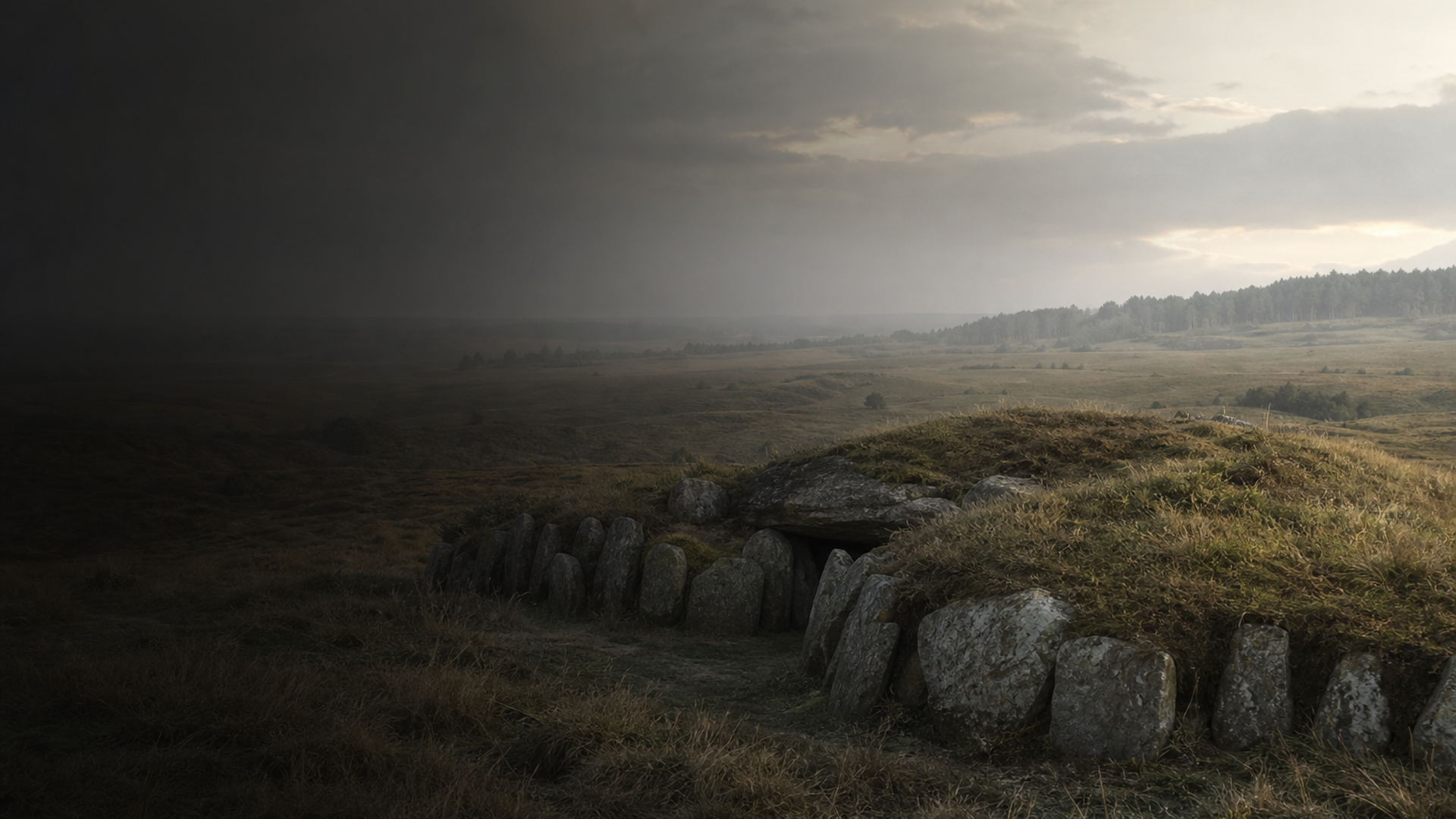
Amid the damp fields of Lower Saxony, the Hiddestorf cemetery preserves fragile traces of communities forging identity in the wake of Roman influence. Dated between roughly 300 and 500 CE, the site sits within the broader phenomenon archaeologists call the Early Medieval Saxon world — a patchwork of villages and cemeteries across northern Germany. Archaeological data indicates localized burial grounds at Hiddestorf with spatial relationships that suggest enduring family loci rather than single episodic events.

Limited evidence suggests population continuity in the region, but the period is dynamic: shifting trade networks, local elite formation, and mobility across the North Sea realm all shaped lives. The connected genetic data (six Y-chromosome samples from the site) provides an additional voice, hinting at patterns in male lineage transmission during a centuries-long process of cultural realignment. Because the genetic sample set is small, interpretations about migration, social organization, and long-term continuity remain provisional. Still, when paired with funerary layouts and regional finds, the evidence paints a scene of communities negotiating identity through kinship and landscape.

  • Dated to c. 300–500 CE, within the Early Medieval Saxon horizon
  • Cemetery at Hiddestorf aligns with regional burial practices of northern Germany
  • Small sample size requires cautious, provisional interpretations
Chapitre IV

Daily Life & Society

Archaeological traces in Lower Saxony suggest everyday life at Hiddestorf was shaped by mixed farming, seasonal rhythms, and local craft. Settlement traces regionally indicate household economies that combined cereal cultivation, animal husbandry, and artisanal production—activities that structured social roles and exchange. Burial evidence from comparable Saxon cemeteries implies varied mortuary treatments that reflected age, sex, and possibly status, though specific grave inventories at Hiddestorf should be interpreted conservatively when sample sizes are small.

Social life likely revolved around kin networks anchored to farmsteads and cemeteries. Long-distance contacts — through trade or mobility — connected these communities to coastal and continental routes, allowing material and cultural exchange with neighboring groups. Environmental data from the region points to managed landscapes: fields, hedges, and woodland patches used for fuel and construction. Together, archaeology and emerging genetic signals offer a textured view of daily existence: rooted, adaptive, and entangled with wider Early Medieval transformations.

  • Economy centered on mixed agriculture and local crafts
  • Kin-based households and burial clustering imply family organization
Chapitre V

Genetic Profile

The genetic snapshot from Hiddestorf comprises six Y‑chromosome samples—all assigned to haplogroup R—and a smaller set of observed mitochondrial lineages (H in two individuals, T in one, K in one). The ubiquity of Y‑R in this small assemblage suggests a strong patrilineal signal in the sampled burials, which can reflect inheritance patterns, male-biased residence, or sampling bias toward male graves. It is important to note that haplogroup R is broad and widespread across Europe; without higher-resolution subclade data or genome‑wide analyses, it is not possible to specify precise geographic origins within the R family.

Mitochondrial diversity (H, T, K) in the available samples hints at multiple maternal ancestries within the community, a pattern consistent with exogamy or the long-standing maternal diversity seen across northern Europe. Because only six Y samples and fewer mtDNA calls are available, the findings should be treated as preliminary. When combined with autosomal data from larger comparative panels, these uniparental markers can help discriminate between local continuity and incoming gene flow during the Early Medieval period. For now, the genetic evidence at Hiddestorf complements archaeological narratives of a Saxon population structured by kinship and regional connections.

  • All six male samples carry haplogroup R — suggests patrilineal clustering
  • mtDNA (H, T, K) shows maternal diversity but derives from a limited subset
Chapitre VI

Legacy & Modern Connections

Hiddestorf’s small cohort contributes a resonant, if cautious, note to the long echo of Saxon presence in northern Germany. Haplogroup R lineages are common across modern northern and western Europe, and mtDNA types found at the site are likewise widespread; this continuity is striking but not conclusive evidence of direct descent for any specific modern population. The cultural legacy — language, place names, and the memory of Saxon groups that later participated in migrations to Britain — is well documented, yet genetic links require broader sampling to quantify.

In museum narratives and ancestry reports, Hiddestorf reminds us that ancient DNA can illuminate social patterns (patrilineality, maternal diversity) but must be integrated with archaeology and historical context. Given the small sample size (six Y-DNA samples; fewer mtDNA calls), further excavation and larger genetic datasets are essential before drawing firm conclusions about population replacement, continuity, or the finer-scale movements of Early Medieval peoples.

  • Genetic and archaeological threads suggest continuity but stop short of direct descent claims
  • Small sample size means broader regional sampling is needed to refine connections
Propulsé par l'IA

Assistant IA

Posez des questions sur la culture Hiddestorf Saxons: Voices from 300–500 CE

Assistant IA par DNAGENICS

Débloquer cette fonction
Posez des questions sur la culture Hiddestorf Saxons: Voices from 300–500 CE. L'assistant IA peut expliquer les rĂ©sultats gĂ©nĂ©tiques, le contexte historique, les preuves archĂ©ologiques et les liens gĂ©nĂ©tiques avec les populations actuelles, dans les limites de l'interprĂ©tation.
Exemple d'analyse IA

La culture Hiddestorf Saxons: Voices from 300–500 CE reprĂ©sente un chapitre fascinant de l'histoire humaine…

L'analyse génétique met en évidence des similarités avec des populations antérieures et des signes d'adaptations propres. Les échantillons d'ADN ancien éclairent les schémas migratoires et les liens entre populations, avec des limites qui dépendent de l'étude et du contexte archéologique.

Il s'agit d'un aperçu de l'analyse IA. AccĂ©dez Ă  l'assistant complet pour explorer :

  • Composition et similaritĂ© gĂ©nĂ©tique
  • SchĂ©mas migratoires et origines
  • Vie quotidienne et pratiques culturelles
  • Contexte gĂ©nĂ©tique actuel

Explorez d'autres cultures antiques

Découvrez les récits de civilisations issues du monde antique