Préparation du rapport

Chargement des informations et références disponibles

Connexion au corpus archéologique…

Collecte des archives antiques

Aller au contenu principal
Himera 409 BCE: Echoes from a Burned City
Profil culturel

Himera 409 BCE: Echoes from a Burned City

Genetic and archaeological traces from Himera (Sicily) at the moment of its destruction

409 BCE
Himera, Sicily (Termini Imerese), Italy
Faites défiler pour commencer
Chapitre I

Le récit

Comprendre la culture Himera 409 BCE: Echoes from a Burned City

Archaeogenetic and archaeological evidence from five individuals at Himera (Termini Imerese, Sicily) illuminates a Sicilian Greek community at 409 BCE. Preliminary DNA points to mixed Mediterranean ancestry with Near Eastern and European signals, reflecting maritime contacts in the central Mediterranean.

Time Period

409 BCE

Region

Himera, Sicily (Termini Imerese), Italy

Common Y-DNA

J (2), T (1), R (1), L (1)

Common mtDNA

U (2), K (1), H (1), HV (1)

Chapitre II

Chronologie

Moments clés de l'histoire de cette culture

409 BCE

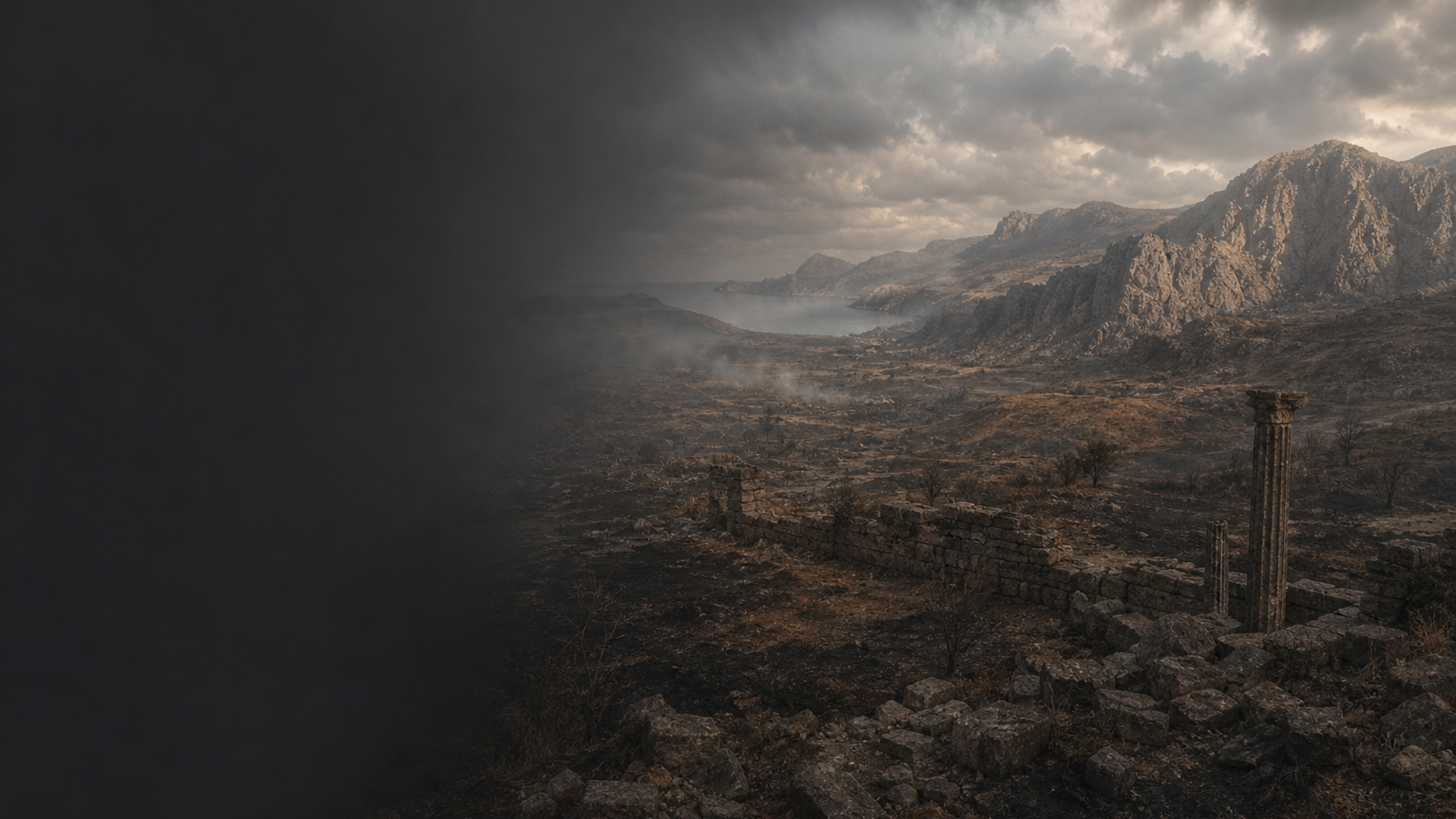
Sacking and destruction of Himera

Historical and archaeological evidence record the city's destruction by Carthaginian forces in 409 BCE, producing a clear destruction layer and many human casualties.

Chapitre III

Origins & Emergence

Himera sits on the northern coast of Sicily near modern Termini Imerese. Archaeological sequences show an Archaic Greek presence attested from the 7th–6th centuries BCE into the Classical period. By the 5th century BCE Himera was a thriving polis on a busy maritime crossroads, where Greek settlers, indigenous Sicels, and wider Mediterranean traders met.

Excavations at Himera have revealed multi-phase occupation layers, fortifications, temples, and a dramatic destruction horizon dated to 409 BCE, when historical sources and stratigraphy indicate the city was sacked. Archaeological data indicates both imported Greek pottery and local ceramic traditions, suggesting a culturally mixed urban fabric. Limited evidence suggests continued interaction with Tyrrhenian and Punic networks prior to the destruction.

Genetically and materially, Himera exemplifies the porous nature of colonial Sicily: a city shaped by migration, trade, and local adoption of Greek cultural forms. However, with only five ancient genomes from the 409 BCE layer, conclusions about the city’s founding populations or long-term demographic trends must remain cautious and provisional.

  • Archaic Greek occupation attested from 7th–6th centuries BCE
  • Located near modern Termini Imerese, Palermo province
  • Destruction horizon securely dated to 409 BCE
Chapitre IV

Daily Life & Society

The streets of Himera, imagined in the flicker of oil lamps and the salt wind from the sea, would have been a mosaic of Greek temples, workshops, and domestic quarters. Archaeological remains — houses, storage pits, imported amphorae, and local wares — reveal a community engaged in agriculture, craft production, and maritime commerce. Grain, olives, and wine likely formed agricultural staples, while trade brought goods and people from mainland Greece, the central Mediterranean, and beyond.

Grave goods and funerary architecture recovered from cemetery contexts indicate social differentiation: some burials contain rich imports, while others remain modest. Inscriptions and material culture attest to Greek political and religious institutions operating alongside enduring local traditions. Osteological evidence from cemetery populations shows varied diets and health profiles, reflecting a mixed economy and different life paths across the populace.

Archaeological data indicate that the city’s social life was abruptly disrupted in 409 BCE. The destruction layer preserves a snapshot — homes burned, valuables buried in haste, and people killed in the conflict — offering a rare moment where material culture and genetic data converge to illuminate the lived experience of a city at war.

  • Economy: agriculture, crafts, and maritime trade
  • Evidence for social differentiation in burial assemblages
Chapitre V

Genetic Profile

Five individuals sampled from Himera’s 409 BCE contexts provide a small but revealing genetic window into the city on the eve of and during its destruction. The Y-chromosome distribution (two J, one T, one R, one L) suggests a mixture of paternal lineages: haplogroups J and T are often associated with Mediterranean and Near Eastern connections, R is widespread in Europe, and haplogroup L is uncommon in the western Mediterranean and may indicate either rare long-distance connections or complexities in haplogroup calling for low-coverage samples.

Mitochondrial results (U twice, K, H, HV) indicate maternal lineages common across Europe and the broader Mediterranean. Haplogroup U is frequent in European hunter-gatherer and later populations; H, K, and HV are widespread in Neolithic and later contexts. Taken together, the profiles are consistent with a coastal Greek colonial population admixed with local Sicilian and wider Mediterranean ancestry.

Crucially, sample count is small (n=5). Limited evidence suggests mixed Mediterranean ancestry at Himera, but these results should be treated as preliminary. Future sampling from multiple stratigraphic layers and a larger number of individuals will be necessary to resolve patterns of kinship, migration, and sex-biased mobility. Archaeogenetic interpretation is strengthened when anchored to archaeological context — in this case the destruction horizon — but broader demographic inferences remain tentative.

  • Paternal mix: J, T, R, and an uncommon L signal (preliminary)
  • Maternal lineages (U, K, H, HV) reflect Mediterranean/European ancestry
Chapitre VI

Legacy & Modern Connections

The ashes and bones of Himera echo into modern genetic landscapes. Haplogroups identified in the 409 BCE individuals overlap with lineages still present around the central Mediterranean today, reflecting long-standing channels of mobility, trade, and cultural exchange. Archaeogenetic links reinforce archaeological narratives of Sicily as a meeting point between Greek, indigenous, and broader Mediterranean worlds.

Because the dataset is small, any direct genealogical linkage to modern populations is speculative. Nonetheless, the mixed genetic signal at Himera highlights how colonial cities could become genetic mosaics through intermarriage, mercantile networks, and the movement of people. For museum visitors and descendants of Sicily alike, Himera’s story offers a cinematic reminder that identity in the past, as today, was shaped by connectivity and contingency.

  • Signals continuity of Mediterranean lineages in the region
  • Reflects the role of colonial ports in creating genetic and cultural mixtures
Propulsé par l'IA

Assistant IA

Posez des questions sur la culture Himera 409 BCE: Echoes from a Burned City

Assistant IA par DNAGENICS

Débloquer cette fonction
Posez des questions sur la culture Himera 409 BCE: Echoes from a Burned City. L'assistant IA peut expliquer les résultats génétiques, le contexte historique, les preuves archéologiques et les liens génétiques avec les populations actuelles, dans les limites de l'interprétation.
Exemple d'analyse IA

La culture Himera 409 BCE: Echoes from a Burned City représente un chapitre fascinant de l'histoire humaine…

L'analyse génétique met en évidence des similarités avec des populations antérieures et des signes d'adaptations propres. Les échantillons d'ADN ancien éclairent les schémas migratoires et les liens entre populations, avec des limites qui dépendent de l'étude et du contexte archéologique.

Il s'agit d'un aperçu de l'analyse IA. Accédez à l'assistant complet pour explorer :

  • Composition et similarité génétique
  • Schémas migratoires et origines
  • Vie quotidienne et pratiques culturelles
  • Contexte génétique actuel

Explorez d'autres cultures antiques

Découvrez les récits de civilisations issues du monde antique